



Run the honest audit on Thanksgiving week. No commute Thursday. None Friday either, for most. Half days or full days off bracketing both, school out, meetings canceled, and a Saturday and Sunday with nothing scheduled but leftovers. By raw free hours, this is the most open week November offers, and performance lifters routinely train less during it than any week of the year, because the hours get spent in the car, the kitchen, and the airport instead.
The failure comes in two flavors. The first lifter treats the four-day holiday as a nine-day layoff, last session the Saturday before, next session the Monday after, and hands the week away wholesale. The second tries to run the full five-day program through a week that will not hold it, fails by Wednesday, and quits the rest in frustration. Both had the same problem: no plan sized to the actual week. So here is that plan, three sessions, scheduled tonight, with a gym, home, and hotel version of each.
How Should You Train During Thanksgiving Week?
Three sessions: a heavy full-body session Tuesday, a short conditioning and accessory session Wednesday or Friday, and a second heavy full-body session on the weekend. Keep your normal working weights and cut the volume, take your daily creatine, and protect sleep through the travel.
Why Three Beats Zero, and Beats Five
The case against the zero-session week comes straight from the deload research: when lifters took a complete week off mid-program, muscle growth held but strength gains came out smaller than training straight through [1]. A week on the couch has a price, and it bills your top-end strength. The case against panic runs the other way: the short-term detraining research shows strength losses over brief breaks are limited [2], so if travel eats one of your three planned sessions, the week is dented, not dead.
What makes three sessions enough is the variable they protect. Strength is maintained when intensity stays high even as volume drops substantially [3], which means the week's job is simply getting your normal working weights moved a few times, not replicating your normal workload. And the recovery consensus supplies the final permission slip: recovery has to balance training against total life demands [4], and a week of hosting, travel, and family is a legitimate demand. Three sessions is not the compromise version of the week. It is the correctly sized version.
The Plan
Step 1: Open your calendar tonight and book all three sessions by name. Tuesday is nearly always safest, before the week's gravity takes over. The second session floats to Wednesday morning or Friday, whichever your travel allows. The third lands Saturday or Sunday.
|
Day |
Session |
Main Lifts |
Sets and Reps |
Home or Hotel Swap |
|
Tuesday |
Heavy Full-Body A |
Squat, bench press, barbell row |
3 x 3 to 5 at normal working weight |
Heavy goblet squats 3 x 8, weighted push-ups 3 x 8, single-arm dumbbell rows 3 x 8 |
|
Wednesday or Friday |
Conditioning + Accessories, 25 minutes |
Kettlebell swings, walking lunges, carries, band pull-aparts, core |
3 rounds as a circuit |
Bodyweight squats, lunges, push-ups, band rows, plank, 3 rounds |
|
Saturday or Sunday |
Heavy Full-Body B |
Deadlift, overhead press, chin-ups or pulldowns |
3 x 3 to 5 at normal working weight |
Dumbbell Romanian deadlifts 3 x 8, dumbbell press 3 x 8, backpack rows or band pulldowns 3 x 10 |
Step 2: Run the heavy days exactly as written, heavy. The entire maintenance effect lives in the load [3], so Tuesday and the weekend session keep your normal working weights on the bar while sets drop to three per lift. Forty minutes, out the door. If the hotel version is what the week offers, pick the heaviest dumbbells available and treat the swap movements with the same seriousness; honest effort at eight reps with a too-light bell still beats the session that never happened.
Step 3: Make the middle session short and keep it moving. This one borrows directly from the time-efficiency research, which prioritizes multi-joint movements and supersets or circuits when minutes are scarce [5]. Twenty-five minutes, three rounds, no rest-scrolling. Its job is circulation, work capacity, and keeping the habit's heartbeat between the two heavy days, not setting records. If the week collapses and this session dies in the kitchen, let it go without ceremony [2] and protect the weekend lifter instead.
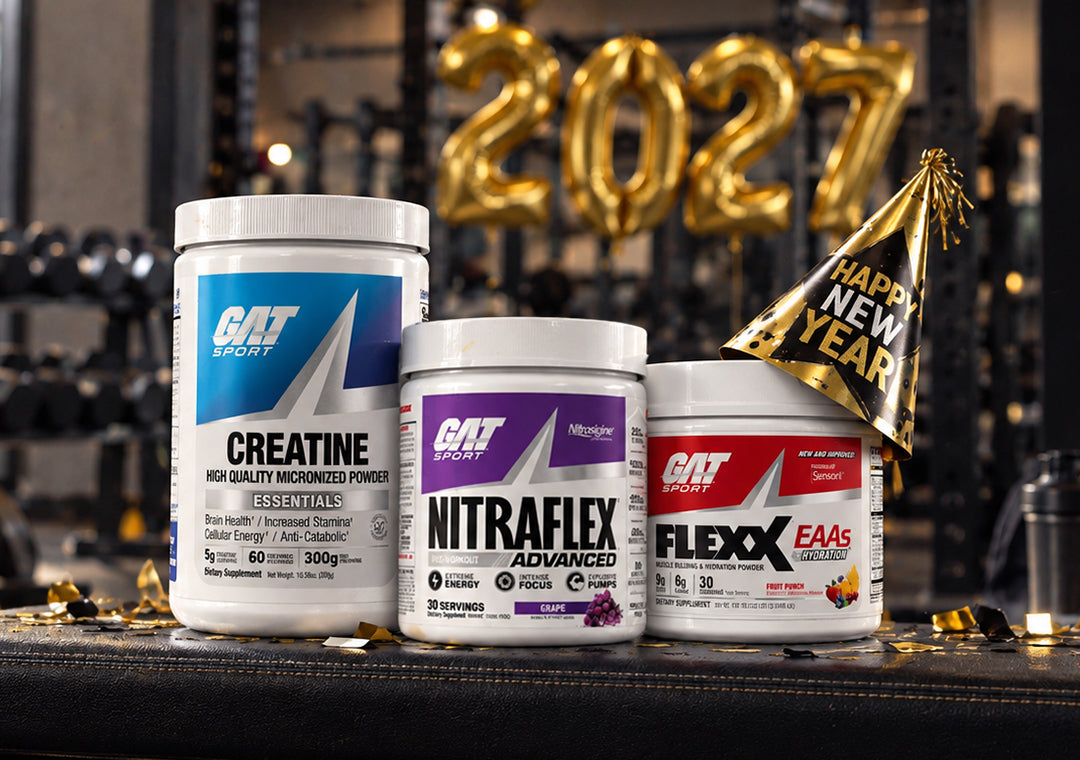
Step 4: Keep the daily creatine running and make it effortless. This is the week Creatine Chews were built for. Each 4-chew serving delivers 5 grams of creatine monohydrate, a full daily dose in the 3 to 5 gram range that supports high-intensity performance and training adaptations and is safe for long-term daily use [6], with no shaker, no powder, and no counter space in a kitchen that has none to spare. One bottle holds 30 servings, which covers this week and the month behind it. Leave it next to the coffee maker, four chews with breakfast, and the daily habit survives the week on autopilot, training days and turkey days alike.
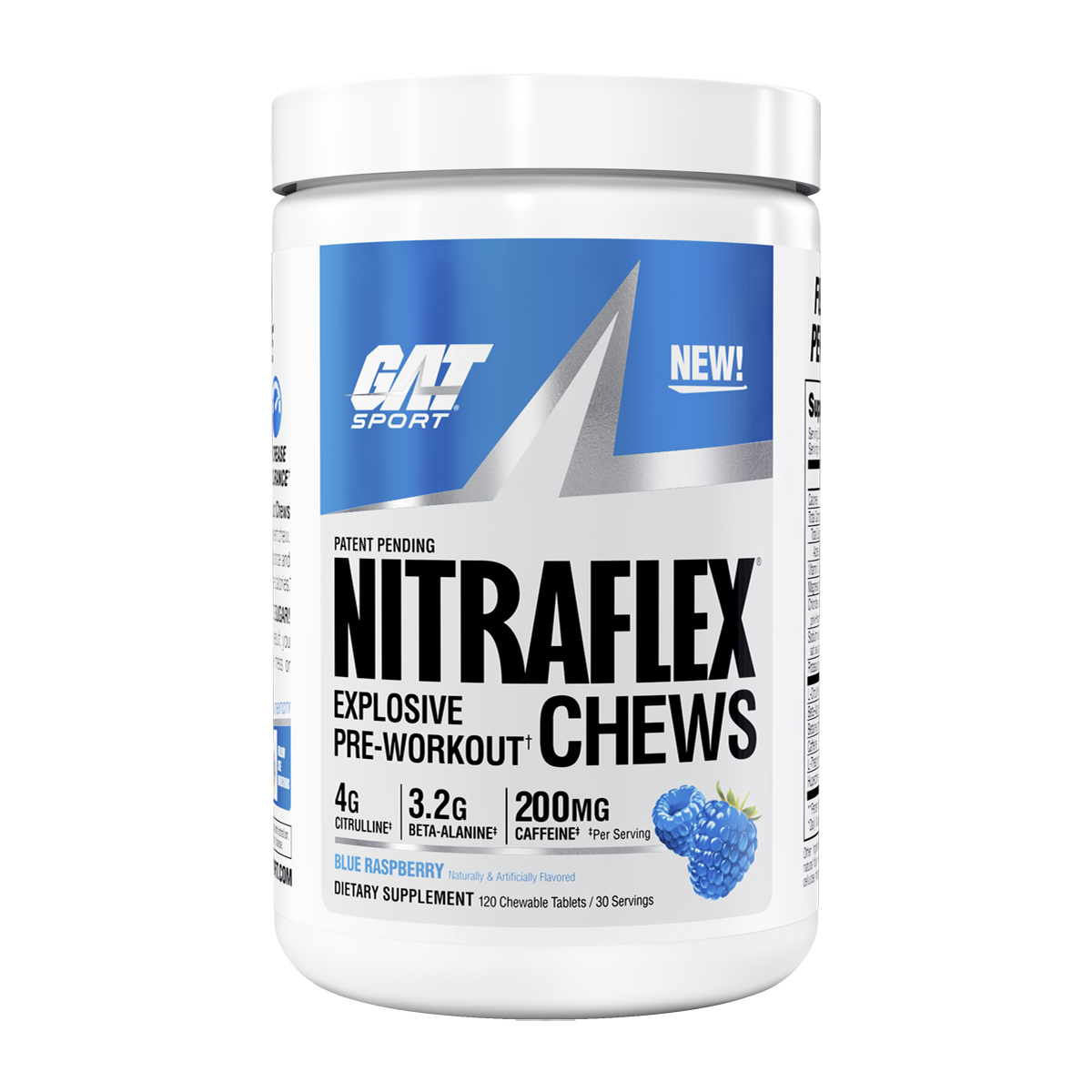
Step 5: Start the early sessions right and respect the clock on late ones. The realistic window for holiday training is early, before the kitchen wakes up or the airport calls, and Nitraflex Chews exist for exactly that compressed morning: 200 milligrams of caffeine per serving, taken shortly before the session, no mixing, no prep, done before the house stirs. The two chews in the cabinet never compete, because they work on different clocks entirely: creatine is the everyday chronic habit, while the Nitraflex serving is acute, deployed only when a session starts. One timing note from the caffeine research keeps the pairing honest: individual responses vary, and caffeine taken late in the day can cost you sleep [7], so if the only slot the week offers is an evening session, train it without the caffeine serving and let the bar do the waking.
Step 6: Protect the sleep that travel attacks. Strange beds, early flights, late pie. Hold your wake time as steady as the week allows, keep the last caffeine early [7], and keep the nightly routine portable: ZMag travels in any bag and keeps daily zinc and magnesium intake covered through the stretch of the week most likely to scramble everything else.
The Whole Ask
Count what this plan actually requests from the most open week of the month: roughly 105 minutes of training across six days, four chews with breakfast, and a calendar entry made tonight. In exchange, you cross into December with your working weights intact, your streak alive, and none of the rebuilding the nine-day-layoff lifter spends early December doing.
Three sessions. That is the whole ask. Schedule them tonight and keep GAT Sport Creatine Chews on the counter all week, at gatsport.com.
Key Takeaways
- Thanksgiving week has more free hours than any week in November; the plan that fits it is three sessions, not zero and not five.
- A complete week off produced smaller strength gains than continuous training, while short breaks cause only limited losses, so train the week but don't panic over one missed session.
- Strength holds when intensity stays high as volume drops: two heavy full-body days at normal working weights, three sets per lift, plus one 25-minute circuit built on multi-joint moves.
- Every session has a home or hotel swap, so location never cancels training.
- Keep daily creatine running with a 5-gram serving of Creatine Chews each morning, use Nitraflex Chews for early sessions only, and keep late-day caffeine away from your sleep.
Frequently Asked Questions
Should I take the week off from the gym for Thanksgiving?
The research says no, but it also says relax. A complete week off mid-program produced smaller strength gains than training through, so the zero-session week has a real cost, while short-term detraining research shows brief breaks cause only limited strength loss, so nothing catastrophic happens either. Three focused sessions capture nearly everything training through offers while fitting the week you'll actually have.
What if I can only train twice during Thanksgiving week?
Keep the two heavy full-body sessions and drop the middle circuit, because the heavy days carry the maintenance effect. Strength holds when working weights stay normal even as total volume falls, so Tuesday's squat, bench, and row plus a weekend deadlift, press, and chin-up session at three hard sets each preserves your block almost entirely. Two real sessions beat five imaginary ones every single November.
What is a good hotel workout for Thanksgiving week?
Mirror the plan with what the room offers. Heavy day: the heaviest goblet squats available for three sets of eight, weighted push-ups, and single-arm rows, all taken seriously. Circuit day: bodyweight squats, lunges, push-ups, band rows, and planks for three brisk rounds in 25 minutes. A single resistance band in the suitcase upgrades everything, and honest effort covers the gap the equipment leaves.
When should I take pre-workout if I'm training late in the day?
Cautiously or not at all. The caffeine research shows individual responses vary and that caffeine taken too close to bedtime can disrupt sleep, which is the one resource holiday travel already attacks. For morning and midday sessions, 200 milligrams shortly before training works cleanly; for evening sessions, train without the stimulant serving and protect the night, because this week recovery outranks intensity.
Do I still need creatine on rest days and holidays?
Yes, and this is the whole mechanism. Creatine works by keeping muscle stores saturated through consistent daily intake of 3 to 5 grams, not by timing around workouts, so Thursday's serving matters exactly as much as Tuesday's. A chewable 5 gram serving makes the habit survive any kitchen, car, or airport, which is precisely why it anchors this week's plan.
References
- Coleman, Max, et al. "Gaining More from Doing Less? The Effects of a One-Week Deload Period during Supervised Resistance Training on Muscular Adaptations." PeerJ, vol. 12, 2024, article e16777, doi:10.7717/peerj.16777.
- Mujika, Iñigo, and Sabino Padilla. "Detraining: Loss of Training-Induced Physiological and Performance Adaptations. Part I: Short Term Insufficient Training Stimulus." Sports Medicine, vol. 30, no. 2, 2000, pp. 79-87, doi:10.2165/00007256-200030020-00002.
- Spiering, Barry A., et al. "Maintaining Physical Performance: The Minimal Dose of Exercise Needed to Preserve Endurance and Strength over Time." Journal of Strength and Conditioning Research, vol. 35, no. 5, 2021, pp. 1449-1458, doi:10.1519/JSC.0000000000003964.
- Kellmann, Michael, et al. "Recovery and Performance in Sport: Consensus Statement." International Journal of Sports Physiology and Performance, vol. 13, no. 2, 2018, pp. 240-245, doi:10.1123/ijspp.2017-0759.
- Iversen, Vegard M., et al. "No Time to Lift? Designing Time-Efficient Training Programs for Strength and Hypertrophy: A Narrative Review." Sports Medicine, vol. 51, no. 10, 2021, pp. 2079-2095, doi:10.1007/s40279-021-01490-1.
- Kreider, Richard B., et al. "International Society of Sports Nutrition Position Stand: Safety and Efficacy of Creatine Supplementation in Exercise, Sport, and Medicine." Journal of the International Society of Sports Nutrition, vol. 14, 2017, article 18, doi:10.1186/s12970-017-0173-z.
- Guest, Nanci S., et al. "International Society of Sports Nutrition Position Stand: Caffeine and Exercise Performance." Journal of the International Society of Sports Nutrition, vol. 18, no. 1, 2021, article 1, doi:10.1186/s12970-020-00383-4.
Frequently asked questions
What is the main takeaway from this article?
“The Thanksgiving Week Training Plan: Three Sessions, Zero Excuses” is designed to turn practical training and nutrition guidance into clear actions you can apply to your routine.
How should I put this advice into practice?
Start with one recommendation, apply it consistently, and adjust it to your goals, training experience, and recovery needs.