


Food first is good advice and a bad excuse. Both things can be true, which is exactly why this debate never ends. On one side stand the supplement enthusiasts with a cabinet full of powders and pills, convinced they need every one. On the other stand the purists who insist that anyone eating "real food" needs nothing else, and who use "food first" as a reason to dismiss the entire category. Both camps are partly right and partly wrong, and the truth sits in the sensible middle.
The result of this endless argument is that lifters make one of two mistakes. They either over-rely on supplements, spending money on a pile of products that do little, or they dismiss all supplements on principle and miss the small handful that genuinely earn their place. Let us cut through the noise and separate what matters from what does not.
Do You Really Need Supplements?
You do not need most supplements, but a small number are genuinely worth taking. The foundation of your nutrition should always be whole food, which no pill can replace. However, a few well-studied supplements, notably creatine, omega-3 fatty acids, and a daily multivitamin to cover common dietary gaps, have strong evidence and real practical value. The smart approach is to build your diet first, then add only the few supplements that close a real gap. Here are the myths that keep people from getting this right.
Myth 1: "If you eat well, you do not need any supplements."
This is the purist's overstatement. While a good diet is the non-negotiable foundation, the claim that a well-fed person has zero gaps does not hold up against the data. Analysis of large, nationally representative U.S. survey data found that inadequate intakes of key micronutrients are pervasive across the population, with a substantial percentage of adults falling below the estimated average requirement for nutrients like vitamin A, vitamin C, vitamin D, and vitamin E [1]. Even people trying to eat well frequently miss the mark on specific nutrients.
The takeaway: "Eating well" and "meeting every nutrient need" are not the same thing. A daily multivitamin, like Men's Multi + Test, is sensible insurance against the common gaps that even a decent diet leaves behind, providing a foundation of essential vitamins and minerals so a shortfall does not quietly undercut your health.
Myth 2: "Supplements can replace a poor diet."
This is the enthusiast's error, and it is just as wrong as the purist's. No amount of supplementation compensates for a foundation of poor eating. Whole foods deliver a complex matrix of protein, fiber, healthy fats, and thousands of compounds that no pill replicates. The very research supporting supplementation frames it as filling gaps in an otherwise sound diet, not as a substitute for one [1]. The word "supplement" means exactly what it says: an addition to, not a replacement for, real food.
The takeaway: Build the diet first, always. Prioritize whole foods and adequate protein, then use supplements to fill the specific gaps that remain. If your diet is a mess, fix that before spending a dollar on powders.
Myth 3: "Creatine is a niche supplement only for bodybuilders."
Creatine suffers from an image problem, dismissed by many as something only serious lifters need. In reality, it is one of the most studied and broadly useful supplements available. The ISSN position stand on creatine concludes that creatine monohydrate is the most effective ergogenic nutritional supplement available for increasing high-intensity exercise capacity and lean body mass during training [2]. Its benefits apply to anyone doing resistance training, not just competitors. And its value may extend beyond muscle: a meta-analysis found creatine supplementation had positive effects on measures of memory, attention, and processing speed in adults [3].
The takeaway: Creatine is not niche; it is a foundational supplement for almost anyone who trains. Creatine Monohydrate is the well-studied form, and because it works through daily saturation, consistency is what matters. It is one of the few supplements that clearly earns its place.
Myth 4: "You get all the omega-3s you need from a normal diet."
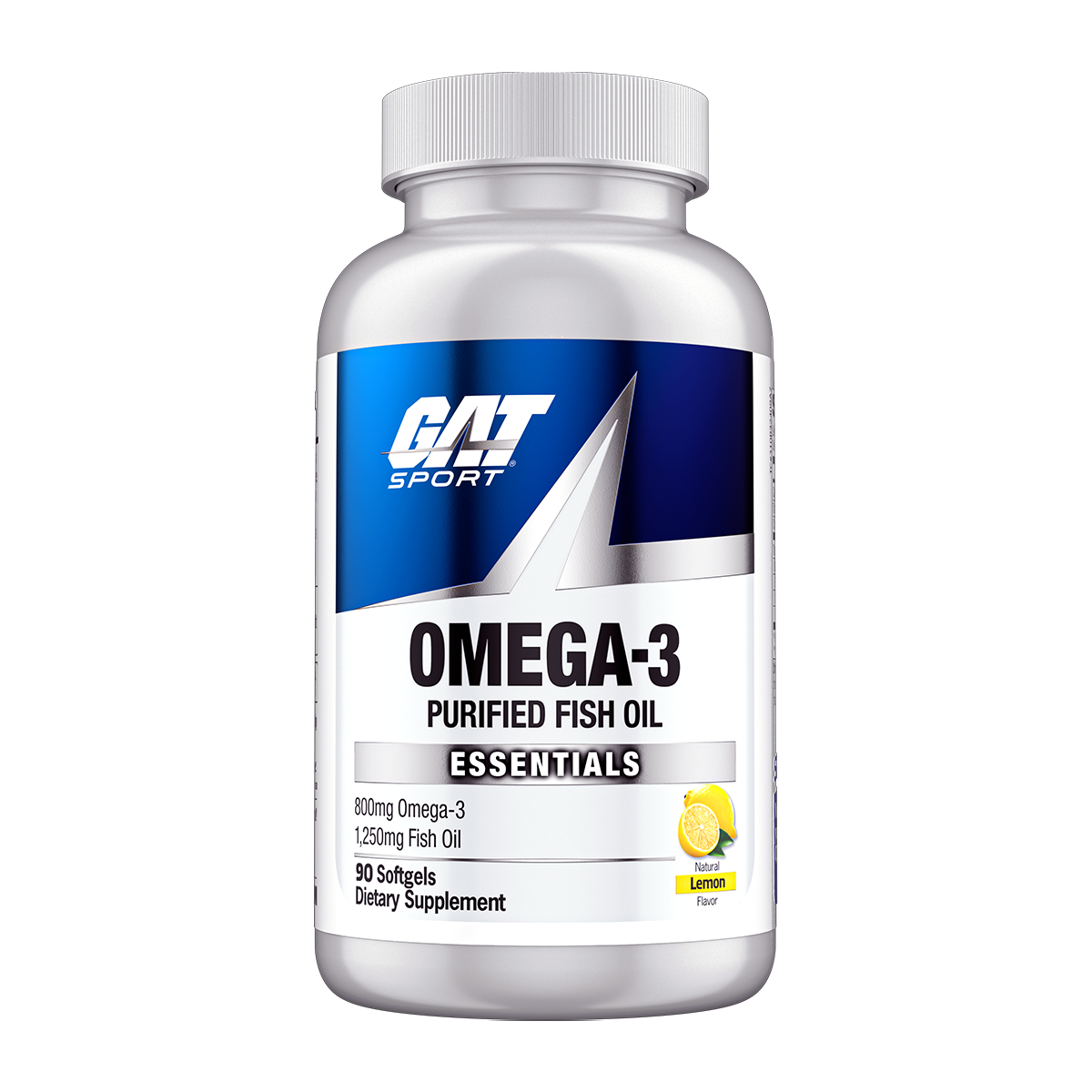
Most people assume their diet covers this base, but unless you regularly eat fatty fish, you likely fall short on the omega-3 fatty acids EPA and DHA. These fats play important roles in heart, brain, and overall health, and the gap is common. The American Heart Association recognizes that omega-3 supplementation supports cardiovascular health, and for most people who do not eat enough fish, closing that gap through diet alone is difficult [4].
The takeaway: Omega-3s are one of the clearest examples of a supplement filling a genuine, widespread dietary gap. GAT Sport Omega-3 Purified Fish Oil is a clean, convenient way to ensure you are getting these important fats, supporting your heart, recovery, and long-term health when your diet falls short.
Myth 5: "More supplements means better results."
This is the mindset that fills bathroom cabinets with dozens of half-used bottles. The belief that if a few supplements help, more must help more, leads to wasted money and clutter, not better results. The truth is that only a small number of supplements have strong evidence behind them. The vast majority of products on the shelf offer little to no benefit for a healthy person eating a reasonable diet. Chasing every new product is the opposite of a smart, evidence-based approach.
The takeaway: Be a minimalist. A short, focused list of proven supplements, like omega-3s, creatine, and a multivitamin, beats a cabinet full of unproven ones every time. Quality and evidence matter far more than quantity.

The Honest Bottom Line
So, do you really need supplements, or just better food? The honest answer is both, in the right order. Better food is the foundation, and it comes first, always. No supplement rescues a poor diet, and anyone selling you that idea is selling a fantasy. But once your diet is solid, a small, evidence-based handful of supplements genuinely earns a place by filling real gaps that food alone often leaves.
The trick is to reject both extremes. Do not dismiss all supplements on principle, and do not over-rely on them as a shortcut. Build the plate first, then add the few proven products, creatine, omega-3s, and a daily multivitamin, that close the gaps the research actually identifies. That is the sensible middle ground where real results live.
Find out which supplements actually earn a spot in your routine. Then build the foundation, fill the gaps, and compete harder with GAT Sport at gatsport.com.
Key Takeaways
- Whole food is the non-negotiable foundation; no supplement can replace a good diet.
- A small, evidence-based handful of supplements genuinely earns a place by filling real dietary gaps.
- Micronutrient inadequacies are common even in people who eat reasonably well, which is where a multivitamin helps.
- Creatine and omega-3s are among the best-supported supplements, useful well beyond just competitive lifters.
- Reject both extremes: do not dismiss all supplements, and do not over-rely on them; build the diet first, then fill gaps.
Frequently Asked Questions
Do you really need supplements?
You do not need most supplements, but a small number are genuinely worth taking. Whole food should always be your foundation, and no pill can replace a good diet. That said, a few well-studied supplements, notably creatine, omega-3 fatty acids, and a daily multivitamin to cover common gaps, have strong evidence and real practical value. Build the diet first, then add only the few that close a real gap.
Which supplements are actually worth taking?
For most active people, the short list is creatine, omega-3 fatty acids, and a daily multivitamin. Creatine is the most studied ergogenic supplement and supports strength and lean mass. Omega-3s fill a common gap for people who do not eat much fatty fish. A multivitamin insures against widespread micronutrient shortfalls. Beyond these, most products offer little benefit for a healthy person eating well.
Can supplements replace a healthy diet?
No. Supplements are meant to fill gaps in an otherwise sound diet, not to replace one. Whole foods provide a complex matrix of protein, fiber, healthy fats, and countless compounds that no pill replicates. If your diet is poor, fixing it should always come before spending money on supplements, because no amount of supplementation compensates for a weak nutritional foundation.
Is creatine only for bodybuilders?
No. Creatine is one of the most broadly useful and well-studied supplements available, beneficial for anyone doing resistance training, not just competitors. It supports high-intensity exercise capacity and lean body mass, and emerging research suggests it may also modestly benefit cognition. It works through daily saturation, so consistency matters more than timing, and creatine monohydrate is the proven form.
Do I need a multivitamin if I eat healthy?
Possibly, because "eating healthy" and "meeting every nutrient requirement" are not the same thing. Large population surveys show that inadequate intakes of nutrients like vitamins A, C, D, and E are common even among people who eat reasonably well. A daily multivitamin is inexpensive insurance against these common gaps, working best as a supplement to a whole-food diet rather than a replacement.
References
- Reider, Carroll A., et al. "Inadequacy of Immune Health Nutrients: Intakes in US Adults, the 2005-2016 NHANES." Nutrients, vol. 12, no. 6, 2020, article 1735, doi:10.3390/nu12061735.
- Kreider, Richard B., et al. "International Society of Sports Nutrition Position Stand: Safety and Efficacy of Creatine Supplementation in Exercise, Sport, and Medicine." Journal of the International Society of Sports Nutrition, vol. 14, no. 18, 2017, doi:10.1186/s12970-017-0173-z.
- Xu, Chen, et al. "The Effects of Creatine Supplementation on Cognitive Function in Adults: A Systematic Review and Meta-Analysis." Frontiers in Nutrition, vol. 11, 2024, article 1424972, doi:10.3389/fnut.2024.1424972.
- Siscovick, David S., et al. "Omega-3 Polyunsaturated Fatty Acid (Fish Oil) Supplementation and the Prevention of Clinical Cardiovascular Disease: A Science Advisory from the American Heart Association." Circulation, vol. 135, no. 15, 2017, pp. e867-e884, doi:10.1161/CIR.0000000000000482.