


Fall is the most underrated training season of the year. The brutal heat breaks, the vacation chaos settles, and the natural rhythm of autumn brings tighter schedules and a clean reason to chase numbers again. While summer training is about surviving the heat and holding your physique together, fall is when you can put your head down and build something. Cooler weather makes hard sessions feel easier, and the back-to-routine energy of September is the perfect fuel for a focused push.
Yet most lifters waste it. They drift into autumn with no particular goal, training by feel, showing up without intent, and letting the single best building window of the year slip past them. By the time the holidays arrive, they have nothing to show for three prime months. The fix is simple but requires a decision: pick a target, build a structured block to reach it, and show up with purpose. Here is how to turn fall into a season of personal records.
How Do You Build Training Momentum in the Fall?
You build fall training momentum by setting a specific, measurable goal, then working backward to build a structured training block that progressively drives you toward it. A clear target focuses your effort and gives every session a purpose, while progressive overload organized into a proper plan is what actually produces strength gains. Instead of training by feel, you follow a map. Add consistent effort and smart fueling, and the cool, focused months of fall become the most productive of your year.
Here is how to build that plan.
Why a Goal and a Plan Beat Training by Feel
The difference between a productive fall and a wasted one usually comes down to structure. Training with a specific goal and an organized plan consistently outperforms showing up and winging it.
A Clear Target Focuses Everything
A specific, measurable goal transforms how you train. "Get stronger" is a wish; "add 20 pounds to my squat by Thanksgiving" is a target you can build a plan around. A concrete goal tells you exactly what to train, how to progress, and how to measure success, and it gives every session a reason to exist. When you know precisely what you are chasing, the decision to show up and train hard becomes far easier, because each workout is a visible step toward something you have committed to.
Structure Produces Strength
Here is where the science is decisive. Organizing your training into a planned, progressive structure, known as periodization, produces better results than unstructured training. A meta-analysis comparing the two found that periodized resistance training tends to produce greater gains in maximal strength than non-periodized training [1]. Planning how your training progresses over weeks, rather than doing the same thing or random things each session, is what drives strength forward.
The foundation underneath any good plan is progressive overload: systematically doing more over time, whether more weight, more reps, or more quality sets. Research on resistance training confirms that strength and muscle are built by progressively challenging the muscle through sufficient, well-applied training [2], and that those hard sets need to be taken reasonably close to failure to maximize the stimulus [3]. A structured block is simply the vehicle that organizes progressive overload into a path toward your goal.
A 12-Week Fall Training Block
Here is a macro strategy that any performance lifter can apply to their own lifts, whether your goal is a bigger squat, bench, deadlift, or a combination. It organizes 12 weeks into three progressive phases, each building on the last. Fill in the specific exercises, sets, and reps to match your sport and your target, but follow the macro arc.
Weeks 1 to 4: Volume Accumulation
The first phase builds a base of work capacity and muscle. Train with moderate loads, roughly 65 to 75 percent of your one-rep max on the main lifts and prioritize higher volume: more total sets and reps in the 8 to 12 range. This phase accumulates the training volume that drives muscle growth and prepares your body and connective tissue for the heavier work ahead. Keep 1 to 2 reps in reserve on most sets. You should finish this block feeling worked but not broken, with a solid foundation laid.
Weeks 5 to 8: Intensification
Now you shift toward strength. Gradually increase the load to roughly 75 to 87 percent of your max while reducing the rep ranges into the 4 to 6 zone and trimming some volume to manage fatigue. This phase teaches your body to express the muscle and work capacity you built in phase one as raw strength. The weights get heavier, the sets get more focused, and your main lifts start climbing. Continue to progress the load week over week, adding weight or reps whenever you can.
Weeks 9 to 12: Peaking and PR Attempts
The final phase sharpens everything to a point. Load climbs to 87 percent and above on the main lifts, reps drop into the 1 to 3 range, and total volume comes down further to shed accumulated fatigue and let your strength surface. Late in this phase, once you feel recovered and sharp, you attack your PR attempts. This is where the whole block pays off: the volume you accumulated, the strength you built, and the fatigue you have now stripped away combine to let you hit numbers you could not have touched twelve weeks earlier. Do not grind through excessive fatigue here; the goal is freshness and a strong, confident PR.
This three-phase arc, base, strength, peak, is a proven way to organize progressive overload, and it reflects exactly why structured periodization outperforms training by feel [1]. Adjust the specifics to your lifts but respect the progression.
Fueling the Block
A focused block deserves fueling that matches the intent, especially on your heaviest days.
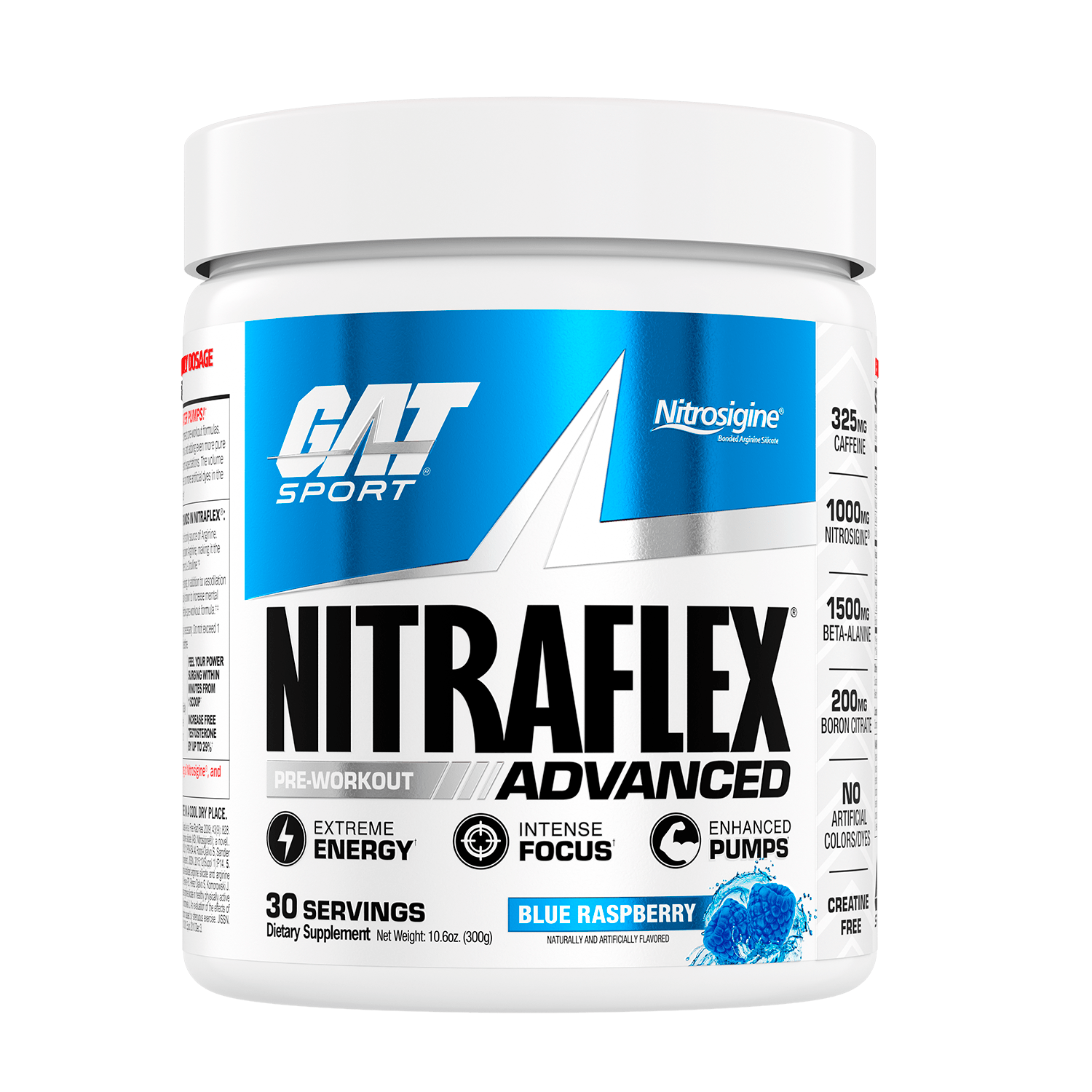
For your hardest sessions, particularly the demanding intensification and peaking phases, Nitraflex Advanced delivers the energy and focus to attack heavy work with real intent. The ISSN position stand on caffeine confirms that pre-workout supplements containing caffeine enhance both anaerobic and aerobic performance at doses of 3 to 6 milligrams per kilogram of body mass [4], which is exactly what a heavy PR-focused session demands. On busy fall days when you are training between commitments, Nitraflex Chews deliver that same focused pre-workout support in a portable, no-mix format so a hectic schedule never costs you a session.
To support the whole block, keep creatine consistent. The ISSN position stand on creatine concludes that creatine monohydrate is the most effective ergogenic nutritional supplement available for increasing high-intensity exercise capacity and lean body mass during training [5]. Creatine Monohydrate works through daily saturation, so a daily dose across all 12 weeks supports the training capacity that drives your progress toward the goal.
Own the Best Season of the Year
Fall rewards the lifter with a plan. While others drift through autumn training by feel and arrive at the holidays with nothing to show, you can use these focused months to build real, measurable strength and hit records you will carry into the new year. It starts with a single decision: choose a target, commit to it, and build the block that gets you there.
Set your fall PR goal and map the block this week. Then put your head down, attack it, and compete harder all season long with GAT Sport at gatsport.com.
Key Takeaways
- Fall is the best building season of the year, and it rewards lifters who train with a specific goal and a plan.
- A clear, measurable target focuses every session and makes showing up with intent far easier.
- Periodized, structured training tends to produce greater strength gains than training by feel.
- A 12-week block progressing through volume accumulation, intensification, and peaking is a proven way to organize progressive overload toward a PR.
- Anchor heavy days with a focused pre-workout and keep creatine consistent across the whole block.

Frequently Asked Questions
How do you build training momentum in the fall?
You build momentum by setting a specific, measurable goal and then building a structured training block that progressively drives you toward it. A clear target gives every session purpose, and periodized progressive overload is what actually produces strength gains. Rather than training by feel, you follow a plan that maps out how your training advances week to week, which turns the focused months of fall into your most productive training of the year.
What is a good length for a training block?
Twelve weeks is an excellent length for a focused block. It is long enough to progress through distinct phases, typically a volume-building phase, a strength-focused phase, and a peaking phase, while remaining short enough to stay motivated and focused on a specific goal. This structure lets you accumulate training volume early, convert it to strength, then shed fatigue to express your best numbers at the end.
Does periodized training really work better?
The research supports it. A meta-analysis comparing periodized and non-periodized resistance training found that periodized training tends to produce greater gains in maximal strength. Organizing your training into planned, progressive phases, rather than doing the same thing every session or training randomly, helps drive continued strength gains and manage fatigue. Structure gives your progressive overload direction and purpose.
How do you peak for a PR?
You peak by gradually increasing load while reducing training volume in the final weeks, which sheds accumulated fatigue and lets your built-up strength surface. After a phase of heavier, lower-rep work, you trim volume, keep intensity high on a few key sets, and then attempt your PR once you feel recovered and sharp. The goal in the final phase is freshness, not grinding through fatigue.
What should you take before a heavy training session?
A pre-workout containing caffeine can enhance performance for heavy sessions, with research supporting doses of 3 to 6 milligrams per kilogram of body mass. A focused pre-workout supports the energy and mental drive that heavy, PR-focused training demands. Keeping creatine consistent daily also supports high-intensity training capacity over a full block, since it works through saturation rather than any single dose.
References
- Williams, Tyler D., et al. "Comparison of Periodized and Non-Periodized Resistance Training on Maximal Strength: A Meta-Analysis." Sports Medicine, vol. 47, no. 10, 2017, pp. 2083-2100, doi:10.1007/s40279-017-0734-y.
- Currier, Brad S., et al. "Resistance Training Prescription for Muscle Strength and Hypertrophy in Healthy Adults: A Systematic Review and Bayesian Network Meta-Analysis." British Journal of Sports Medicine, vol. 57, no. 18, 2023, pp. 1211-1220, doi:10.1136/bjsports-2023-106807.
- Refalo, Martin C., et al. "Influence of Resistance Training Proximity-to-Failure on Skeletal Muscle Hypertrophy: A Systematic Review with Meta-Analysis." Sports Medicine, vol. 53, no. 3, 2023, pp. 649-665, doi:10.1007/s40279-022-01784-y.
- Guest, Nanci S., et al. "International Society of Sports Nutrition Position Stand: Caffeine and Exercise Performance." Journal of the International Society of Sports Nutrition, vol. 18, no. 1, 2021, article 1, doi:10.1186/s12970-020-00383-4.
- Kreider, Richard B., et al. "International Society of Sports Nutrition Position Stand: Safety and Efficacy of Creatine Supplementation in Exercise, Sport, and Medicine." Journal of the International Society of Sports Nutrition, vol. 14, no. 18, 2017, doi:10.1186/s12970-017-0173-z.