

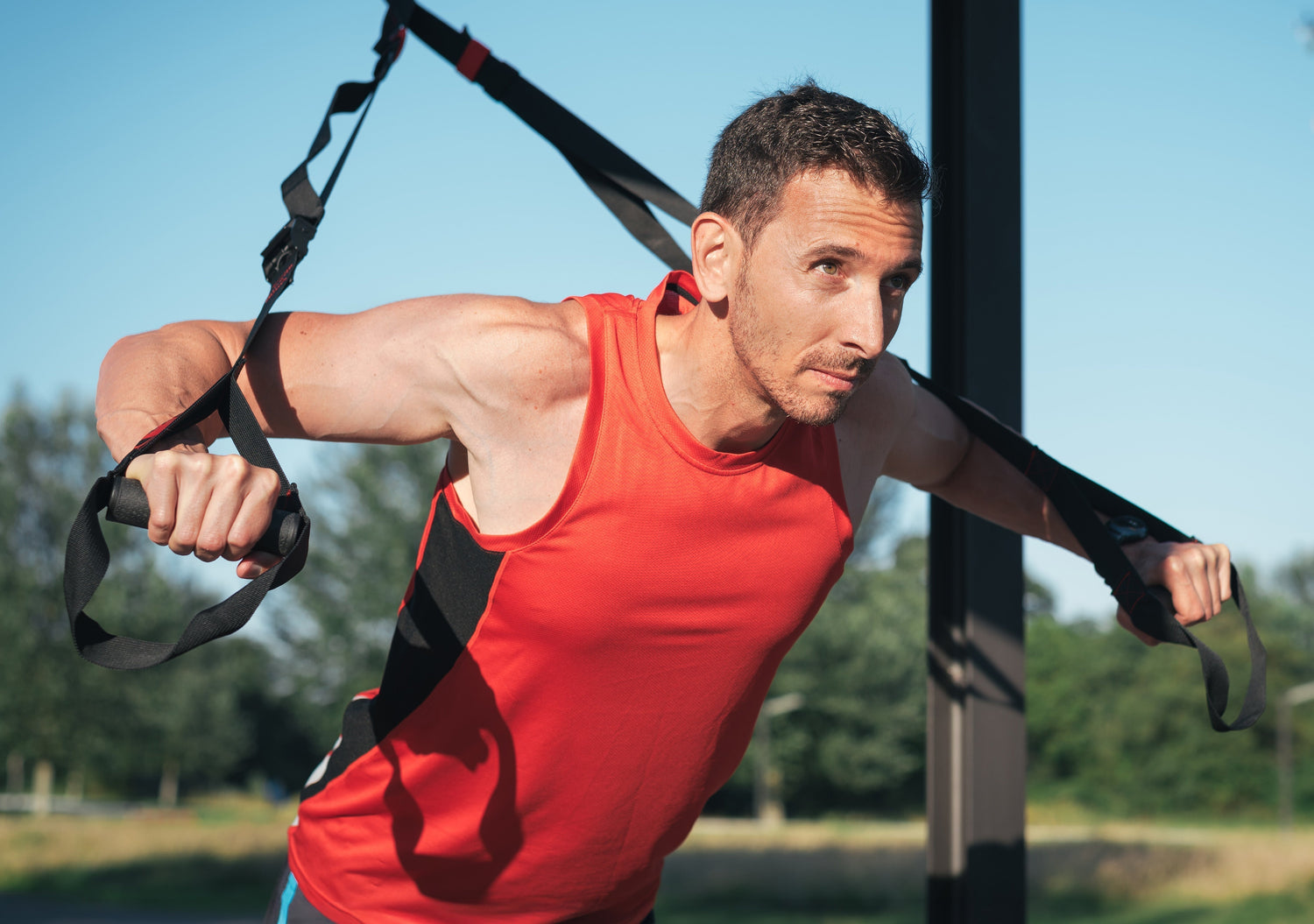
The lifter who trains for the next forty years quietly out-results the one training for the next four weeks. While one chases a summer look that fades by fall, the other is building something that compounds for decades: a stronger, more capable, more resilient body that pays dividends long after the beach season is forgotten.
Here is the assumption that costs so many people dearly. They treat strength training as a young person's game, something for building a physique in your twenties and thirties and quietly let it slide as life gets busy. In doing so, they miss its single biggest payoff, which arrives precisely when most people stop: in your 40s, 50s, and beyond. Strength training is not just about how you look now. It is one of the most powerful investments you can make in how you will live, move, and feel for the rest of your life. Here are six ways it pays off.
Why Is Strength Training Important as You Age?
Strength training is important as you age because it preserves the muscle, bone, and function that naturally decline over the years, supports metabolic and brain health, and is linked to living longer and staying independent. Starting in your 30s and 40s, you lose muscle and strength unless you actively train to keep them. Resistance training reverses much of that decline, protecting your ability to move, live independently, and stay healthy for decades. Here are the six specific payoffs.
1. You Preserve the Muscle That Aging Steals
From around your late 30s onward, you naturally lose muscle mass and strength in a process called sarcopenia, and left unchecked, it slowly erodes your strength and independence. Resistance training is the single most effective countermeasure. Research on older adults with age-related muscle loss shows that resistance training significantly improves muscle strength, muscle mass, and functional measures like getting out of a chair [1]. Every year you keep training, you are actively defending the muscle that aging would otherwise quietly strip away, raising your starting point for the decades ahead.
2. You Build and Protect Your Bones
Muscle is not the only tissue that declines with age. Bone density falls too, raising the risk of fractures that can be genuinely life-altering later in life. Strength training helps here as well. A meta-analysis of resistance training in older adults found that it produced positive effects on bone mineral density at key sites like the hip and spine, supporting a protective effect against the increasing risk of bone frailty in an older population [2]. The mechanical stress of loading your muscles also loads your bones, signaling them to stay strong. That is a payoff you cannot get from cardio alone.
3. You Support Metabolic Health and Body Composition
As you age, maintaining a healthy body composition becomes both harder and more important. Muscle is metabolically active tissue and preserving it through strength training supports your metabolism and helps you manage body composition over time. Beyond the muscle itself, the resistance-training habit is associated with meaningfully better long-term health outcomes. A large meta-analysis found that engaging in resistance training was associated with a lower risk of death from all causes, including cardiovascular disease and cancer [3]. Training for strength is training for metabolic resilience that serves you for decades.
4. You May Sharpen Your Brain
The payoffs of training are not only physical. Emerging research suggests creatine, one of the most studied supplements in strength training, may support cognitive function as well. A meta-analysis of creatine supplementation found significant positive effects on measures of memory, attention, and processing speed in adults [4]. Because the brain is metabolically demanding and creatine plays a role in cellular energy, supporting your creatine intake as you train may offer benefits that extend beyond the muscle. It is one more reason the long-game lifter has an edge.
5. You Stay Functional and Independent
Perhaps the most valuable payoff of all is the one that is easiest to take for granted until it is gone: the ability to live independently and do the things you want to do. The strength, muscle, and bone you build translate directly into real-world function, climbing stairs, carrying groceries, playing with grandchildren, catching yourself before a fall. The research on strength and aging consistently ties resistance training to preserved physical function and the capacity to keep performing daily tasks [1]. Grip strength, a simple marker of overall strength, is itself a powerful predictor of health outcomes, with lower strength strongly associated with a higher risk of death from any cause [5]. Training now is buying independence later.
6. You Invest in a Longer, Healthier Life
Step back and all these individual payoffs point to one conclusion: strength training is among the best long-term investments you can make in your lifespan and healthspan. The mortality research is striking. Beyond the all-cause mortality benefit already noted, grip strength has been shown to predict survival so powerfully that each meaningful decrease in strength is associated with a significantly higher risk of death [5]. Strength is not vanity; it is one of the clearest signals of a body built to last. Every session in your 40s and beyond is a deposit into decades of better living.
Support the Long Game
Training is the foundation, but a few well-chosen basics support the muscle, recovery, and overall health that the long game depends on.
Start with creatine. The ISSN position stand on creatine concludes that creatine monohydrate is the most effective ergogenic nutritional supplement available for increasing high-intensity exercise capacity and lean body mass during training [6]. That makes it especially valuable as you age and work to preserve muscle, with the possible cognitive benefits noted above as a bonus. Creatine Monohydrate works through daily saturation, so take a consistent daily dose and never skip it.
Two more basics round out the foundation. GAT Sport Omega-3 Purified Fish Oil supports heart and overall health, benefits that matter more with each decade, and which the American Heart Association recognizes for cardiovascular support, since most people do not get enough omega-3s through diet [7]. And because a varied diet gets harder to maintain over time, Men's Multi + Test helps fill the common micronutrient gaps that even a decent diet can leave behind [8], providing a daily foundation of essential vitamins and minerals. None of these replace the training or a good diet; they support the body you are building for the decades ahead.
Start Training for the Long Game
The choice in front of you is really about time horizon. Train for the next four weeks and you get a temporary result. Train for the next forty years and you get muscle that resists aging, bones that stay strong, a metabolism that holds, a brain that may stay sharper, and the independence to live fully well into your later decades. The dividends of strength compound, and the best time to start earning them is now.
See all six long-term payoffs and start training for the long game. Then go build a body that lasts, and compete harder for decades, with GAT Sport at gatsport.com.
Key Takeaways
- Strength training preserves the muscle and bone that naturally decline with age, protecting strength and independence.
- Resistance training is linked to lower all-cause mortality and better metabolic health across the lifespan.
- Grip strength is a powerful predictor of survival, making the strength you build a marker of a body built to last.
- Creatine supports muscle preservation with age and may offer modest cognitive benefits as a bonus.
- The payoffs of training compound over decades, so the long-game lifter out-results the one chasing short-term looks.
Frequently Asked Questions
Why is strength training important as you age?
Strength training is important as you age because it preserves the muscle, bone, and physical function that naturally decline over the years, supports metabolic and brain health, and is linked to living longer and staying independent. From your late 30s onward, you lose muscle and strength unless you train to keep them. Resistance training reverses much of that decline, protecting your ability to move, live independently, and stay healthy for decades.
Is it too late to start strength training in your 40s or 50s?
No. Research consistently shows that adults who begin resistance training later in life still gain significant improvements in muscle strength, mass, and function, even into their 70s and beyond. The body remains highly adaptable to training at any age. Starting now raises your baseline and slows the age-related decline in muscle and bone, so the sooner you begin, the greater the long-term payoff.
Does strength training really help you live longer?
The evidence links it strongly to longevity. A large meta-analysis found that resistance training is associated with a lower risk of death from all causes, cardiovascular disease, and cancer. Grip strength, a simple measure of overall strength, is itself a powerful predictor of survival. While no single habit guarantees a longer life, strength training is among the most reliable investments in both lifespan and healthspan.
Can strength training protect your bones?
Yes. A meta-analysis of resistance training in older adults found positive effects on bone mineral density at key sites like the hip and spine, supporting a protective effect against age-related bone frailty. The mechanical loading of your muscles during training also stresses your bones, signaling them to maintain density, which helps reduce the risk of fractures later in life.
Does creatine help older adults?
Creatine is particularly valuable with age because it supports the high-intensity training capacity and lean body mass that help preserve muscle. Emerging research also suggests it may modestly benefit cognition, with a meta-analysis finding positive effects on memory, attention, and processing speed in adults. It works through daily saturation, so consistency matters more than timing, and creatine monohydrate is the well-studied form.
References
- Chen, Nan, et al. "Effects of Resistance Training on Muscle Strength, Muscle Mass, and Physical Function in Older People with Sarcopenia: A Systematic Review and Meta-Analysis." Journal of the American Medical Directors Association, 2024, doi:10.1016/j.jamda.2024.105255.
- Massini, Danilo A., et al. "The Effect of Resistance Training on Bone Mineral Density in Older Adults: A Systematic Review and Meta-Analysis." Healthcare, vol. 10, no. 6, 2022, article 1129, doi:10.3390/healthcare10061129.
- Shailendra, Prathiyankara, et al. "Resistance Training and Mortality Risk: A Systematic Review and Meta-Analysis." American Journal of Preventive Medicine, vol. 63, no. 2, 2022, pp. 277-285, doi:10.1016/j.amepre.2022.03.020.
- Xu, Chen, et al. "The Effects of Creatine Supplementation on Cognitive Function in Adults: A Systematic Review and Meta-Analysis." Frontiers in Nutrition, vol. 11, 2024, article 1424972, doi:10.3389/fnut.2024.1424972.
- Leong, Darryl P., et al. "Prognostic Value of Grip Strength: Findings from the Prospective Urban Rural Epidemiology (PURE) Study." The Lancet, vol. 386, no. 9990, 2015, pp. 266-273, doi:10.1016/S0140-6736(14)62000-6.
- Kreider, Richard B., et al. "International Society of Sports Nutrition Position Stand: Safety and Efficacy of Creatine Supplementation in Exercise, Sport, and Medicine." Journal of the International Society of Sports Nutrition, vol. 14, no. 18, 2017, doi:10.1186/s12970-017-0173-z.
- Siscovick, David S., et al. "Omega-3 Polyunsaturated Fatty Acid (Fish Oil) Supplementation and the Prevention of Clinical Cardiovascular Disease: A Science Advisory from the American Heart Association." Circulation, vol. 135, no. 15, 2017, pp. e867-e884, doi:10.1161/CIR.0000000000000482.
- Engel, Matthew G., et al. "Micronutrient Gaps in Three Commercial Weight-Loss Diet Plans." Nutrients, vol. 10, no. 1, 2018, article 108, doi:10.3390/nu10010108.