

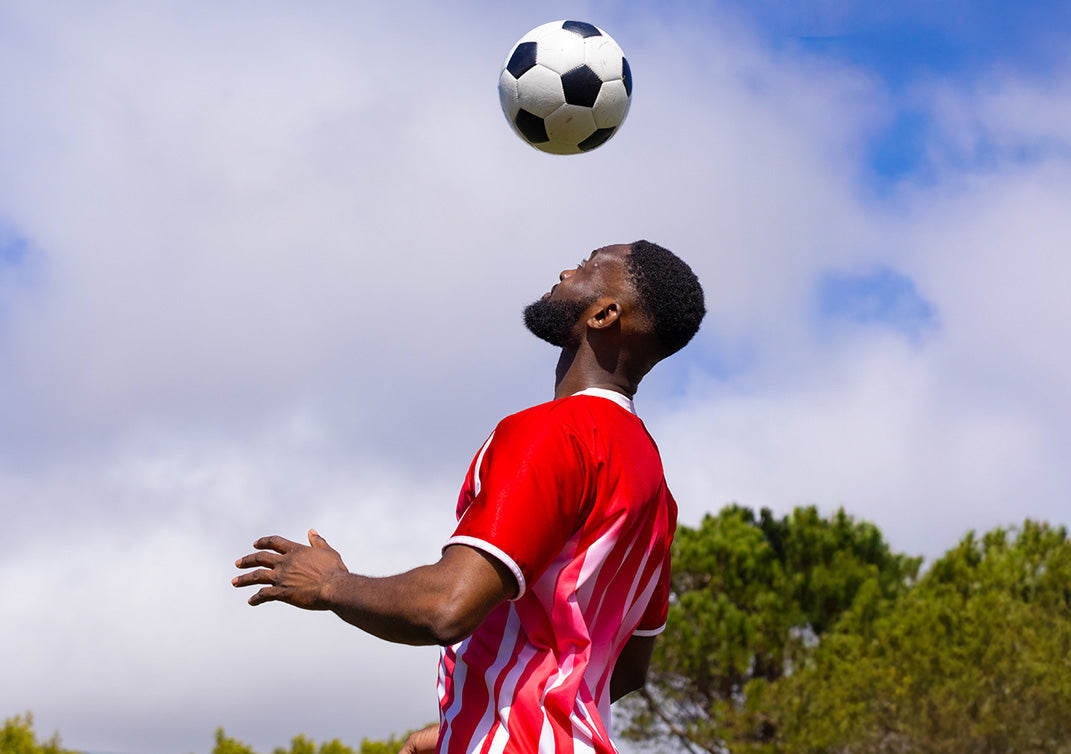
Soccer players run 7 miles per game in African heat. Your treadmill session in climate control looks cute. Here's what they know about endurance that you don't. As AFCON 2025 kicks off in Morocco this December 21st, elite players like Salah, Mané, and Osimhen will cover 10-14 kilometers per match in 30°C+ heat with 60% humidity. They'll maintain this pace for potentially 120 minutes in knockout rounds, executing precise passes while you're struggling to finish 30 minutes on an indoor bike when it's barely freezing outside. The gap between their performance and yours isn't genetics or talent. It's understanding how to build an endurance engine that performs regardless of conditions, and their protocols can transform your winter training from survival to dominance.
The Winter Endurance Crisis
Cold-weather cardio doesn't just feel harder; it measurably destroys performance. Perceived effort jumps 15-20% below 5°C because blood redirects to your core, reducing oxygen delivery to working muscles (1). Your legs literally receive less fuel while working harder to maintain the same pace. This isn't mental weakness; it's physiological reality.
Seasonal affective disorder compounds the problem. Shorter days crush serotonin and dopamine production, making indoor sessions feel like psychological torture rather than physical training (2). Add in cold's direct assault on muscle protein synthesis and increased inflammation markers post-exercise, and you understand why most people completely abandon cardio in winter (3).
The result is predictable and devastating lost aerobic base, decreased fat-burning capacity, and arriving at spring looking and feeling worse than you did in November. That summer cut becomes twice as hard because you spent winter avoiding the very training that maintains metabolic flexibility.
The AFCON Performance Protocol
Elite soccer demands a hybrid engine unlike any other sport: 10-14 km total distance combined with 200-300 meters of explosive sprinting per game (4). Players aren't just jogging; they're constantly transitioning between aerobic and anaerobic systems while making split-second decisions under fatigue.
The gold-standard training method proven in multiple studies transforms recreational athletes into endurance machines: 4 × 4-minute intervals at 90-95% max heart rate with 3-minute recovery jogs produces 8-12% VO₂max increases in just 8 weeks (5). This isn't just improvement; it's transformation of your cellular machinery.
High-intensity interval training consistently beats steady-state for fat loss while preserving muscle, even in cold conditions (6). Regular cold exposure combined with high-intensity work increases mitochondrial density and fat oxidation capacity, turning you into a more efficient energy-producing machine (7).
Your 8-Week Winter Domination Blueprint
Weekly Architecture
Monday: AFCON HIIT
6-10 × 4 minutes at 90-95% HRmax with 3-minute recovery jogs. This is where adaptation happens.
Tuesday: Recovery Foundation
Flexx EAAs recovery walk with mobility work. Active recovery accelerates adaptation.
Wednesday: Tempo Sustainment
30-45 minutes at 70-75% HRmax with Nitraflex Sport pre-workout. Building aerobic efficiency.
Thursday: Restoration
Complete rest or gentle yoga. Recovery is where fitness improves.
Friday: HIIT Repetition
Repeat Monday's protocol. Frequency drives adaptation.
Saturday: Long Slow Distance
60-90 minutes at 60-65% HRmax. Cold fat-burning zone optimization.
Sunday: Active Recovery
Light movement or complete rest based on recovery status.
The Stack Built for 120-Minute Performance
Nitraflex Hydration becomes your hero product, with 1 serving pre-workout plus intra-workout. The 6g of citrulline combined with electrolytes delivers 11% longer time-to-exhaustion in both heat and cold conditions (8). This isn't just hydration; it's performance extension when your body wants to quit.
Nitraflex Sport taken 30 minutes before HIIT or tempo sessions provides caffeine, theanine, and beta-alanine for crash-free energy that sustains through entire sessions rather than abandoning you halfway through.
Flexx EAAs at 10-15g during or post-workout reduces muscle breakdown by 30% during prolonged cardio while speeding glycogen replenishment (9). Every session becomes less catabolic, more anabolic, setting up superior recovery for the next bout.
Cold-Weather Performance Hacks
Start with a 10-minute indoor dynamic warm-up to prime your system before facing the cold. Layer moisture-wicking fabrics that maintain temperature without trapping sweat. Post-session, implement a 5-minute nasal breathing walk to downregulate stress response. Within 30 minutes, consume 400mg magnesium with your Flexx EAAs shake to accelerate recovery processes.
Expected Results Based on Research
Eight weeks following this protocol produces 8-12% VO₂max improvement, visible fat loss, and dramatically better 5K times (5). Extend to 16 weeks and you'll possess an aerobic engine that makes spring cutting effortless rather than torturous. Additional benefits include improved cold tolerance, enhanced mood despite seasonal challenges, and strengthened immunity when others are getting sick.
The Choice: Survive or Thrive
AFCON players don't "just run a lot." They engineer hybrid endurance systems that survive 120 minutes of chaos in brutal conditions. Their training isn't about suffering; it's about systematic adaptation that produces superior performance regardless of environment.
You can spend another winter on the treadmill watching Netflix, maintaining mediocrity, and arriving at spring soft and slow. Or you can implement the same protocols that allow elite athletes to perform in conditions that would break most people. The tools are available. The science is proven. The only variable is your decision.
References
- Castellani, John W., and Michael N. Tipton. (2016). Cold Stress Effects on Exposure Tolerance and Exercise Performance. Comprehensive Physiology, 6(1), 443-469.
- Lambert, Gavin W., et al. (2002). Effect of Sunlight and Season on Serotonin Turnover in the Brain. The Lancet, 360(9348), 1840-1842.
- Peake, Jonathan M., et al. (2017). Muscle Damage and Inflammation During Recovery From Exercise. Journal of Applied Physiology, 122(3), 559-570.
- Stølen, Truls, et al. (2005). Physiology of Soccer: An Update. Sports Medicine, 35(6), 501-536.
- Helgerud, Jan, et al. (2007). Aerobic High-Intensity Intervals Improve VO₂max More Than Moderate Training. Medicine & Science in Sports & Exercise, 39(4), 665-671.
- Milanović, Zoran, et al. (2015). Effectiveness of High-Intensity Interval Training (HIT) and Continuous Endurance Training for VO₂max Improvements. Sports Medicine, 45(11), 1469-1481.
- Ihsan, Mohammed, et al. (2013). Influence of Postexercise Cooling on Muscle Oxygenation and Blood Volume Changes. Medicine & Science in Sports & Exercise, 45(5), 876-882.
- Pérez-Guisado, Joaquín, and Philip M. Jakeman. (2010). Citrulline Malate Enhances Athletic Anaerobic Performance and Relieves Muscle Soreness. Journal of Strength and Conditioning Research, 24(5), 1215-1222.
- Jackman, Sarah R., et al. (2017). Branched-Chain Amino Acid Ingestion Stimulates Muscle Myofibrillar Protein Synthesis Following Resistance Exercise. Frontiers in Physiology, 8, 390.