

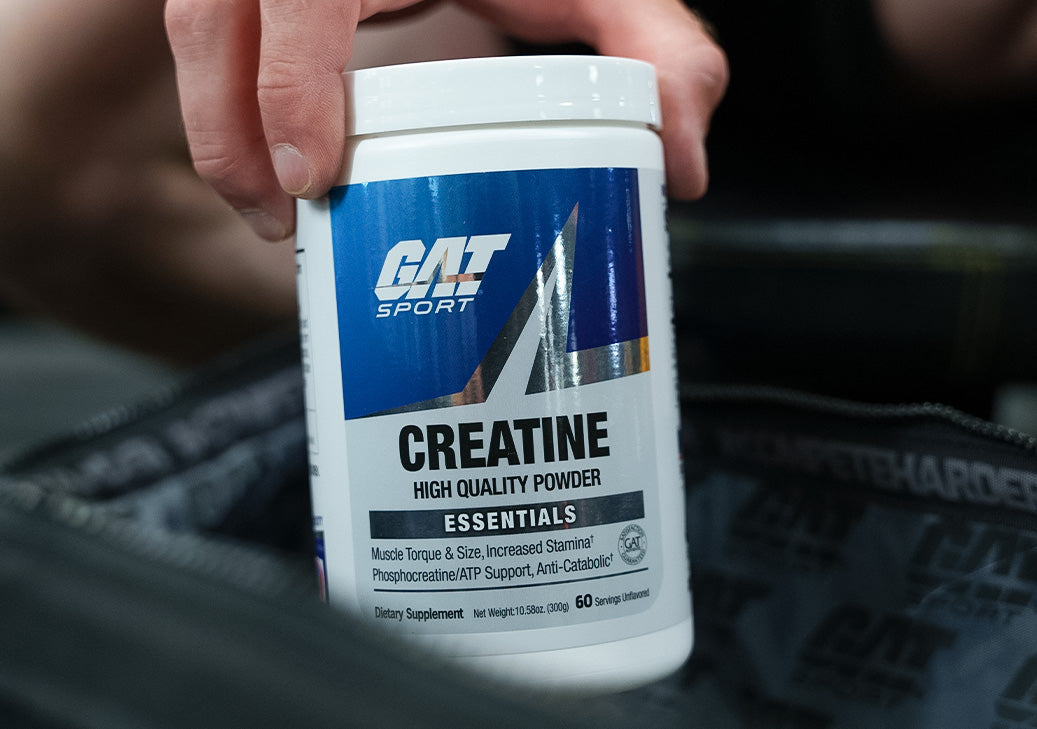
Before creatine became mainstream, gym culture invented a mythology around it. Hair loss. Kidney damage. Dangerous bloating. "It's basically a steroid." None of it holds up to peer review.
Creatine monohydrate is the most researched supplement in sports nutrition history, with thousands of studies spanning decades. Yet myths born on internet forums and outdated gym lore continue to scare away millions of athletes who could benefit from it. These misconceptions have persisted despite overwhelming evidence from the International Society of Sports Nutrition (ISSN) and dozens of independent reviews showing creatine is safe, effective, and beneficial for virtually every population: from weekend warriors to elite athletes, young lifters to older adults.
The truth is simple: creatine is a naturally occurring compound that helps your muscles produce energy faster during high-intensity efforts. It is not a hormone, not a drug, and not dangerous when used at recommended doses. Below, we bust the most persistent myths with real science and explain what creatine actually does for your body: no hype, no gym-floor rumors, just verifiable peer-reviewed evidence.

Myth 1: Creatine Causes Hair Loss
This myth exploded after a single 2009 study on rugby players that reported a small rise in dihydrotestosterone (DHT) after a creatine loading phase. DHT is linked to male-pattern baldness in genetically predisposed individuals, so the leap to "creatine causes baldness" spread like wildfire.
The reality? That early finding has never been reliably replicated. A comprehensive 2021 review of common questions and misconceptions around creatine found no consistent link between supplementation and increased DHT or hair loss [1]. More decisively, a 2025 randomized, double-blind, placebo-controlled trial, the first to directly measure hair follicle health and growth parameters, examined resistance-trained men supplementing with 5 g of creatine monohydrate daily for 12 weeks. Researchers measured hormone levels, hair density, follicular unit count, and cumulative hair thickness. Results showed no significant differences in DHT levels, DHT-to-testosterone ratio, or any hair-related outcomes between the creatine and placebo groups. Total and free testosterone changed over time independently of supplementation. The authors concluded that creatine does not contribute to hair loss, providing strong evidence against the longstanding claim [2].
If you are genetically prone to androgenetic alopecia, current evidence indicates creatine supplementation will not meaningfully accelerate it. The myth persists because one small, unreplicated observation made for a catchy headline.
Myth 2: Creatine Damages Your Kidneys (or Liver)
This myth stems from the fact that creatine supplementation can cause a modest, temporary rise in serum creatinine: a waste product that labs use to estimate kidney function. Many people (and even some doctors) see the number go up and assume damage is occurring.
Decades of research tell a different story. Long-term studies, including those lasting up to 5 years at doses well above the standard 3–5 g/day, show no adverse effects on actual kidney function in healthy individuals. Meta-analyses confirm that while serum creatinine may rise slightly due to increased muscle turnover, more accurate markers of renal health (such as cystatin-C or direct glomerular filtration rate) remain unchanged [6]. The same holds for liver enzymes: no evidence of harm in healthy populations.
The ISSN position stand is clear: creatine monohydrate is safe for healthy people, including adolescents, older adults, and those with high-protein diets [3]. The only groups who should exercise caution or consult a physician are those with pre-existing kidney disease. For everyone else, the kidney (or liver) damage claim is simply not supported by the evidence.
Myth 3: Creatine Is a Steroid or "Roid-Adjacent"
This one is easy to debunk: creatine and anabolic steroids have completely different chemical structures and mechanisms. Steroids are synthetic hormones that mimic testosterone and dramatically alter gene expression, protein synthesis, and hormonal balance throughout the body. Creatine is simply a combination of three amino acids (arginine, glycine, and methionine) that your body already produces and stores primarily in skeletal muscle.
It works by increasing phosphocreatine stores, which helps regenerate ATP: the immediate energy currency for short, explosive efforts like lifting heavy weights or sprinting. The ISSN position stand is crystal clear: creatine is not an anabolic steroid; it is a legal, ethical, and naturally occurring nutrient [3]. Comparing the two is like equating a carbohydrate supplement to insulin. They are not in the same category.
Myth 4: Creatine Causes Unwanted Bloating or "Puffy" Weight Gain That Looks Bad
Many users notice a 1–3 lb. increase on the scale in the first week or two, especially during a loading phase. This is almost entirely intracellular water: creatine pulls water into muscle cells, making them fuller and more volumized. It is not subcutaneous (under-the-skin) bloating or fat gain.
This "water weight" is actually a positive: fuller muscles look better, support better pumps in the gym, and contribute to the strength gains that follow. Once maintenance dosing begins, the scale usually stabilizes. Long-term studies show creatine helps improve body composition (more lean mass, less relative fat) when paired with proper training and nutrition [3][5].
Myth 5: Creatine Only Benefits Bodybuilders. It's Not Useful for Other Athletes or Cognitive Health
While creatine shines in strength and power sports: improving maximal strength, power output, and lean mass gains when combined with resistance training, its benefits extend far beyond the weight room.
Soccer players, sprinters, swimmers, combat athletes, and team-sport athletes all benefit from improved repeated sprint ability and faster recovery between high-intensity bouts. Even endurance athletes see advantages in buffering acidosis and supporting training quality during high-volume phases. Older adults gain improvements in muscle mass, strength, and physical function, helping combat sarcopenia. Vegetarians and vegans, who often have lower baseline creatine stores from diet, frequently experience even greater relative benefits.
Emerging research also points to cognitive advantages. Meta-analyses show creatine supplementation can improve memory performance, attention, and processing speed, particularly in older adults, during mental fatigue, sleep deprivation, or in populations with lower baseline levels [4]. While results vary by context, the brain clearly benefits from enhanced energy availability in certain stressful situations.
In other words, if your training or sport involves short bursts of power, repeated explosive efforts, building/maintaining muscle, or sharp mental performance under stress, creatine is relevant.
What Creatine Actually Does for Your Body: The Evidence-Based Benefits
The ISSN position stand summarizes the robust body of evidence: creatine monohydrate is the most effective ergogenic nutritional supplement currently available for increasing high-intensity exercise capacity and lean body mass during training [3].
Key proven benefits include:
- Increased strength and power output
- Greater gains in lean muscle mass when combined with resistance training
- Improved recovery between intense bouts
- Enhanced training volume and quality over time
- Potential neuroprotective and cognitive benefits under stress or sleep deprivation
These effects are especially pronounced in people with lower baseline creatine levels (vegetarians, older adults) but are reliable across populations at standard doses of 3–5 g per day (or approximately 0.03 g/kg body weight). A short loading phase (20 g/day divided into 4 doses for 5–7 days) can speed muscle saturation, but consistent daily maintenance dosing achieves the same results over time.
Additional research explores creatine's role in post-exercise recovery, reducing markers of muscle damage, supporting thermoregulation, and aiding rehabilitation. When combined with resistance training, creatine consistently produces greater improvements in strength and lean tissue mass compared to training alone [5].
Who Benefits Most from Creatine?
- Creatine is especially valuable for:
- Resistance trainers seeking greater strength and muscle gains
- Athletes in power, sprint, or intermittent sports (football, basketball, soccer, combat sports)
- Older adults aiming to preserve muscle mass and function (countering sarcopenia)
- Vegetarians and vegans with naturally lower creatine stores
- Anyone performing repeated high-intensity efforts or looking for cognitive support during fatigue
GAT Sport's Creatine Lineup: Science-Backed and Practical
GAT Sport offers clean, effective options built directly on the creatine monohydrate form backed by decades of research:
Creatine Powder: Pure, unflavored, micronized monohydrate for easy mixing into shakes, water, or pre/post-workout drinks. Ideal for daily flexibility and value.
Creatine Chews: Convenient, great-tasting, portable 5 g doses, perfect for travel, gym bags, or athletes who prefer not to mix powder.
Both products are third-party tested and manufactured in cGMP-certified facilities, ensuring purity, potency, and label accuracy. No unnecessary fillers or proprietary blends: just the compound the science supports.

How to Start Using Creatine Effectively
The simplest protocol: Take 3–5 g of creatine monohydrate daily, every day, with or without food. Consistency matters far more than precise timing. Many athletes prefer post-workout with protein and carbohydrates for convenience.
Optional loading phase: 20 g/day (split into four 5 g doses) for 5–7 days, followed by 3–5 g maintenance. Stay well hydrated, as creatine increases intracellular water retention. Pair supplementation with progressive resistance training for optimal results in strength, power, and body composition.
No cycling is necessary. Long-term daily use is well-tolerated in healthy individuals.
Bottom Line
Creatine monohydrate is not a miracle supplement, but it comes closer than almost anything else in sports nutrition: extensively researched, extremely safe for healthy people, and reliably effective for improving performance, lean mass, training capacity, and even aspects of cognitive function. The myths have persisted far too long, keeping too many athletes from a simple, low-cost tool that delivers real results.
Read the science. Skip the rumors. Add creatine to your daily routine and give your training the support the research shows it deserves.
References
[1] Antonio, Jose, et al. "Common Questions and Misconceptions about Creatine Supplementation: What Does the Scientific Evidence Really Show?" Journal of the International Society of Sports Nutrition, vol. 18, no. 1, 2021, article 13.
[2] Lak, M., et al. "Does Creatine Cause Hair Loss? A 12-Week Randomized, Double-Blind, Placebo-Controlled Trial." Journal of the International Society of Sports Nutrition, 2025.
[3] Kreider, Richard B., et al. "International Society of Sports Nutrition Position Stand: Safety and Efficacy of Creatine Supplementation in Exercise, Sport, and Medicine." Journal of the International Society of Sports Nutrition, vol. 14, 2017, article 18.
[4] Prokopidis, Konstantinos, et al. "Effects of Creatine Supplementation on Memory in Healthy Individuals: A Systematic Review and Meta-Analysis of Randomized Controlled Trials." Nutrition Reviews, vol. 81, no. 4, 2023, pp. 416–427.
[5] Wax, Benjamin, et al. "Creatine for Exercise and Sports Performance, with Recovery Considerations for Healthy Populations." Nutrients, vol. 13, no. 6, 2021, article 1915.
[6] Naeini, E. K., et al. "Effect of Creatine Supplementation on Kidney Function: A Systematic Review and Meta-Analysis." BMC Nephrology, 2025.