

Creatine is the most researched supplement in sports nutrition history. Half your gym still does not take it. The only reason is that nobody made it simple enough until now.
Walk into almost any gym and you will see the same scene: dedicated lifters grinding through heavy sets, tracking macros, optimizing sleep, yet many still skip one of the few supplements that consistently delivers measurable results. Creatine monohydrate has thousands of studies behind it, decades of safety data, and clear benefits for strength, power, muscle mass, and training capacity. Yet confusion keeps people on the sidelines. Too many conflicting protocols, scary myths about hair loss or kidney damage, and complicated loading schedules make creatine feel intimidating instead of approachable.
The truth is far simpler than the internet makes it seem. You do not need to cycle it. You do not need perfect timing. You do not need to load aggressively. You simply need to take an effective daily dose consistently. That is, it. When the process becomes effortless, the results follow.
Why So Many Athletes Still Skip Creatine
The biggest barrier is not lack of evidence; it is perceived complexity. Forums and social media are filled with conflicting advice: "You must load for a week," "You have to cycle off every 8 weeks," "It only works if you take it post-workout with carbs," or "It will make you bloated and lose your hair."
These myths create decision paralysis. Beginners see the noise and decide it is not worth the hassle. Experienced athletes sometimes assume they are "already advanced enough" without it. The result is low adoption among the exact population that would benefit most: anyone doing resistance training or high-intensity work.
Research tells a much cleaner story. The International Society of Sports Nutrition (ISSN) position stand, one of the most authoritative reviews in the field, concludes that creatine monohydrate is safe and effective for improving high-intensity exercise capacity and lean body mass when taken consistently [1]. The primary driver of success is not fancy timing or cycling; it is simply daily intake at an effective dose.
What the Science Actually Says About Dosing and Use
Creatine works by increasing phosphocreatine stores in muscle, which helps rapidly regenerate ATP: your body's immediate energy source for short, explosive efforts like lifting heavy weights or sprinting. Once muscle stores are elevated, you experience better strength, power output, more repetitions in later sets, and faster recovery between bouts.
Key evidence-based guidelines:
- Maintenance dose: 3–5 grams per day is sufficient for most people to maintain elevated muscle creatine levels and see performance benefits [1][2].
- Loading phase (optional): 20 grams per day (split into 4 doses) for 5–7 days speeds up saturation, but daily 3–5 g achieves the same results over 3–4 weeks [1].
- Timing: Flexible. Post-workout with protein and carbs is convenient for many, but any consistent time of day works equally well. The ISSN notes that chronic daily use matters far more than precise peri-workout timing [1].
- Cycling: Not necessary. Long-term studies lasting up to 5 years show continued benefits and safety with uninterrupted daily use in healthy individuals [3].
For most athletes, the simplest protocol wins: take 5 grams every single day, regardless of training or rest days. Consistency beats perfection.
Addressing the Most Common Concerns
"Will creatine make me bloated?" The initial 1–3 lb. weight gain is almost entirely intracellular water drawn into muscle cells. This creates fuller-looking muscles and supports better pumps and performance. It is not subcutaneous bloating or fat gain. Most users find the visual effect positive once body composition improves [1].
"Does creatine cause hair loss?" A single small 2009 study noted a temporary rise in DHT in rugby players, but multiple follow-up studies and reviews have not replicated a consistent link to hair loss or accelerated male pattern baldness [2]. Current evidence does not support this as a meaningful concern for the vast majority of users.
"Is it safe for kidneys?" In healthy individuals, creatine does not impair kidney function. Serum creatinine may rise slightly due to increased muscle metabolism, but actual glomerular filtration rate (the true marker of kidney health) remains unchanged. The ISSN confirms safety for healthy populations, including long-term use [1][4].
"Do I need to load?" No. Daily 3–5 g works reliably. Loading simply reaches saturation faster if you want quicker results.
GAT Sport Makes Creatine Truly Simple
GAT Sport removes every remaining friction point with two practical formats built on the same research-backed creatine monohydrate:
Creatine Powder: The classic, affordable option for home or gym use. Mix 5 g into your post-workout shake, water, or pre-workout. Maximum flexibility and value.
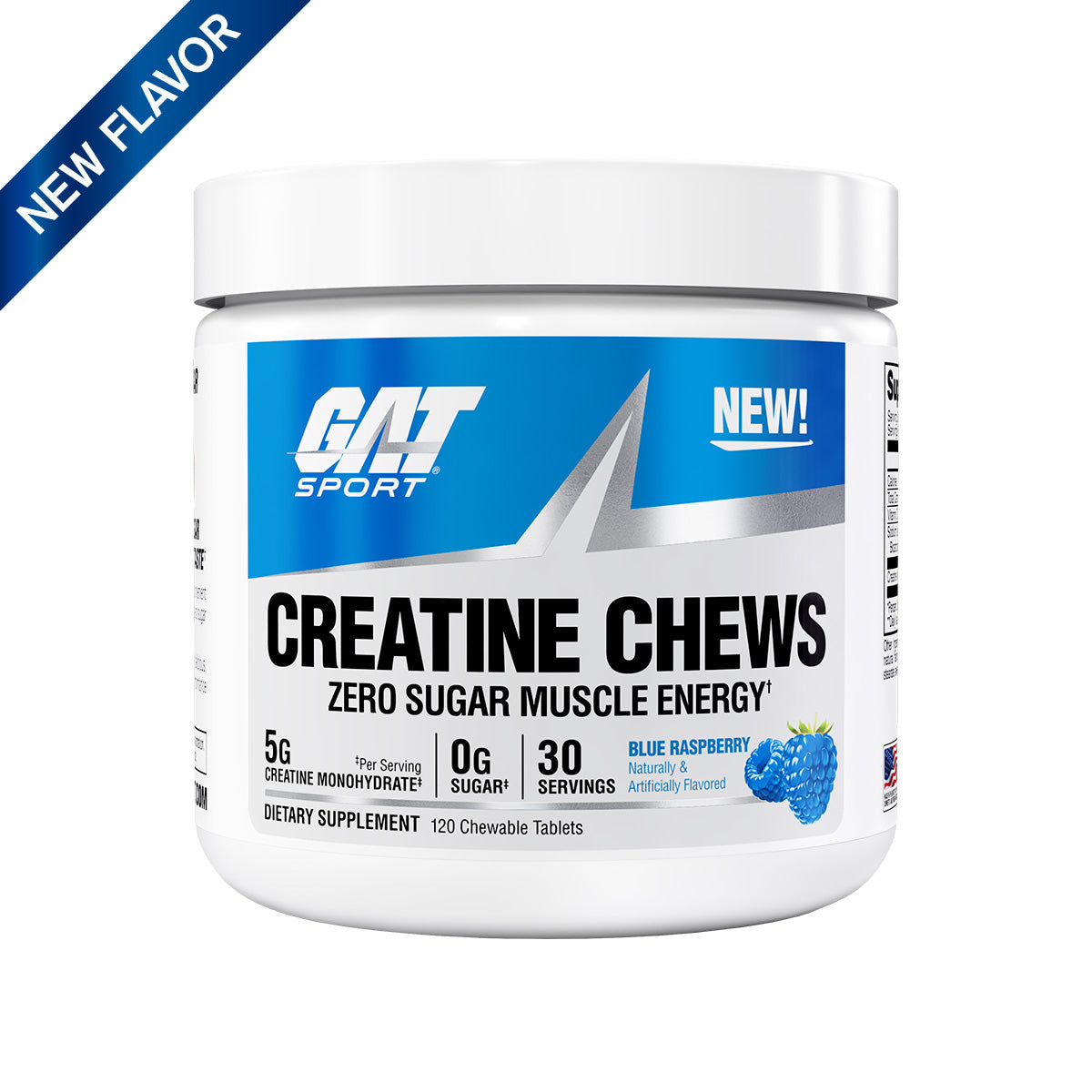
Creatine Chews: The game-changer for real life. Each serving delivers a precise 5 g dose in convenient, tasty chews. No mixing, no shaker, no mess. Perfect for travel, commuting, busy mornings, or anyone who has ever skipped a dose because preparation felt like too much effort.
Both deliver the exact compound and dosing the science supports. The only difference is how easily they fit into your daily routine. When taking creatine becomes as effortless as brushing your teeth, consistency skyrockets, and that is when you see the real benefits in the gym.
Simple Daily Creatine Protocol for Most Athletes
- Choose your format (Powder at home, Chews on the go, or both).
- Take 5 grams every day: training day or rest day.
- Optional: Load with 20 g/day (split doses) for 5–7 days if you want faster saturation.
- Stay hydrated and train consistently with progressive overload.
- Track strength and body composition over 4–8 weeks.
Most users notice improved workout performance (more reps, better recovery between sets) within the first 2–4 weeks, with visible changes in muscle fullness and strength gains following as consistency builds.
Bottom Line
Creatine does not need to be complicated. It is one of the few supplements with decades of research showing clear benefits for strength, power, and muscle when taken daily at effective doses. The biggest mistake athletes make is overcomplicating it or letting inconvenience get in the way.
GAT Sport Creatine Chews and Powder make it truly simple: 5 grams of research-backed creatine monohydrate, no hassle, no excuses. Start your creatine habit today and give your training the consistent support it deserves.
References
[1] Kreider, R. B., et al. "International Society of Sports Nutrition Position Stand: Safety and Efficacy of Creatine Supplementation in Exercise, Sport, and Medicine." Journal of the International Society of Sports Nutrition, vol. 14, 2017, article 18.
[2] Antonio, J., et al. "Common Questions and Misconceptions about Creatine Supplementation: What Does the Scientific Evidence Really Show?" Journal of the International Society of Sports Nutrition, vol. 18, no. 1, 2021, article 13.
[3] Kreider, R. B. "Bioavailability, Efficacy, Safety, and Regulatory Status of Creatine and Related Compounds: A Critical Review." Nutrients, vol. 14, no. 5, 2022, article 1035.
[4] Vega, J., et al. "Effects of Creatine Supplementation on Renal Function: A Systematic Review." Revista Medica de Chile, vol. 147, no. 5, 2019, pp. 628–35.