
Creatine Summer: Why June Is Never Too Late to Start
Creatine does not care if you missed April. It does not care if you skipped May. The molecule does not consult your calendar before it starts working. It builds intramuscular stores from day one of consistent intake, on whatever day that day turns out to be. June is not a missed window. June is just today. And today is the only day you can actually start.
The Missed Window Myth
Athletes treat creatine like a seasonal product. The thinking goes something like this: I should have started in February, I missed the cut, I will just wait until the next bulking phase. That logic does not match how creatine actually works. There is no missed cycle to recover from. There is no penalty for starting late. The phosphocreatine reservoir in your muscle cells builds with consistent daily intake, period. Whether you started March 1 or whether you start the morning you read this blog, the trajectory looks identical from the moment you begin.
Men's Health Month is a fine reminder to recommit to performance basics. Creatine sits at the top of that list because the evidence base is the deepest of any sports supplement available.
Two Paths, Same Destination
The foundational research on creatine loading from Hultman and colleagues established the two basic protocols still in use today [1]. The fast protocol uses 20 grams per day for 5 to 6 days, which raises muscle total creatine concentration by approximately 20 percent. The slow protocol uses 3 grams per day for 28 days, which reaches the same approximately 20 percent elevation. Two paths. Same destination. Different timelines.
Source: Hultman et al., J Appl Physiol, 1996. Both protocols reach approximately a 20% increase in muscle total creatine. The fast protocol uses 20 g/day for 6 days; the slow protocol uses 3 g/day for 28 days.
The International Society of Sports Nutrition's position stand on creatine supplementation, which synthesizes over 500 peer-reviewed publications on the compound, confirms both approaches and recommends a daily maintenance dose of 3 to 5 grams (or 0.1 g per kg of bodyweight) regardless of which path you choose [2]. The comprehensive review on common creatine misconceptions explicitly confirms that a formal loading phase is not required to reach saturation [3]. Loading is faster. Daily dosing is simpler. Both work.
What this means practically: an athlete who starts a slow protocol on June 2 reaches the same saturated state by late June as an athlete who loaded heavily in early May. The fast protocol shortens the runway. It does not change the ceiling. And neither protocol depends on what the calendar says.
What "Stored Energy" Actually Does
Once your muscle cells are saturated, creatine works through the phosphocreatine system. During high-intensity contractions, ATP gets used within seconds. Phosphocreatine donates a phosphate group to regenerate ATP almost instantly, keeping force production high during the first 10 to 20 seconds of explosive work.
Classic biopsy research from Greenhaff and colleagues found that creatine supplementation increased phosphocreatine resynthesis during recovery from intense contraction by an average of 35 percent in responders [4]. That faster resynthesis is what lets you produce closer-to-max force on set two than you would have managed without saturation, and again on set three, and so on through the workout.
This is also why creatine does not just help powerlifters. The ISSN position stand documents performance benefits across sprinting, interval training, team sports, resistance training, and even endurance contexts when high-intensity bursts are involved [2]. If your sport requires anything more intense than a steady walk, creatine builds the energy substrate that fuels it.
Summer Reality: Heat and Hydration
The other concern that delays summer starts is the persistent rumor that creatine causes cramping, dehydration, or compromises heat tolerance. The systematic review and meta-analysis evidence does not support this.
A systematic review with meta-analyses examining ten controlled trials found no evidence that creatine supplementation either hinders the body's ability to dissipate heat or negatively affects body fluid balance in athletes exercising in hot conditions [5]. The comprehensive review on common creatine misconceptions reached the same conclusion: well-controlled studies do not show increased cramping, dehydration, or heat illness with creatine use at recommended doses [3].
Hot training is hard regardless of supplementation. Creatine is not the variable that determines whether you finish a July session well-hydrated. Your fluid plan, your electrolyte intake, your training intensity, and your acclimatization status are the variables that matter. Creatine is neutral on that front, and it gives you back something you actually need in summer: more usable force production for shorter, harder sessions when the heat makes long sessions miserable anyway.
Pick Your Format
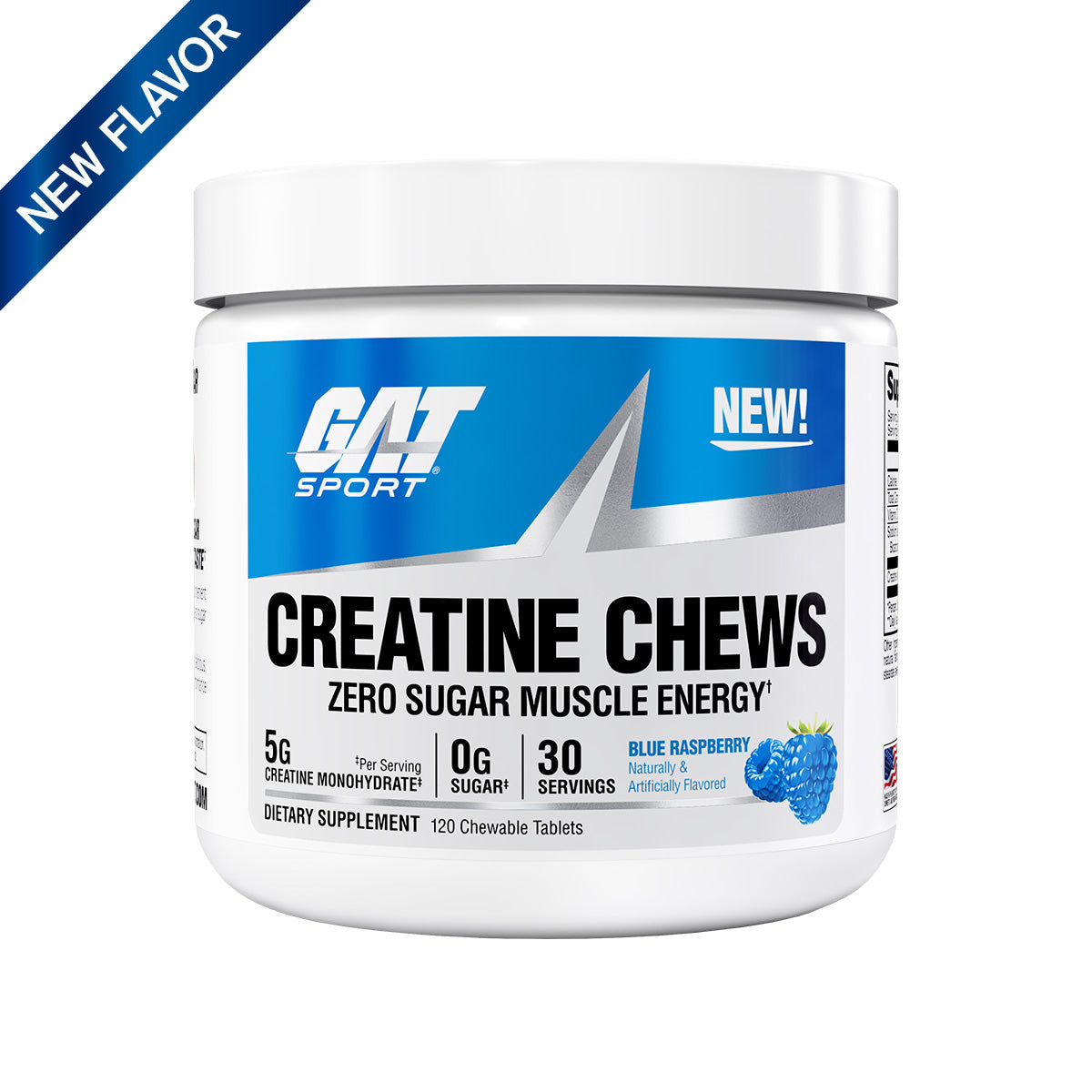
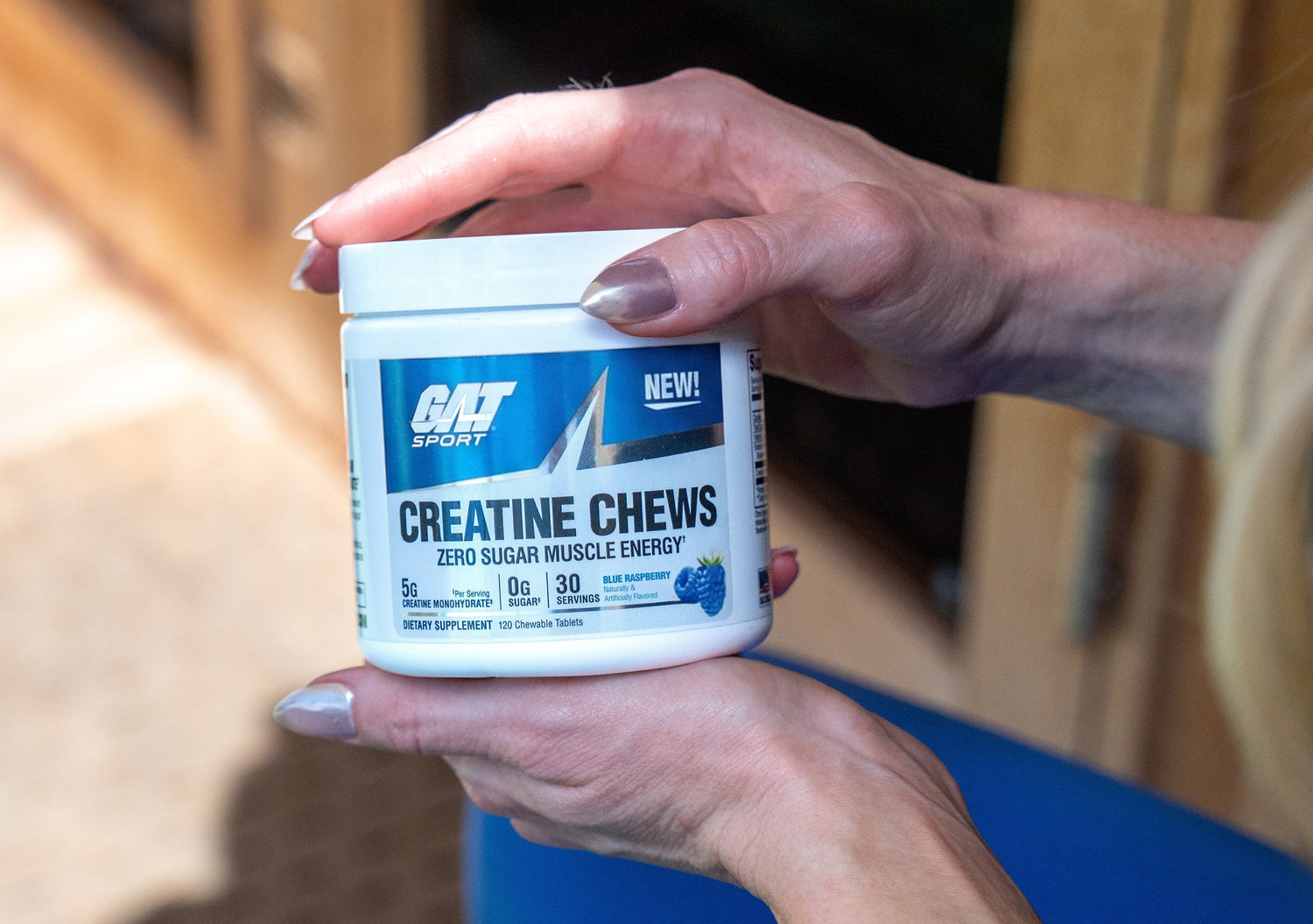
The format you choose has nothing to do with how well creatine works and everything to do with whether you will actually take it every day. Compliance is the entire game. The most effective creatine protocol is the one you stay on for 12 weeks, 24 weeks, 52 weeks. GAT Sport now offers two formats so that decision becomes about your life, not your willpower.
GAT Sport Creatine Format Comparison
|
Format |
Best For |
Dosing |
Portability |
When to Take |
|
Creatine Powder |
Athletes with a fixed daily routine |
1 scoop into water, shake, or pre-workout |
Bottle and scoop required |
Same time daily, anchored to a meal or workout |
|
Creatine Chews |
Athletes who travel, train on the go, or skip drinks |
Pre-measured serving, no mixing |
Pocket, gym bag, glove compartment |
Anytime, on the way to wherever |
Powder gives you the lowest cost per dose and the most flexibility for scaling. Chews remove the scoop and the cup.
Both formats deliver creatine monohydrate, the form with the deepest research base and the form the ISSN position stand specifically endorses [2]. The compound is the same. The delivery is the variable.
The Bottom Line
The "missed window" framing exists because supplement marketing trains athletes to think in cycles. Creatine does not work in cycles. It works in saturation, and saturation is available to anyone who starts taking it consistently from today forward.
June is a perfect month to begin. Men's Health Month is the reminder. Two GAT Sport formats are the options. Twenty-five years of formulation experience, cGMP certified manufacturing, and third-party testing are the credibility.
Start your creatine habit today. Pick whichever format will actually live in your daily rhythm. Build the foundation that makes the rest of your training compound.
Shop the full GAT Sport creatine lineup at gatsport.com. The best day to start is always today.
References
[1] Hultman, E., et al. "Muscle Creatine Loading in Men." Journal of Applied Physiology, vol. 81, no. 1, 1996, pp. 232-237, https://doi.org/10.1152/jappl.1996.81.1.232.
[2] Kreider, Richard B., et al. "International Society of Sports Nutrition Position Stand: Safety and Efficacy of Creatine Supplementation in Exercise, Sport, and Medicine." Journal of the International Society of Sports Nutrition, vol. 14, 2017, article 18, https://doi.org/10.1186/s12970-017-0173-z.
[3] Antonio, Jose, et al. "Common Questions and Misconceptions About Creatine Supplementation: What Does the Scientific Evidence Really Show?" Journal of the International Society of Sports Nutrition, vol. 18, no. 1, 2021, article 13, https://doi.org/10.1186/s12970-021-00412-w.
[4] Greenhaff, P. L., et al. "Effect of Oral Creatine Supplementation on Skeletal Muscle Phosphocreatine Resynthesis." American Journal of Physiology, vol. 266, no. 5 Pt 1, 1994, pp. E725-E730, https://doi.org/10.1152/ajpendo.1994.266.5.E725.
[5] Lopez, Rebecca M., et al. "Does Creatine Supplementation Hinder Exercise Heat Tolerance or Hydration Status? A Systematic Review with Meta-Analyses." Journal of Athletic Training, vol. 44, no. 2, 2009, pp. 215-223, https://doi.org/10.4085/1062-6050-44.2.215.
Daniel Pierce, MS
Daniel Pierce brings over a decade of specialized expertise in active nutrition innovation, omni-channel deployment strategy, and performance-driven digital marketing. With a Master of Science degree focused on natural language processing using large language models, Pierce has established himself as a leading authority at the intersection of AI-driven consumer insights and nutrition brand strategy. His active nutrition innovation experience spans formulation consulting for emerging brands and global brands, ingredient efficacy research, and regulatory compliance for functional food products. Pierce has architected successful omni-channel deployment strategies that seamlessly integrate direct-to-consumer platforms, social commerce, and traditional retail channels, enabling nutrition brands to scale rapidly across multiple touchpoints. As a digital marketing strategist specializing in the active nutrition space, Pierce leverages his natural language processing background to develop AI-enhanced consumer targeting and content optimization strategies. His data-driven approach combines advanced analytics with creator partnerships and viral content creation, enabling startups to compete effectively against established category leaders through authentic storytelling and measurable performance marketing initiatives.