

A big bench is great until you gas out carrying groceries up three flights. Work capacity is the quiet skill that makes strength usable. It is the difference between a lifter who looks powerful and one who can actually apply that power, again and again, when a task demands it. And it is the piece most strength-focused training quietly leaves out.
Here is the gap. Plenty of strong lifters have built impressive numbers on the big lifts but cannot sustain effort for more than a few reps or a single hard set. They have strength without the engine to use it repeatedly. When sport, work, or life asks for sustained output, hauling gear, chasing a kid, playing a pickup game, moving all day, their conditioning taps out long before their strength does. Real capability requires both: the strength to produce force and the work capacity to keep producing it. Let us fix the missing half.
How Do You Build Work Capacity?
You build work capacity by adding structured metabolic conditioning, or MetCons, and functional, multi-joint training on top of a solid strength base. Functional movements performed at a high effort, in circuits or intervals, train your body to produce and sustain force across time, which is exactly what transfers to sport and daily life. Keep your strength work as the foundation, layer in quality conditioning a couple of times a week and hydrate the longer efforts so you can actually complete them at intensity.
The rest of this article explains why this works and how to add it without wrecking your strength.
Why Strength Alone Falls Short
Strength and work capacity are related but distinct qualities, and training only one leaves a real gap in your fitness.
Strength Is Force. Capacity Is Sustained Force.
Maximal strength is your ability to produce force in a single effort, a one-rep max, a heavy single. Work capacity is your ability to perform meaningful work over time, to repeat efforts, sustain output, and recover quickly between bouts. A powerlifter can be enormously strong yet gas out during a task that demands sustained effort, because that task draws on conditioning their training never developed.
Most real-world and sporting demands are capacity demands, not one-rep-max demands. Carrying, climbing, dragging, repeating: these ask you to produce force again and again, not just once. That is why strength alone, however impressive the numbers, leaves you underprepared for the way your body actually gets used.
Functional Training Builds Transferable Fitness
This is where functional fitness and metabolic conditioning come in. High-intensity functional training, or HIFT, is defined in the research as an exercise approach emphasizing functional, multi-joint movements that can be scaled to any fitness level and that recruit more muscle than traditional isolated exercise [1]. Because it trains movements rather than isolated muscles, and does so under a conditioning demand, it builds fitness that carries directly into sport and life.
The conditioning benefit is well supported. Research on high-intensity interval-style training shows it produces meaningful improvements in cardiovascular fitness and metabolic health, and does so efficiently, in less time than traditional steady-state approaches [2]. MetCons apply that same interval logic to functional movements, so you develop both the engine and the movement quality that make your strength usable.
How to Add MetCons Without Wrecking Your Strength
The goal is to complement your strength work, not compete with it. Done carelessly, conditioning can interfere with strength, so structure matters.
Keep Strength as the Base
Your heavy lifting stays the foundation. Do not sacrifice your strength sessions to chase conditioning; instead, add MetCons as a layer on top. Start with just one or two quality conditioning sessions per week. That is enough to build meaningful work capacity while leaving your recovery intact for the strength work that anchors your training. More is not better here; quality and consistency are what matter.
Build Simple, Effective MetCons
A good MetCon does not need to be complicated. Choose a few functional, multi-joint movements you can perform with solid technique under fatigue, structure them into rounds with defined work and rest, and scale the load and pace to your level, exactly as the functional-training approach allows [1]. Kettlebells, pull-ups, push-ups, and box jumps are ideal building blocks: they are multi-joint, they demand full-body coordination, and they scale easily. Here are two simple, effective sessions to try.
MetCon 1: The Ascending Ladder (about 15 to 18 minutes)
This one builds sustained output by climbing in reps each round. Set a running clock and move through as many rounds as you can with good form in 15 minutes.
- 5 pull-ups
- 10 push-ups
- 15 kettlebell swings
- 20 box jumps (use a moderate, safe box height and step down between reps to protect your knees)
Rest only as needed to keep your technique clean, then start the next round. Aim to keep moving. Track your total rounds and reps so you have a number to beat next time, which is how you measure real progress in work capacity.
MetCon 2: The Interval Circuit (about 20 minutes)
This session uses fixed work and rest so you can push each station hard. Perform 5 total rounds of the following, resting 60 to 90 seconds between rounds:
- Kettlebell goblet squats: 40 seconds of work
- Push-ups: 40 seconds of work
- Kettlebell swings: 40 seconds of work
- Box jumps or step-ups: 40 seconds of work
Work at a strong, controlled pace within each 40-second block, then move to the next station with minimal transition. If pull-ups are a strength for you, swap them in for one of the pressing or squatting stations to bias the circuit toward pulling. Scale the work interval down to 30 seconds if you are newer to conditioning.
For both sessions, keep every movement one you can perform cleanly when tired. If your form on box jumps or pull-ups degrades, reduce the reps, lower the box, or use an assisted pull-up variation. The goal is hard, quality conditioning work, not a sloppy burnout session that leaves you too smoked to lift. Separate your hardest MetCons from your heaviest lifting days when you can, so each gets the recovery it needs to be productive.

Fueling and Hydrating High-Output Work
MetCons and functional conditioning are, by design, longer and higher output than a few heavy singles. That sustained effort makes fueling and hydration matter far more than they do for short strength work.
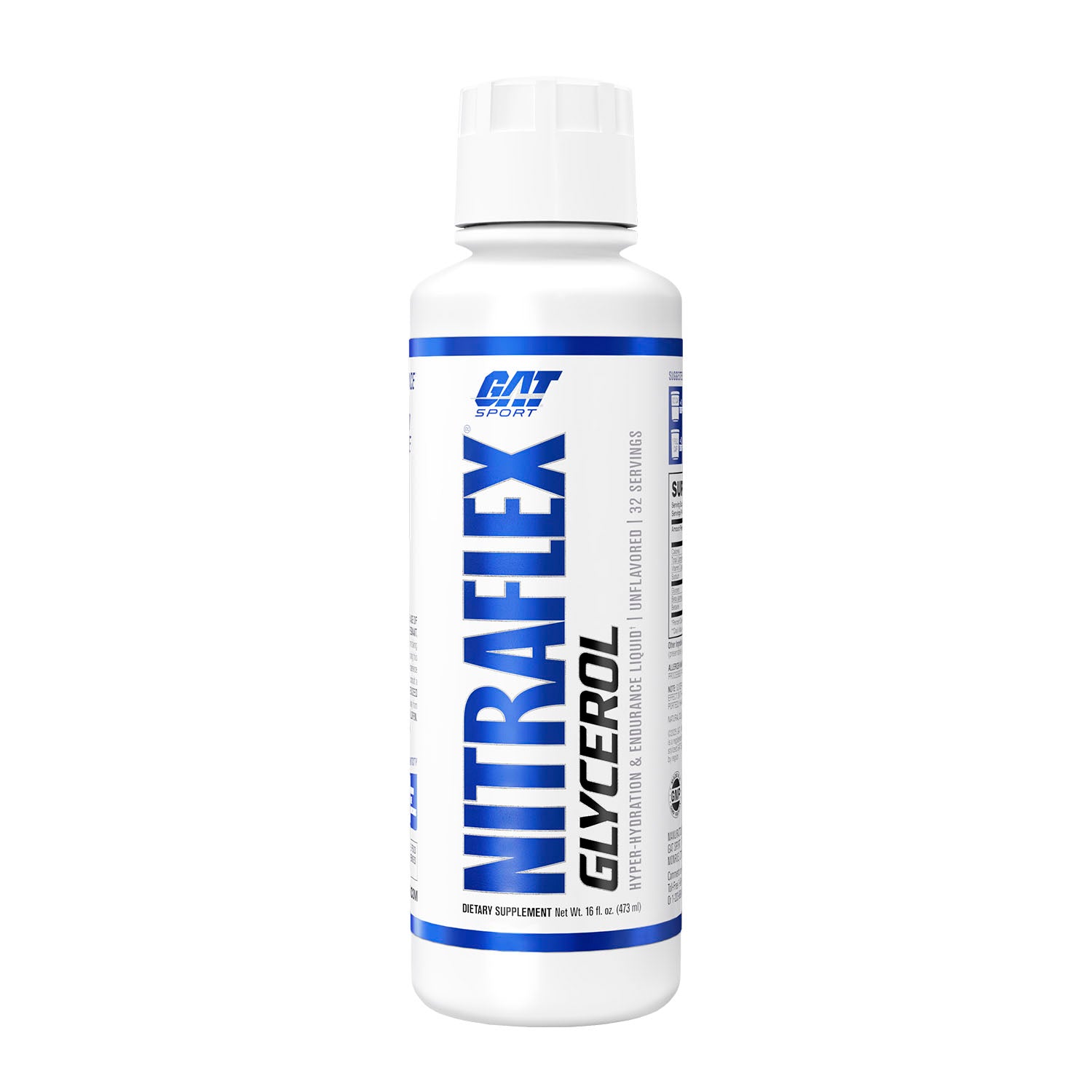
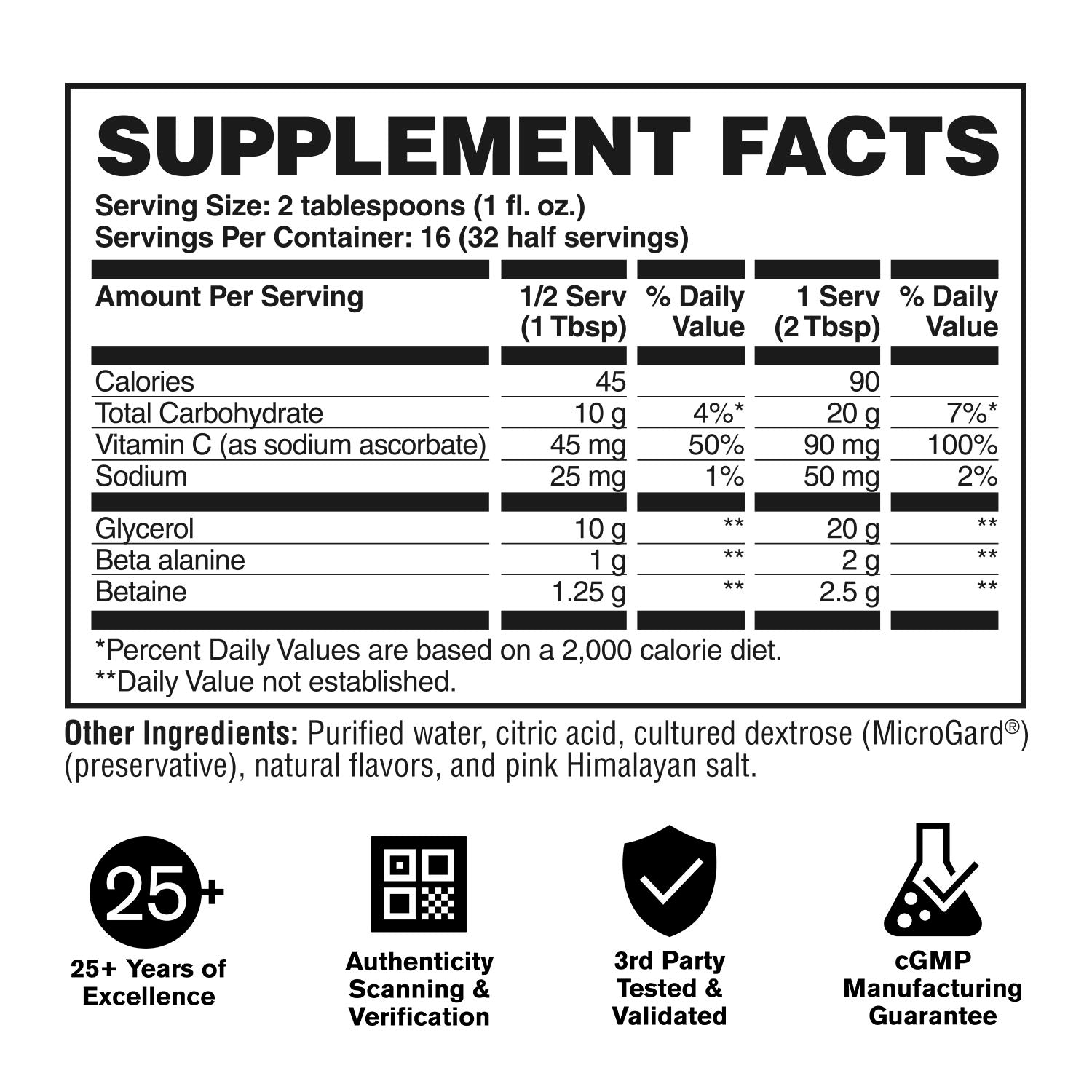
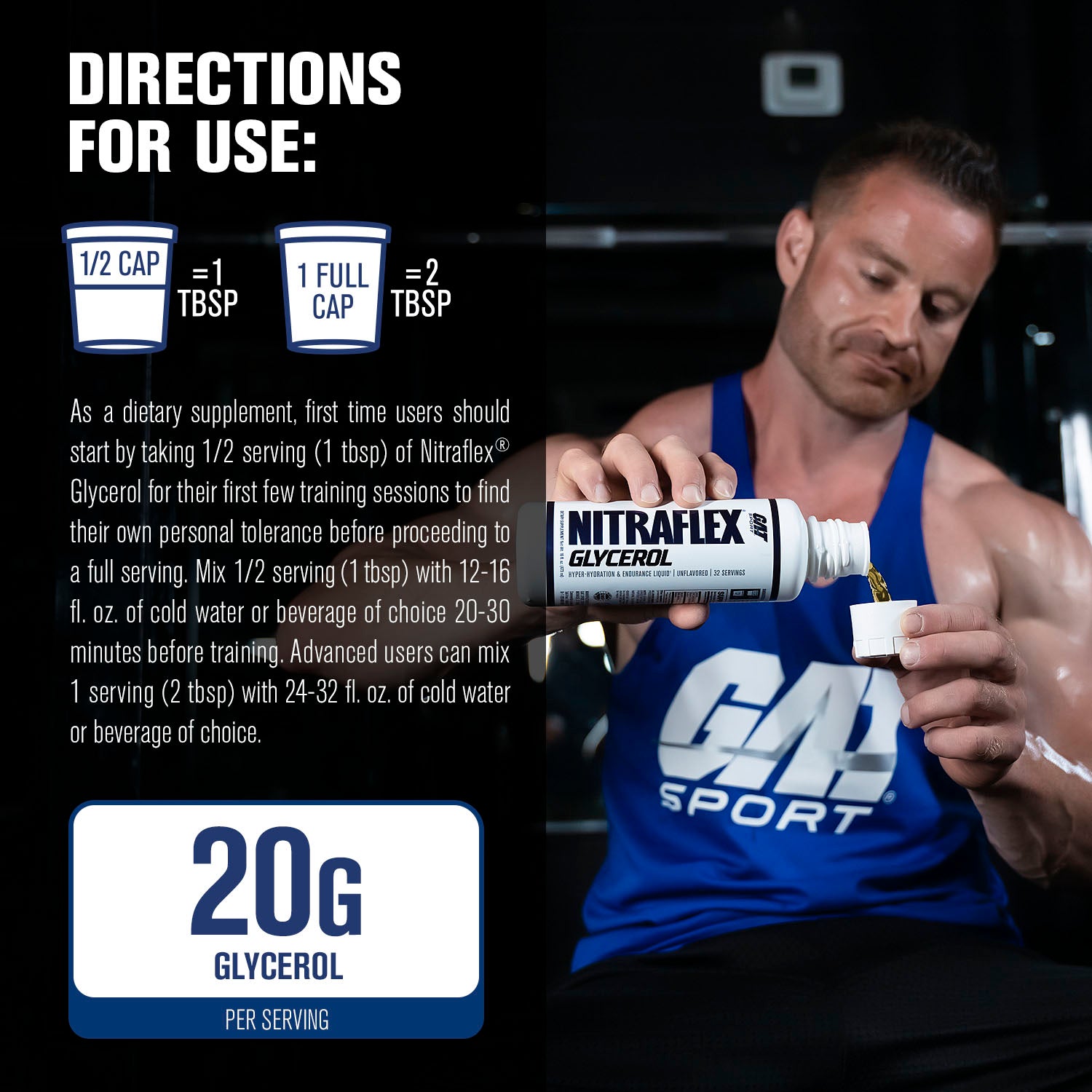
Lead With Nitraflex Glycerol
On high-output conditioning days, this is where Nitraflex Glycerol earns its place. Glycerol helps your body pull in and hold onto water, and the research supports the mechanism: a meta-analysis of glycerol-induced hyperhydration found that adding glycerol significantly increased fluid retention, holding roughly 7.7 additional milliliters of fluid per kilogram of body weight compared to water alone, and was associated with about a 2.6 percent improvement in endurance performance [3]. For the longer, sustained efforts that define a MetCon, that extra fluid retention supports your endurance and gives you fuller pumps as you work. Take it ahead of your high-output sessions so you start topped off and can hold intensity deeper into the work.
Replace What You Lose With Nitraflex Hydration
Sustained conditioning work, especially in late-summer heat, drives real fluid and electrolyte loss, and losing more than about two percent of your body mass in fluid measurably impairs performance [4]. Nitraflex Hydration covers the replacement side, replenishing the fluid and electrolytes you sweat out during a demanding MetCon. Sip it through your session to stay ahead of your losses so your output holds up from the first round to the last, rather than fading as you dehydrate.
Build Capacity You Can Actually Use
Strength you cannot apply is just a number on a bar. The lifters who are truly capable, in sport, at work, and in everyday life, are the ones who paired their strength with real work capacity. They built the engine to use their power repeatedly, not just once. That combination is what separates looking strong from being genuinely, usefully strong.
You do not need to overhaul your training to get there. Keep your strength base, add structured functional conditioning a couple of times a week, and fuel and hydrate the longer efforts so you can complete them at intensity. Over time, you build a body that is not just strong on paper but capable when it counts.
Add one quality MetCon a week and build capacity you can actually use. Then go compete harder, in the gym and everywhere else, with GAT Sport at gatsport.com.
Key Takeaways
- Work capacity is the ability to produce and sustain force over time, and it is what makes strength usable in sport and life.
- Strength alone is single-effort force; most real demands require repeated, sustained effort that only conditioning builds.
- High-intensity functional training uses scalable, multi-joint movements like kettlebell swings, pull-ups, push-ups, and box jumps to build transferable fitness.
- Keep strength as your base and add just one or two quality MetCons per week, separated from heavy lifting days.
- Fuel and hydrate longer, high-output efforts, since sustained work drives real fluid loss that impairs performance.
Frequently Asked Questions
How do you build work capacity?
You build work capacity by adding structured metabolic conditioning and functional, multi-joint training on top of a strength base. Functional movements performed at high effort in circuits or intervals train your body to produce and sustain force over time, which transfers directly to sport and daily life. Keep strength work as the foundation, add one or two quality conditioning sessions per week, and hydrate longer efforts so you can complete them at intensity.
What is the difference between strength and work capacity?
Strength is your ability to produce force in a single maximal effort, like a one-rep max. Work capacity is your ability to perform meaningful work repeatedly and sustain output over time. Most real-world and sporting demands are capacity demands, requiring you to produce force again and again, which is why a very strong person can still gas out during sustained tasks their training never prepared them for.
What is a MetCon workout?
A MetCon, short for metabolic conditioning, is a workout that combines functional, multi-joint movements into rounds with defined work and rest to build conditioning and work capacity. Common movements include kettlebell swings, pull-ups, push-ups, and box jumps. The goal is to train your body to sustain output across time, developing the engine that makes your strength usable rather than isolating a single muscle.
Will MetCons hurt my strength gains?
Not if you program them sensibly. The key is to keep your heavy lifting as the foundation and add only one or two quality conditioning sessions per week, ideally separated from your heaviest lifting days. This lets you build work capacity while leaving enough recovery for your strength work. Problems arise mainly when excessive conditioning volume competes with strength training for recovery.
How often should you do functional conditioning?
For most lifters focused on strength, one or two quality MetCon sessions per week is the sweet spot. That is enough to build meaningful work capacity and cardiovascular fitness while preserving recovery for strength training. Conditioning follows the same principle as everything else: quality and consistency matter more than piling on volume, and more is not automatically better.
References
- Feito, Yuri, et al. "High-Intensity Functional Training (HIFT): Definition and Research Implications for Improved Fitness." Sports, vol. 6, no. 3, 2018, article 76, doi:10.3390/sports6030076.
- Gibala, Martin J., et al. "Physiological Adaptations to Low-Volume, High-Intensity Interval Training in Health and Disease." The Journal of Physiology, vol. 590, no. 5, 2012, pp. 1077-1084, doi:10.1113/jphysiol.2011.224725.
- Goulet, Eric D. B., et al. "A Meta-Analysis of the Effects of Glycerol-Induced Hyperhydration on Fluid Retention and Endurance Performance." International Journal of Sport Nutrition and Exercise Metabolism, vol. 17, no. 4, 2007, pp. 391-410, doi:10.1123/ijsnem.17.4.391.
- Cheuvront, Samuel N., and Robert W. Kenefick. "Dehydration: Physiology, Assessment, and Performance Effects." Comprehensive Physiology, vol. 4, no. 1, 2014, pp. 257-285, doi:10.1002/cphy.c130017.