

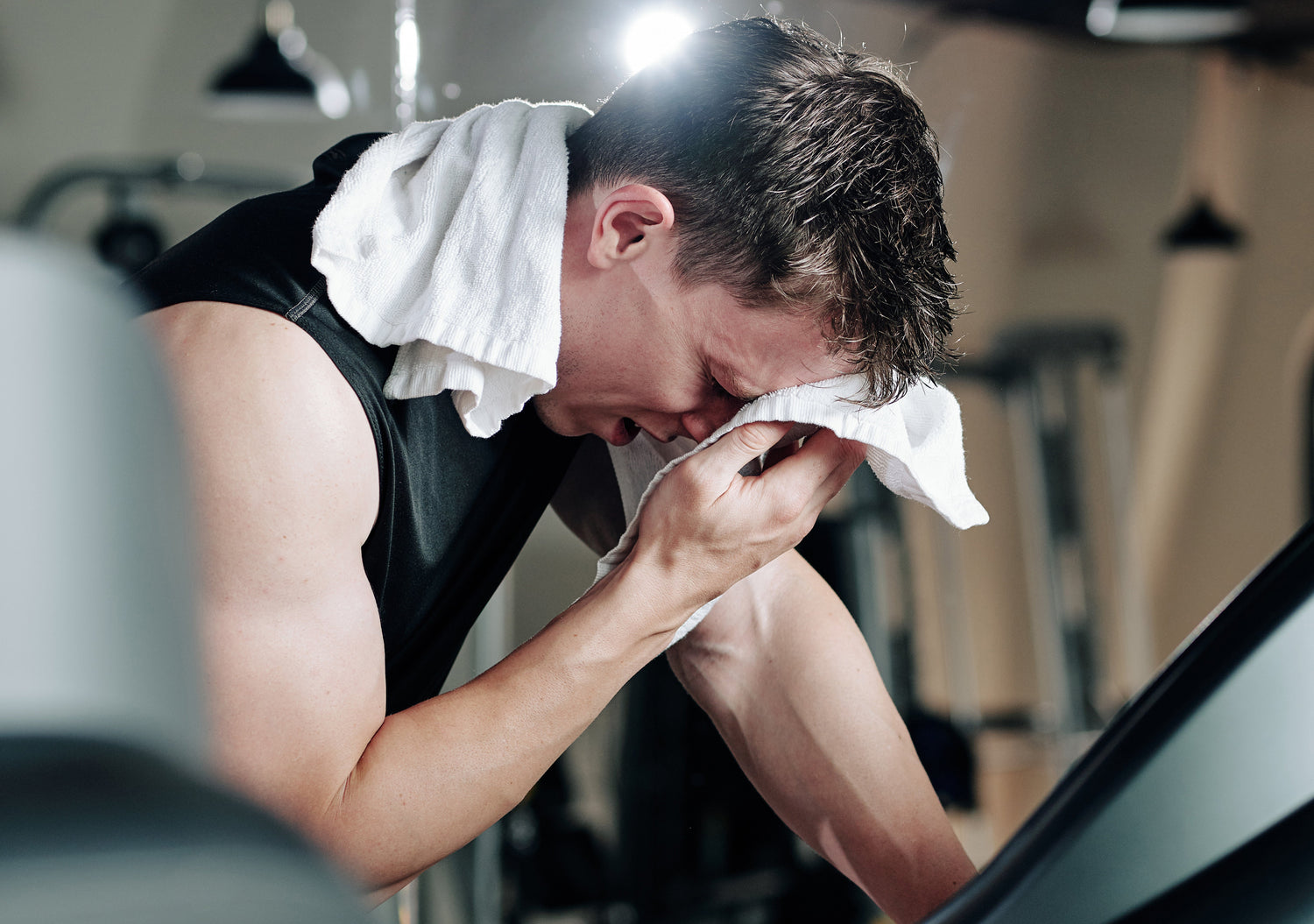
True overtraining is rare. Chronic under-recovery is everywhere, and it is wearing a costume that looks just like discipline. Walk into any gym and you will find lifters convinced that their stalled progress means they need to do more: more sets, more sessions, more intensity. They wear their exhaustion like a badge of honor, certain that grinding harder is the answer. Most of them have it exactly backward.
Here is the trap. When progress stalls, the instinct is to add volume. More work must equal more results, right? So, the lifter piles on sets and sessions, digging deeper into a hole that more training created in the first place. The real issue is almost never that they are training too little. It is that they are recovering too little to absorb the training they are already doing. Let us separate the myth from the reality.
Is More Training Always Better?
No. More training is only better if your recovery can keep pace with it. Beyond that point, adding volume stops driving progress and starts undermining it, because your body cannot adapt to a stimulus it never recovers from. For most lifters who feel stuck, the problem is under-recovery from poor sleep, nutrition, and stress, not insufficient training. Often the best change you can make is to train less but recover and execute better.
Here are the myths keeping lifters exhausted and stalled.
Myth 1: "If I'm not progressing, I need to train more."
This is the reflex that digs the hole. When the numbers stop moving, adding volume feels like the obvious fix, but it usually makes things worse. Training progress depends on a balance: the stress of training must be matched by adequate recovery for adaptation to occur. The ECSS and ACSM joint consensus statement on overtraining puts it plainly: successful training must involve overload, but it must also avoid the combination of excessive overload plus inadequate recovery [1]. Pile on more work without fixing recovery, and you tilt that balance the wrong way.
The takeaway: When you stall, do not automatically add volume. First ask whether your recovery can support the training you are already doing. More often than not, that is the real bottleneck.
Myth 2: "My exhaustion means I'm overtraining."
Lifters throw around "overtraining" to describe any period of feeling wiped out, but clinical overtraining syndrome is actually quite rare and quite serious. Research describes overtraining syndrome as a maladapted response to excessive exercise without adequate rest, producing a performance decline that persists for weeks or months and requires a long recovery [2]. That is a debilitating condition, not the ordinary tiredness most gym-goers experience.
What is far more common is simple under-recovery: the accumulated fatigue that builds when sleep, nutrition, and stress management fall short of your training demands. The consensus research emphasizes that training is not the only stressor driving fatigue; inadequate recovery inputs contribute heavily to the picture [1]. Your exhaustion is much more likely garden-variety under-recovery than a rare clinical syndrome.
The takeaway: You are probably not overtrained in the clinical sense. You are under-recovered, which is far more fixable and does not require you to stop training altogether.
Myth 3: "Recovery is what happens on rest days, so my training days don't need it."
This myth treats recovery as a separate compartment; something confined to the one or two rest days on your calendar. In reality, recovery is a continuous, daily process driven by inputs you control every single day, and sleep sits at the center of it. When collegiate basketball players extended their sleep, their sprint times got faster, and their shooting accuracy improved by nine percent [3]. The reverse is just as real: a meta-analysis of acute sleep loss found meaningful impairments in physical performance, including strength and power [4]. If your sleep is short every night, no amount of scheduled rest days will compensate.
The takeaway: Recovery is a daily practice, not a weekly event. Prioritize sleep and nutrition every day, not just on rest days, because that is where the bulk of your adaptation actually happens.
Myth 4: "Life stress has nothing to do with my training results."
Many lifters treat the gym as separate from the rest of their lives, but the body does not compartmentalize stress that way. Psychological stress directly impairs physical recovery. In a controlled study, individuals under higher chronic life stress recovered muscular function significantly more slowly after strenuous resistance exercise than lower-stress individuals [5]. Your body draws on the same finite recovery capacity for a hard training session and a stressful week at work.
The takeaway: When life stress spikes, your recovery capacity shrinks, so the same training load hits harder. Account for your total stress, not just your gym stress, when deciding how much to train.
Myth 5: "Supplements can't help with recovery, only training and diet can."
Whole foods, sleep, and sensible training are the foundation, but the right supplements support the recovery and output that let you train productively. Creatine is the standout. The ISSN position stand on creatine concludes that creatine monohydrate is the most effective ergogenic nutritional supplement available for increasing high-intensity exercise capacity and lean body mass during training [6]. That capacity helps you get more out of the training you can actually recover from. Creatine Monohydrate works through daily saturation, so take a consistent daily dose and never skip it.
Recovery also depends on giving your muscles the raw material to rebuild. The ISSN position stand on protein confirms that adequate protein intake combined with training drives the muscle protein synthesis that builds and preserves muscle [7]. Flexx EAAs offer a convenient way to deliver essential amino acids around your training when a full meal is not practical, supporting the recovery that turns your work into results.
The takeaway: Supplements do not replace sleep, food, or smart programming, but creatine and adequate protein genuinely support the recovery and performance that let you progress.
Train Smarter, Not Just Harder
Step back and the pattern is clear. The lifter who stalls and responds by piling on more volume is treating a recovery problem with a training solution, and it backfires every time. True overtraining is rare. Chronic under-recovery, from short sleep, inadequate nutrition, and unmanaged stress, is the far more common culprit, and it hides behind the appearance of discipline.
The fix is not to abandon hard training. It is to match your training load to your actual recovery capacity, fix your sleep and nutrition first, manage your total stress, and support your output with the basics. Sometimes the best program change you can make is less training, done better and fully recovered from.
Learn the difference and adjust before you dig a deeper hole. Then train smarter, and compete harder, with GAT Sport at gatsport.com.
Key Takeaways
- More training is only better if your recovery can keep pace; beyond that, added volume undermines progress.
- Clinical overtraining syndrome is rare and severe; everyday exhaustion is almost always fixable under-recovery.
- Recovery is a daily process centered on sleep, not something confined to rest days.
- Life stress draws on the same recovery capacity as training, so it directly affects your results.
- When you stall, fix sleep, nutrition, and stress before adding volume, and support output with creatine and protein.
Frequently Asked Questions
Is more training always better?
No. More training only helps if your recovery can keep pace with it. Beyond that point, adding volume undermines progress because your body cannot adapt to a stimulus it never recovers from. For most lifters who feel stuck, the real problem is under-recovery from poor sleep, nutrition, and stress rather than insufficient training, so training less but recovering better is often the smarter move.
Am I overtraining or just under-recovered?
Almost certainly under-recovered. Clinical overtraining syndrome is rare and involves a performance decline lasting weeks or months that requires extensive recovery. The ordinary exhaustion most lifters feel comes from accumulated under-recovery: insufficient sleep, inadequate nutrition, and unmanaged stress relative to training demands. The good news is that under-recovery is far more fixable and does not require stopping training entirely.
What is the difference between overreaching and overtraining?
Overreaching is a short-term performance dip from increased training that resolves with rest, and it is a normal part of training. Overtraining syndrome is a maladapted state where performance stays suppressed for weeks or months despite recovery. The main practical difference is how long recovery takes: days to a couple of weeks for overreaching, versus months for true overtraining syndrome.
Can poor sleep cause you to stop making progress?
Yes. Sleep is where much of physical recovery and adaptation happens. Research shows extending sleep improves sprint speed, accuracy, and reaction time, while acute sleep loss impairs strength and power. If your sleep is chronically short, it caps your recovery no matter how many rest days you schedule, which can absolutely stall your progress.
Does life stress affect muscle recovery?
Yes, directly. In a controlled study, people under higher chronic life stress recovered muscular function significantly more slowly after strenuous resistance exercise than lower-stress individuals. Your body uses the same recovery capacity for training stress and life stress, so a stressful period effectively reduces how much training you can absorb and recover from.
References
- Meeusen, Romain, et al. "Prevention, Diagnosis, and Treatment of the Overtraining Syndrome: Joint Consensus Statement of the European College of Sport Science and the American College of Sports Medicine." Medicine and Science in Sports and Exercise, vol. 45, no. 1, 2013, pp. 186-205, doi:10.1249/MSS.0b013e318279a10a.
- Kreher, Jeffrey B., and Jennifer B. Schwartz. "Overtraining Syndrome: A Practical Guide." Sports Health, vol. 4, no. 2, 2012, pp. 128-138, doi:10.1177/1941738111434406.
- Mah, Cheri D., et al. "The Effects of Sleep Extension on the Athletic Performance of Collegiate Basketball Players." Sleep, vol. 34, no. 7, 2011, pp. 943-950, doi:10.5665/sleep.1132.
- Craven, Jonathan, et al. "Effects of Acute Sleep Loss on Physical Performance: A Systematic and Meta-Analytical Review." Sports Medicine, vol. 52, no. 11, 2022, pp. 2669-2690, doi:10.1007/s40279-022-01706-y.
- Stults-Kolehmainen, Matthew A., et al. "Chronic Psychological Stress Impairs Recovery of Muscular Function and Somatic Sensations Over a 96-Hour Period." Journal of Strength and Conditioning Research, vol. 28, no. 7, 2014, pp. 2007-2017, doi:10.1519/JSC.0000000000000335.
- Kreider, Richard B., et al. "International Society of Sports Nutrition Position Stand: Safety and Efficacy of Creatine Supplementation in Exercise, Sport, and Medicine." Journal of the International Society of Sports Nutrition, vol. 14, no. 18, 2017, doi:10.1186/s12970-017-0173-z.
- Jäger, Ralf, et al. "International Society of Sports Nutrition Position Stand: Protein and Exercise." Journal of the International Society of Sports Nutrition, vol. 14, no. 20, 2017, doi:10.1186/s12970-017-0177-8.