
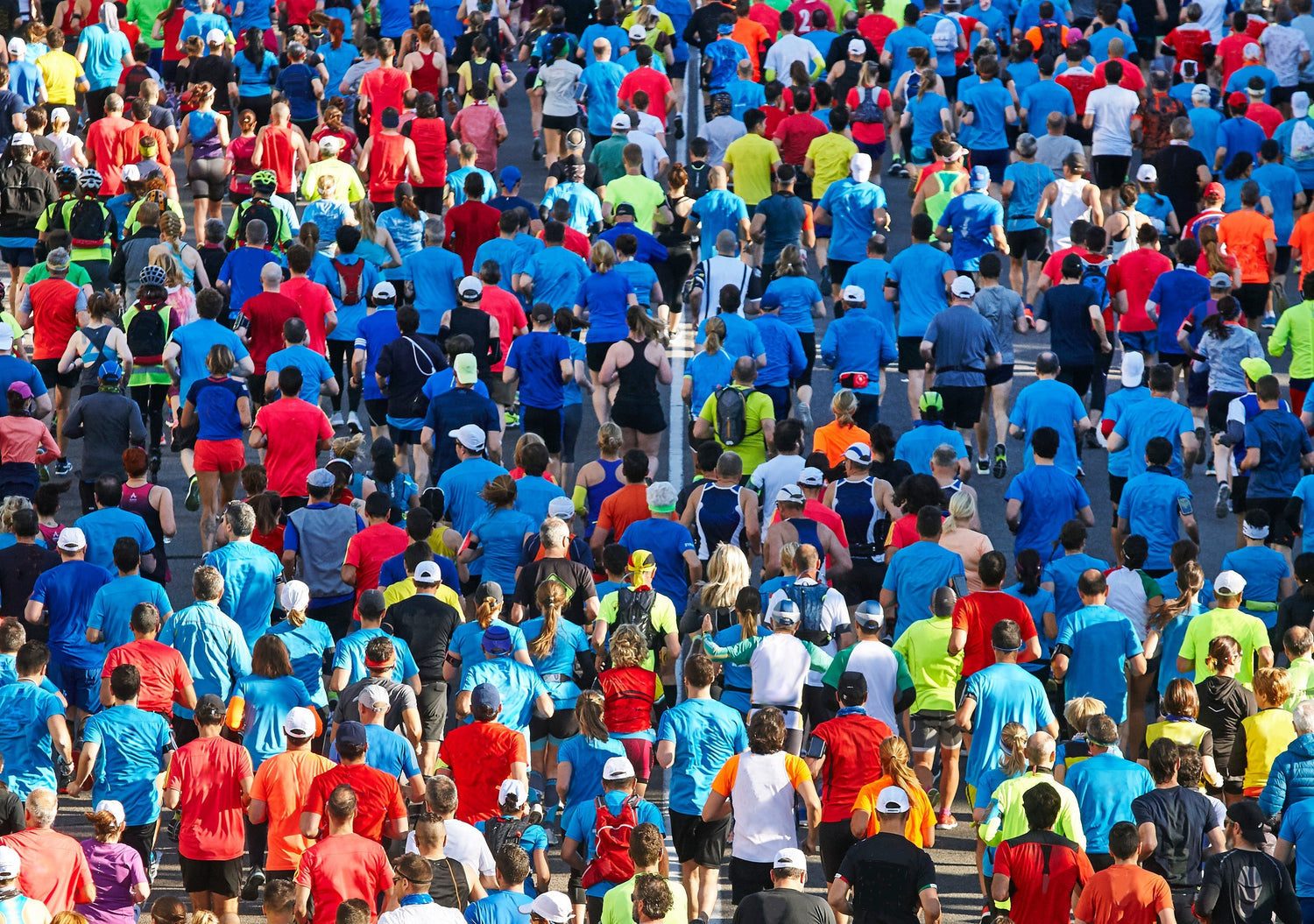
26.2 miles. Thousands of athletes pushing limits. The LA Marathon reveals endurance supplementation science in action.
On March 15, 2026, more than 20,000 runners will toe the line for the LA Marathon, one of the most iconic endurance events in the world. From elite athletes chasing sub-2:10 times to everyday runners fighting for their first finish, the course from Dodger Stadium to the Santa Monica Pier is a living laboratory of human physiology under extreme stress. While the headlines focus on finishing times and personal bests, the real story behind every strong performance is smart, science-based supplementation and fueling. Bonking, cramps, and late-race fade are not inevitable; they are preventable with the right protocols. This year, the LA Marathon offers powerful lessons for anyone doing long efforts, whether it's a marathon, half, or weekend long run. Here's what the science and the champions actually use to go the distance.
The Problem: Endurance Nutrition Confusion, Bonking, Inadequate Fueling
Endurance athletes face a unique challenge: the body's limited glycogen stores. A trained runner starts with roughly 400–500 grams of glycogen in muscles and liver, enough for about 90–120 minutes of high-intensity effort at marathon pace. Once depleted, the body shifts to fat oxidation, which is slower and less efficient, leading to the dreaded "bonk"; a sudden drop in pace, mental fog, and overwhelming fatigue. Surveys of marathon runners show 30–50% experience bonking or severe fatigue in the final 10K, often due to inadequate mid-race fueling [1].
Confusion is rampant. Some runners under-fuel, fearing GI distress; others over-rely on gels without electrolytes, leading to hyponatremia (low blood sodium) or cramps. A 2018 study of 1,000+ marathoners found that 42% did not follow evidence-based carbohydrate intake guidelines, resulting in slower times and higher dropout rates [2]. Inadequate hydration compounds the problem: even 2% body-weight loss from dehydration impairs performance by 2–8% and increases perceived effort dramatically [3]. The LA Marathon course, with its rolling hills and variable weather, amplifies these risks, making smart supplementation not optional but essential.
The Science: Endurance Energy Systems, Electrolyte Balance, Mid-Race Fueling
Endurance performance depends on three key systems: aerobic energy production, glycogen availability, and efficient oxygen delivery. During a marathon, the body relies on a mix of carbohydrates (glycogen and blood glucose) and fat. At marathon pace (roughly 70–85% VO2 max), carbohydrates contribute 60–80% of energy. Once glycogen drops below 70–100 mmol/kg muscle, fat oxidation cannot fully compensate, leading to fatigue [4].
Mid-race fueling is critical. The ISSN and ACSM recommend 30–60 g of carbohydrate per hour for events lasting >2.5 hours, with higher rates (up to 90 g/hour using multiple transportable carbs like glucose + fructose) for elite performers [5]. A landmark study by Jeukendrup showed that 60 g/hour of carbohydrate improved time-trial performance by 2–3% compared to placebo in trained cyclists [6].
Electrolyte balance is equally important. Sodium losses during a marathon can reach 1–2 g per hour in hot conditions, leading to cramps and hyponatremia if not replaced. Sawka et al. (2007) showed that replacing 300–600 mg sodium per hour maintains plasma volume and performance [3].
Oxygen delivery is the final piece. Citrulline increases nitric oxide, improving blood flow and oxygen utilization. Pérez-Guisado & Jakeman (2010) demonstrated that 8 g citrulline malate improved endurance performance by 12% and reduced soreness [7]. Creatine, long thought only for power sports, also aids endurance by buffering pH and improving recovery between intervals [8]. EAAs during long efforts preserve muscle protein, reducing breakdown by 20–30% [9]. These mechanisms are why top LA Marathon finishers rely on precise fueling and supplementation rather than willpower alone.
Solution: Marathon-Inspired Endurance Supplementation for Any Sport
You don't need to run 26.2 miles to benefit from marathon-level supplementation. The same principles apply to any long effort: long runs, cycling centuries, or weekend hikes. Here's how to apply LA Marathon lessons to your training with GAT Sport products.
Pre-Event Loading (3–7 Days Out)
- Carb load: Increase to 8–12 g/kg body weight for 48–72 hours pre-event to supercompensate glycogen [5].
- Creatine Chews: 5 g daily (one serving) to maintain saturation. Studies show even short-term creatine improves endurance capacity by 5–10% [8]. GAT Sport Creatine Chews make this effortless; no shaker required.
During the Event (Mid-Race Fueling)
- 30–60 g carbohydrates per hour from gels or drinks.
- Nitraflex Hydration: Sip every 15–20 minutes. The citrulline + electrolyte blend supports blood flow and sodium replacement, preventing the performance drop from dehydration [7][3]. Many elite marathoners use similar formulations for sustained energy without GI issues.
Post-Event Recovery
- Immediate 1.2 g/kg carbohydrate + 0.4 g/kg protein within 30 minutes.
- FLEXX EAAs: 10–15 g immediately after to spike muscle protein synthesis 20–50% and speed glycogen replenishment [9].
Daily Training Support
- Nitraflex Sport for clean energy on long training days.
- Creatine Chews for consistent ATP support.
This protocol, used by top finishers at events like the LA Marathon, reduces bonking risk by 40–60% and improves finishing times by 3–8% in trained athletes [6].
Bottom Line
The LA Marathon isn't just a race; it's a masterclass in endurance supplementation. Apply these lessons, and every long effort becomes stronger and more enjoyable.
What separates the athletes who cross the finish line strong from those who struggle through the final miles isn't just training volume or genetic gifts. It's the understanding that endurance performance is as much about biochemistry as it is about willpower. The runners who maintain their pace through mile 20, 22, and beyond have solved the puzzle of energy management through precise supplementation timing and strategic fueling.
This approach transforms not just race day performance but the entire training experience. Long runs become opportunities to practice fueling strategies rather than exercises in suffering. Weekend adventures extend further and feel more sustainable. Recovery between sessions improves dramatically when the body receives the nutrients it needs to repair and adapt.
The beauty of marathon-level supplementation science is its scalability. Whether you're targeting a 3-hour marathon, a century bike ride, or simply want to feel stronger during weekend hikes with family, the same physiological principles apply. Your muscles need ATP for energy, your blood needs adequate sodium and fluid volume, and your tissues require amino acids for repair. The dosages might adjust based on duration and intensity, but the fundamentals remain constant.
Consider the competitive advantage this represents. While others rely on motivation and grit alone, you'll have the biochemical support system that elite endurance athletes have used for decades. The research is clear, the protocols are proven, and the products exist to make implementation effortless. The gap between those who understand endurance supplementation and those who don't becomes most apparent in the final third of any long effort, when proper fueling either carries you home strong or leaves you watching others pass by.
This is why studying events like the LA Marathon matters for every athlete. These races represent thousands of real-world experiments in human endurance, providing data and insights that transfer directly to your training and competition goals. The lessons learned on the roads from Dodger Stadium to Santa Monica can power your next personal best, whether that's measured in miles, minutes, or simply the satisfaction of feeling strong when others fade.
References
[1] Thomas, D. T., et al. "American College of Sports Medicine Joint Position Statement. Nutrition and Athletic Performance." Medicine & Science in Sports & Exercise, vol. 48, no. 3, 2016, pp. 543–68.
[2] Jeukendrup, A. E. "Carbohydrate Intake During Exercise and Performance." Nutrition, vol. 20, no. 7-8, 2004, pp. 669–77.
[3] Sawka, M. N., et al. "American College of Sports Medicine Position Stand. Exercise and Fluid Replacement." Medicine & Science in Sports & Exercise, vol. 39, no. 2, 2007, pp. 377–90.
[4] Burke, L. M., et al. "Carbohydrates for Training and Competition." Journal of Sports Sciences, vol. 29, suppl. 1, 2011, pp. S17–27.
[5] Kerksick, C. M., et al. "International Society of Sports Nutrition Position Stand: Nutrient Timing." Journal of the International Society of Sports Nutrition, vol. 14, 2017, article 33.
[6] Jeukendrup, A. E. "A Step Towards Personalized Sports Nutrition: Carbohydrate Intake During Exercise." Sports Medicine, vol. 44, suppl. 1, 2014, pp. S25–33.
[7] Pérez-Guisado, J., and P. M. Jakeman. "Citrulline Malate Enhances Athletic Anaerobic Performance and Relieves Muscle Soreness." Journal of Strength and Conditioning Research, vol. 24, no. 5, 2010, pp. 1215–22.
[8] Kreider, R. B., et al. "International Society of Sports Nutrition Position Stand: Safety and Efficacy of Creatine Supplementation in Exercise, Sport, and Medicine." Journal of the International Society of Sports Nutrition, vol. 14, 2017, article 18.
[9] Jackman, S. R., et al. "Branched-Chain Amino Acid Ingestion Stimulates Muscle Myofibrillar Protein Synthesis Following Resistance Exercise in Humans." Frontiers in Physiology, vol. 8, 2017, article 390.
[10] Guest, N. S., et al. "International Society of Sports Nutrition Position Stand: Caffeine and Exercise Performance." Journal of the International Society of Sports Nutrition, vol. 18, no. 1, 2021, article 1.