

This is not about brand loyalty. This is about what you get per dollar, per serving, and per workout. One category is engineered for performance. One is engineered for marketing budgets.
Athletes making the energy-drink-as-pre-workout decision are not making an informed choice. They are making a default choice. The ingredient gap between a purpose-built pre-workout and an energy drink is significant and measurable.
The stakes matter when performance demands escalate. Military personnel, first responders, and tactical athletes operate under conditions where suboptimal supplementation can affect mission success and safety outcomes. The International Society of Sports Nutrition position stand on tactical athlete nutrition specifically documents the importance of strategic supplementation including creatine and multi-ingredient pre-workout formulations for high-demand performance populations [1].
These athletes don't choose supplements based on convenience store availability or marketing appeal. They choose based on what works under stress. The research supporting this choice reveals fundamental differences between energy drinks and performance-engineered pre-workout supplements.
The Ingredient Reality Check
Energy drinks and pre-workout supplements share one primary ingredient: caffeine. Beyond that, the formulations diverge dramatically in both composition and purpose.
Energy Drinks: Stimulation Without Strategy
Energy drinks center their formulations around a simple premise: deliver caffeine with supporting compounds that enhance the perception of energy. The typical energy drink contains 80-300mg caffeine, often accompanied by taurine, B vitamins, and either sugar or artificial sweeteners [2].
Research examining energy drink ingredients reveals that beyond caffeine and sugar, most compounds don't significantly impact performance at the doses commonly used [3]. Taurine typically appears at 1000mg per can, but research on its energy benefits remains limited at these levels. Additional compounds like guarana provide extra caffeine, while ginseng, L-carnitine, and glucuronolactone appear in proprietary blends at doses often too low to produce measurable effects [3].
The formulation strategy prioritizes taste, shelf stability, and cost control over performance optimization. Energy drinks are designed for mass market appeal rather than athletic enhancement, which explains why they rely primarily on caffeine and sugar for their effects while other ingredients serve mainly marketing purposes [3].
Pre-Workout Supplements: Performance Engineering
Pre-workout supplements approach formulation from the opposite direction. Rather than building around one stimulant, they engineer multi-ingredient systems specifically designed to enhance different aspects of athletic performance. Research supports this approach, with studies on multi-ingredient pre-workout supplements showing advantages in power output, endurance, and training quality compared to simple caffeinated beverages [4].
The International Society of Sports Nutrition's position stand on beta-alanine specifically notes that multi-ingredient pre-workout formulas have gained popularity in tactical populations, with initial results demonstrating positive effects on military-specific tasks [5]. This recognition reflects the meaningful difference between stimulant-only beverages and performance-formulated supplements for high-demand athletes.
Quality pre-workout formulations include research-backed ingredients at clinically effective doses: beta-alanine at 2-3.2g for muscular endurance enhancement, L-citrulline at 3-6g for nitric oxide support and improved blood flow, creatine for immediate energy system support, and caffeine at optimized doses often combined with L-theanine for smooth energy delivery [6].
The ISSN position stand on tactical athlete nutrition provides authoritative guidance on supplementation for military personnel and first responders. The recommendations are particularly relevant because these populations face performance demands that exceed typical athletic requirements while operating in environments where suboptimal performance carries serious consequences [1].
The position stand specifically identifies caffeine, creatine monohydrate, essential amino acids, protein, omega-3 fatty acids, beta-alanine, and L-tyrosine as supplements that may benefit military personnel, especially during high-stress conditions [7]. This list reflects compounds with robust research support for performance enhancement under demanding circumstances.
Notably absent from the recommendations are the proprietary blends of minimally researched compounds commonly found in energy drinks. The tactical athlete guidelines prioritize ingredients with established mechanisms of action and documented performance benefits over marketing-driven formulations [1].
The position emphasizes strategic nutritional supplementation to improve physical, cognitive, and occupational performance outcomes while reducing risk of injury and promoting operational readiness [7]. This performance-first approach explains why tactical populations gravitate toward engineered pre-workout formulations rather than convenience store energy drinks.
Nitraflex Chews: The Complete Performance System
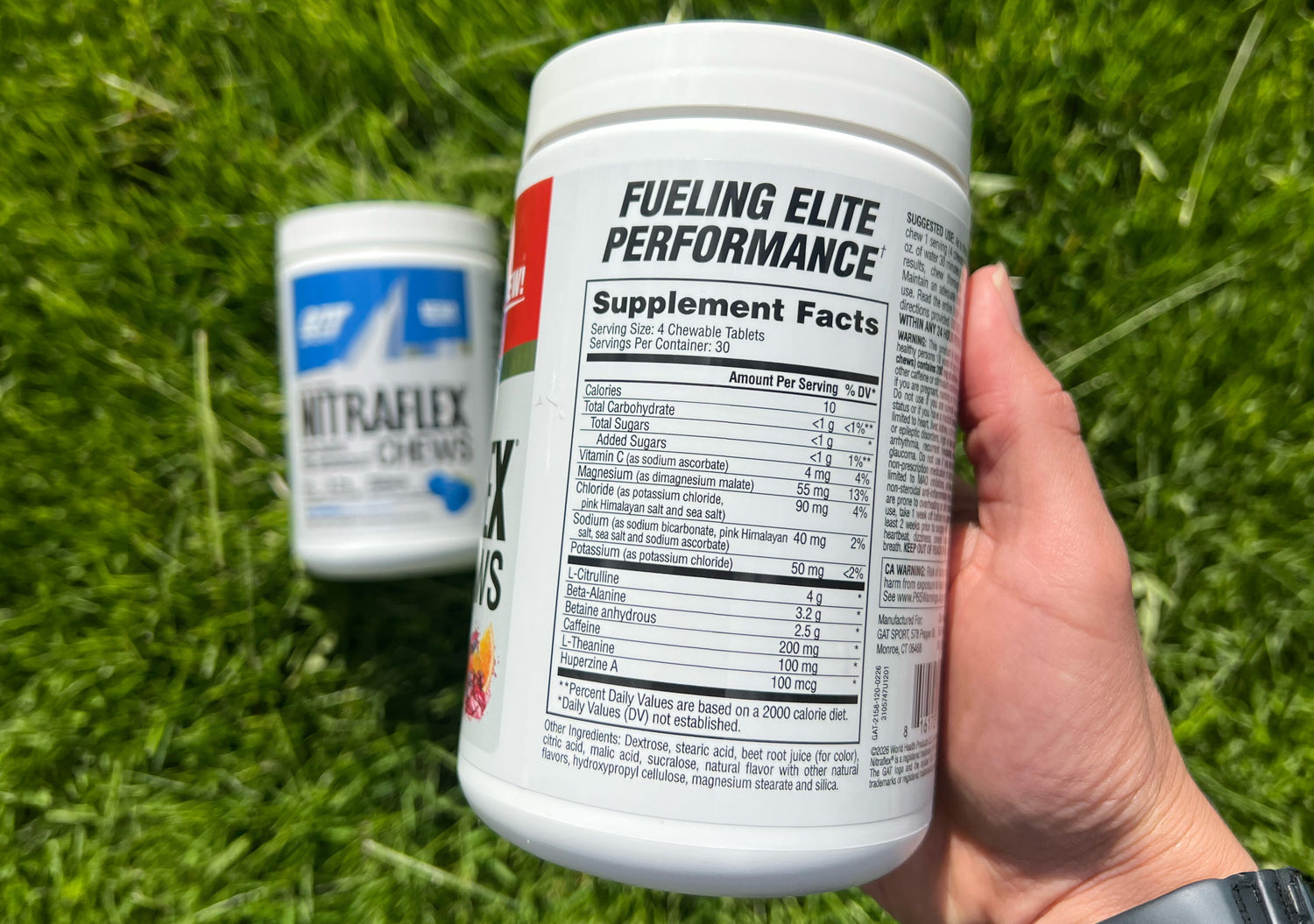
Nitraflex Pre-Workout Chews exemplify the engineered approach to pre-workout supplementation. The formula includes every compound identified as beneficial for tactical athletes: 200mg caffeine for energy and focus, 3.2g beta-alanine for muscular endurance, 4g L-citrulline for blood flow enhancement, 2.5g betaine anhydrous for power output, 100mg L-theanine for smooth caffeine delivery, and 100mcg huperzine A for cognitive support.
This represents a complete performance stack in a format that requires no mixing, no refrigeration, and no compromise in demanding environments. Each ingredient appears at research-supported doses rather than token amounts designed for label claims.
Beta-Alanine: Tactical Performance Enhancement
The 3.2g beta-alanine dose aligns with research showing that tactical athletes benefit from beta-alanine supplementation. The ISSN position stand notes that the training and duties of military personnel often consist of prolonged and rigorous exercise resulting in reductions in physical and cognitive performance, making beta-alanine supplementation potentially advantageous for attenuating fatigue and enhancing neuromuscular performance [5].
Research specifically examining tactical populations demonstrates positive effects on military-specific tasks, validating beta-alanine's inclusion in performance-oriented formulations designed for high-stress environments [5].
The complete Nitraflex formula demonstrates the multi-ingredient approach that research shows superior to single-compound supplementation. Studies examining multi-ingredient pre-workout supplements document improvements in exercise performance compared to individual ingredients alone [8].
The ISSN beta-alanine position stand notes that combining beta-alanine with other ergogenic aids such as creatine and multi-ingredient pre-workout formulas has gained popularity specifically because of enhanced performance outcomes [5]. This scientific support for combination formulations explains why tactical athletes choose comprehensive pre-workout systems over simple stimulant beverages.
The Convenience Factor Fallback
The primary advantage energy drinks maintain over pre-workout supplements is convenience. Energy drinks require no preparation, remain stable at room temperature, and are universally available. These factors create a compelling case for situations where supplement preparation is impractical.
However, this convenience advantage disappears with chewable pre-workout formats. Nitraflex Chews deliver the complete performance formula in a format that matches energy drink convenience while providing superior performance benefits. No mixing required, no refrigeration needed, and complete portability for any training environment.
The convenience argument for energy drinks assumes that athletes must choose between performance and practicality. Chewable pre-workout formats eliminate this compromise by delivering research-backed performance enhancement in a format as convenient as any energy drink.
When comparing energy drinks to pre-workout supplements on a per-serving basis, the performance difference becomes clear. A typical energy drink provides 200mg caffeine plus minimally dosed support ingredients for $2-4 per serving. A quality pre-workout provides equivalent caffeine plus clinically dosed performance compounds for similar or lower cost per serving.
The value proposition improves dramatically when considering the performance difference. Energy drinks deliver temporary stimulation that fades without meaningful training enhancement. Pre-workout supplements provide sustained performance benefits that compound over time through improved training quality.
For athletes who train consistently, the performance enhancement from properly dosed beta-alanine, citrulline, and betaine translates to measurable improvements in strength, endurance, and training capacity that justify any cost difference.
Memorial Day honors those who served in the most demanding performance environments imaginable. Military service members understand better than most athletes that when performance matters, every advantage counts. They choose supplements based on what works under pressure, not what's convenient or heavily marketed.
The supplement choices of tactical populations provide valuable guidance for all serious athletes. If military personnel and first responders choose multi-ingredient pre-workout formulations over energy drinks for mission-critical performance, recreational athletes should consider the same evidence-based approach to their training supplementation.
The research supporting tactical athlete nutrition applies directly to civilian athletes pursuing serious training goals. The same physiological demands that require strategic supplementation in military environments exist in high-level athletic training, even if the consequences differ.
The ingredient gap between energy drinks and engineered pre-workout supplements is not subtle. Energy drinks provide caffeine-driven stimulation with minimal performance enhancement. Pre-workout supplements provide comprehensive performance support through research-backed ingredient combinations at clinically effective doses.
For athletes who train seriously, the choice should align with performance goals rather than convenience preferences. Energy drinks serve their purpose for general energy and alertness, but they cannot match the training benefits of properly formulated pre-workout supplementation.
Nitraflex Pre-Workout Chews bridge the gap between convenience and performance by delivering the complete tactical athlete formula in a format that requires no preparation while providing maximum performance benefits. For athletes who train under demanding conditions, the formula is not optional.
Make the performance choice. Shop Nitraflex Pre-Workout Chews at gatsport.com and experience what engineered pre-workout supplementation delivers compared to convenience store alternatives.
[1] Gonzalez, D.E., et al. "International Society of Sports Nutrition Position Stand: Tactical Athlete Nutrition." Journal of the International Society of Sports Nutrition, vol. 19, no. 1, 2022, https://www.ncbi.nlm.nih.gov/pmc/articles/PMC9261739/.
[2] Performance Lab. "Coffee vs Pre-Workout vs Energy Drinks: What's Best?" Performance Lab, 30 July 2025, https://www.performancelab.com/blogs/nutrition/coffee-vs-pre-workout-vs-energy-drinks.
[3] Ultimate Nutrition. "Energy Drinks vs. Pre-Workout: Which One Fits Your Grind?" Ultimate Nutrition, 17 Oct. 2025, https://ultimatenutrition.com/blogs/nutrition/energy-drinks-vs-pre-workout-which-one-fits-your-grind.
[4] Harty, Patrick S., et al. "Multi-ingredient Pre-workout Supplements, Safety Implications, and Performance Outcomes: A Brief Review." Journal of the International Society of Sports Nutrition, vol. 15, no. 41, 2018, https://www.ncbi.nlm.nih.gov/pmc/articles/PMC6083567/.
[5] Trexler, Eric T., et al. "International Society of Sports Nutrition Position Stand: Beta-Alanine." Journal of the International Society of Sports Nutrition, vol. 12, no. 30, 2015, https://www.ncbi.nlm.nih.gov/pmc/articles/PMC4501114/.
[6] Men's Fitness. "Energy Drinks vs. Pre Workout Supplements – What's Better for the Gym." Men's Fitness, 29 Mar. 2026, https://www.mensfitness.com/news/energy-drinks-vs-pre-workout-supplements-whats-better-for-the-gym.
[7] Exercise & Sport Nutrition Lab. "ISSN Publishes Position Stand on Tactical Athlete Nutrition." Exercise & Sport Nutrition, 9 July 2022, https://exerciseandsportnutritionlab.com/issn-publishes-position-stand-on-tactical-athlete-nutrition/.
[8] Kreider, Richard B., et al. "International Society of Sports Nutrition Position Stand: Safety and Efficacy of Creatine Supplementation in Exercise, Sport, and Medicine." Journal of the International Society of Sports Nutrition, vol. 14, 2017, https://www.ncbi.nlm.nih.gov/pmc/articles/PMC5469049/.