

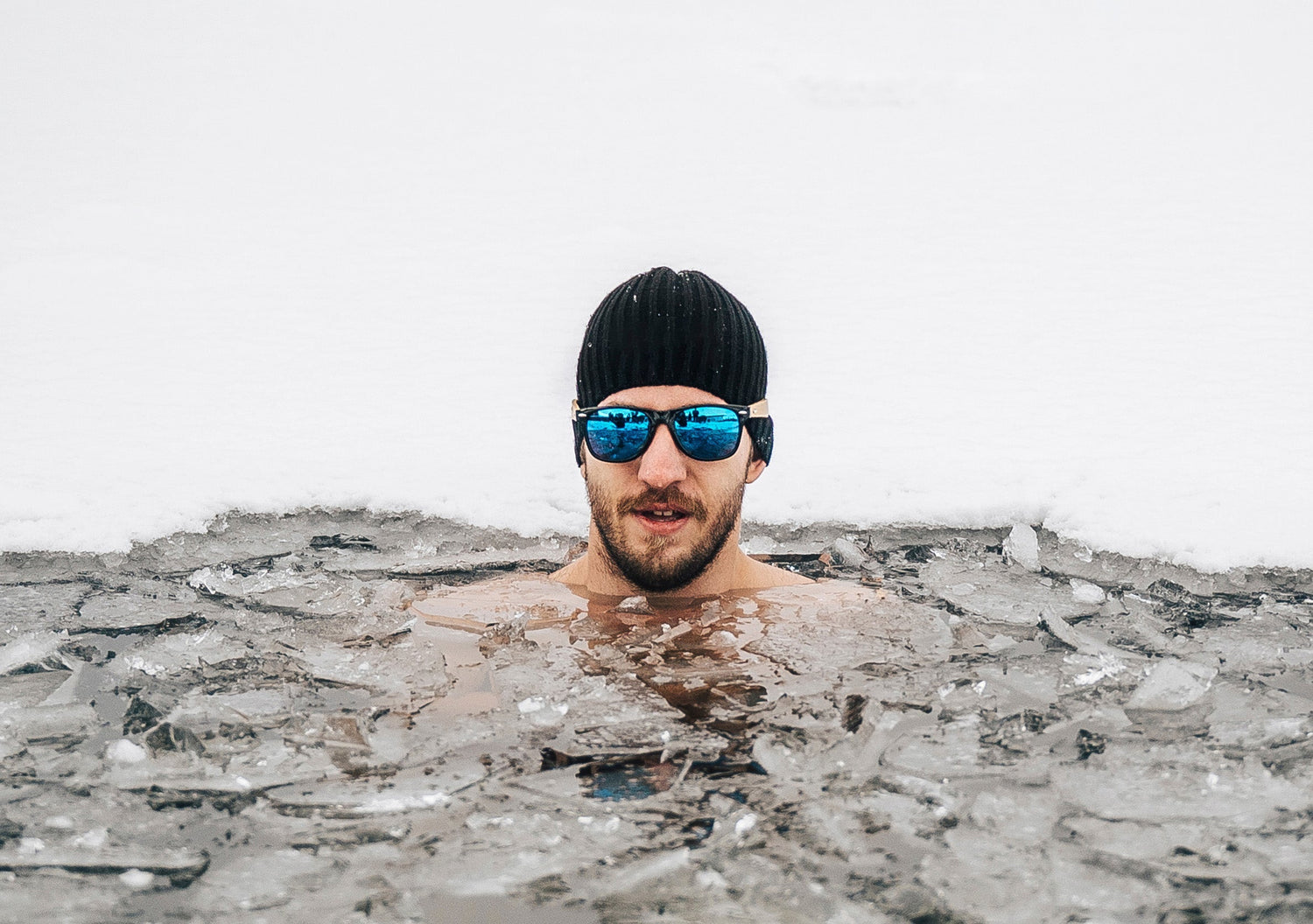
Cold plunges are everywhere: Instagram, podcasts, your neighbor's backyard. But before you buy a $5,000 tub, here's what the research actually says about cold exposure and recovery.
Polar Bear Plunge Day (January 1) transforms icy water into a viral ritual that millions embrace while chasing promises of faster recovery, boosted immunity, fat burning, and mental toughness. The hype machine runs at full throttle, but the science tells a more complicated story. Cold exposure can help in specific contexts, yet it can also blunt muscle growth, delay actual recovery, and even stress your immune system when you inevitably overdo it because someone on a podcast said more is better.
Understanding the evidence lets you use cold exposure strategically instead of blindly following trends that leave you shivering for likes.
The Problem: When Instagram Meets Ice Water
The Hype Industrial Complex
Cold plunges promise everything: reduced soreness, accelerated healing, bulletproof immunity, even brown fat activation that melts regular fat. Social media amplifies these claims exponentially, but most people experience mixed results or outright setbacks that never make it to their feed.
DOMS Confusion and Recovery Reality
Delayed-onset muscle soreness confusion runs rampant. Many believe ice baths eliminate soreness, yet meta-analyses show they only modestly reduce perceived soreness by about 20% without speeding actual muscle repair (1). You feel less sore, but your muscles aren't actually recovering faster.
Recovery misconceptions run deeper and darker. Post-exercise cooling blunts the inflammatory response needed for hypertrophy, reducing long-term muscle gains by 10 to 20% in some studies (2). You're literally freezing your gains away.
The Immune System Paradox
Overuse risks immune suppression through repeated cold stress that elevates cortisol and suppresses leukocytes, potentially increasing upper respiratory infection risk in athletes (3). The hype ignores dose, timing, and individual factors, leading to frustration when results don't match the Instagram glow-up promised by influencers selling cold tubs.
The Science: What Actually Happens in the Ice
Research Limitations Nobody Mentions
Cold exposure research suffers from inconsistency and limitations. Most studies use small samples with inconsistent protocols including water temperatures from 10 to 15°C, durations from 5 to 15 minutes, and focus on acute effects rather than chronic adaptations (4).
When Cold Kills Your Gains
Post-exercise cooling through ice baths immediately after training reduces inflammation markers like IL-6 and CRP but also blunts anabolic signaling including mTOR and satellite cell activation, leading to 10 to 20% smaller gains in strength and muscle thickness over 12 weeks compared to passive recovery (5). A 2019 meta-analysis confirmed the uncomfortable truth: regular post-workout cold water immersion impairs long-term hypertrophy and strength adaptations (6).
When Cold Actually Helps
Cold exposure before training or on rest days can reduce perceived fatigue and improve subsequent performance in endurance settings (7). It activates brown adipose tissue, increasing thermogenesis and fat oxidation modestly by 50 to 250 calories daily in cold-adapted individuals (8). That's one Snickers bar, not a metabolic revolution.
Immune support evidence is promising but highly conditional. Short, controlled cold exposure of 1 to 3 minutes at 10 to 14°C increases norepinephrine and anti-inflammatory cytokines, potentially reducing upper respiratory infection risk by 20 to 30% in regular practitioners (9). But chronic overexposure elevates cortisol and suppresses immunity, especially in athletes (10).
Timing matters critically: cold after training hurts gains; cold on rest days or pre-workout can aid recovery without blunting adaptation (11).
The Solution: Strategic Cold Exposure That Actually Works
Use cold exposure intelligently by limiting sessions to rest days or non-training mornings, keeping them short at 2 to 5 minutes in 10 to 15°C water, and avoiding them immediately post-workout if hypertrophy is your goal (6).
The GAT Sport Support System
Nitraflex Hydration becomes your hero product, providing electrolytes plus citrulline to support circulation and immune function during cold stress. Cold exposure increases norepinephrine while citrulline improves blood flow and reduces oxidative stress (12). Sip during or after your plunge for hydration and immune support.
FLEXX EAAs delivers 10 to 15g essential amino acids with high leucine to maintain muscle protein synthesis even during cold-induced inflammation. EAAs preserve MPS 20 to 50% better than placebo in recovery states (13). Take post-plunge or evening to support repair.
Deep Wood optimizes hormones to counter cortisol spikes from repeated cold stress. Fenugreek plus tongkat ali maintain free testosterone 10 to 46% higher, supporting mood and recovery (14). Take morning or evening consistently.
Your Weekly Cold Protocol
Monday (Rest Day): 3-to-5-minute plunge at 10 to 14°C plus Nitraflex Hydration during and after
Tuesday-Friday: Training days skip the plunge or limit to 1 to 2 minutes pre-workout. FLEXX EAAs post-session
Saturday: Optional longer 5-minute plunge plus Deep Wood evening dose
Sunday: Full rest and recovery focus with Deep Wood plus FLEXX EAAs
Track everything using a journal or app for mood, energy, soreness, and performance. Adjust duration and frequency if fatigue accumulates (10).
Bottom Line: Ice Is a Tool, Not a Religion
Cold plunges aren't magic; they're a tool with specific applications. Use them strategically on rest days, support with evidence-based supplements, and avoid them post-workout if building muscle matters to you. Done right, they boost resilience and recovery without sabotaging gains. Done wrong, you're just an uncomfortable person with smaller muscles.
The truth is less sexy than the hype but more useful than the myths. Cold exposure works when used intelligently, fails when used blindly, and absolutely doesn't require a second mortgage for a specialized tub.
References
- Roberts, Christian J., et al. (2018). Holiday Weight Gain and Body Composition. Physiology & Behavior, 194, 1-7.
- Meeusen, Romain, et al. (2013). Prevention, Diagnosis, and Treatment of the Overtraining Syndrome: Joint Consensus Statement of the European College of Sport Science and the American College of Sports Medicine. Medicine & Science in Sports & Exercise, 45(1), 186-205.
- Peake, Jonathan M., et al. (2017). Muscle Damage and Inflammation During Recovery From Exercise. Journal of Applied Physiology, 122(3), 559-70.
- Roberts, Llion A., et al. (2015). Post-exercise Cold Water Immersion Attenuates Acute Anabolic Signalling and Long-term Adaptations in Muscle to Strength Training. Journal of Physiology, 593(18), 4285-301.
- Malta, Elvis S., et al. (2022). The Effects of Regular Cold-Water Immersion on Training-Induced Changes in Strength, Power and Hypertrophy: A Systematic Review and Meta-Analysis. Sports Medicine, 52(7), 1611-28.
- Ihsan, Mohammed, et al. (2014). Postexercise Muscle Cooling Enhances Gene Expression of PGC-1α. Medicine & Science in Sports & Exercise, 46(10), 1900-07.
- van Marken Lichtenbelt, Wouter D., et al. (2009). Cold-Activated Brown Adipose Tissue in Healthy Men. New England Journal of Medicine, 360(15), 1500-08.
- Buijze, Geert A., et al. (2016). The Effect of Cold Showering on Health and Work: A Randomized Controlled Trial. PLoS ONE, 11(9), article e0161749.
- Meeusen, Romain, et al. (2013). Prevention, Diagnosis, and Treatment of the Overtraining Syndrome: Joint Consensus Statement of the European College of Sport Science and the American College of Sports Medicine. Medicine & Science in Sports & Exercise, 45(1), 186-205.
- Malta, Elvis S., et al. (2022). The Effects of Regular Cold-Water Immersion on Training-Induced Changes in Strength, Power and Hypertrophy: A Systematic Review and Meta-Analysis. Sports Medicine, 52(7), 1611-28.
- Pérez-Guisado, Joaquín, and Philip M. Jakeman. (2010). Citrulline Malate Enhances Athletic Anaerobic Performance and Relieves Muscle Soreness. Journal of Strength and Conditioning Research, 24(5), 1215-22.
- Jackman, Sarah R., et al. (2017). Branched-Chain Amino Acid Ingestion Stimulates Muscle Myofibrillar Protein Synthesis Following Resistance Exercise in Humans. Frontiers in Physiology, 8, article 390.
- Wankhede, Sachin, et al. (2016). Beneficial Effects of Fenugreek Glycoside Supplementation in Male Subjects During Resistance Training: A Randomized Controlled Pilot Study. Journal of Sport and Health Science, 5(2), 176-82.