

Pre-workout makes your heart explode. It only works the first few times. It is just caffeine in expensive packaging. Three myths. Three wrong answers. Here is what the research actually says.
Pre-workout misinformation keeps athletes from using a genuinely effective performance category and pushes others toward under-dosed products out of unfounded fear about properly formulated supplements. The gap between perception and reality in pre-workout supplementation is wide enough to affect training decisions that matter for long-term progress.
Research on citrulline, beta-alanine, and the caffeine and L-theanine combination demonstrates meaningful improvements in pump, muscular endurance, and focused performance. Tolerance to caffeine develops over time but is reversible. Cardiac concerns at clinical doses in healthy adults are not supported by current evidence.
Myth #1: "Pre-Workout Will Destroy Your Heart"
The Reality: Clinical doses of caffeine in pre-workout supplements do not pose cardiac risks for healthy adults, and research shows more nuanced cardiovascular effects than the scare stories suggest.
The heart explosion myth stems from misunderstanding normal caffeine physiology and extrapolating from extreme cases involving massive doses or underlying health conditions. Research examining caffeine's cardiovascular effects at pre-workout doses tells a different story.
Studies demonstrate that caffeine at 1.5 to 3.0 mg/kg body weight (equivalent to 1 to 3 cups of coffee) actually lowers heart rate during submaximal exercise in non-habitual users, reducing it by 4 to 7 beats per minute compared to placebo [1]. The same research showed that while caffeine increased resting systolic blood pressure, it had no effect on blood pressure during exercise [1].
More comprehensive research confirms that caffeine affects autonomic control but does not create dangerous cardiovascular responses in healthy adults. A 2017 study examining caffeine's effects during and after moderate exercise found that while caffeine influenced blood pressure recovery, it did not affect heart rate, respiratory rate, or oxygen saturation during exercise [2].
Key Finding: The International Society of Sports Nutrition's position stand on caffeine confirms that performance benefits occur consistently at 3 to 6 mg/kg bodyweight, with minimal effective doses potentially as low as 2 mg/kg [3]. For a 180-pound athlete, this translates to roughly 245 to 490mg caffeine, well within safe parameters for healthy adults.
Caffeine Dose vs. Cardiovascular Response
|
Dose Range |
Equivalent |
Heart Rate Effect |
Blood Pressure |
Safety Profile |
|
1.5 to 3.0 mg/kg |
1 to 3 cups coffee |
Reduces during exercise |
Slight increase at rest |
Safe for healthy adults |
|
3 to 6 mg/kg |
Performance dose |
Minimal change |
Temporary elevation |
ISSN recommended range |
|
Over 400mg daily |
High intake |
Variable |
May cause sustained increase |
Monitor for sensitivity |
The Bottom Line: Properly dosed pre-workout supplements pose no cardiac risk to healthy adults. The cardiovascular effects are well-studied, predictable, and generally beneficial for exercise performance.
Myth #2: "Tolerance Makes Pre-Workout Useless After a Few Uses"
The Reality: Caffeine tolerance is real, develops with chronic daily use over weeks rather than days, and is reversible with strategic cycling or withdrawal periods.
The tolerance myth creates the false impression that pre-workout supplements become permanently ineffective, leading athletes to either avoid them entirely or escalate to dangerous doses. Research shows that tolerance follows specific patterns and can be managed effectively.
A controlled trial published in the Journal of Sports Sciences demonstrated that 28 days of low-dose caffeine supplementation (1.5 to 3.0 mg/kg/day) completely eliminated the acute performance benefits that were present before the supplementation period in low-habitual caffeine consumers [4]. The performance benefit observed during pre-supplementation testing was no longer apparent after four weeks of chronic caffeine intake.
Comprehensive review research on habitual caffeine use in athletes confirms that regular daily consumption can blunt caffeine's performance-enhancing impact, though the precise timeline of tolerance development varies based on dose, frequency, and individual response [5]. Importantly, this tolerance is not permanent.
Foundational pharmacological research established that chronic caffeine administration results in tolerance that is "virtually complete, pharmacologically specific, and fully reversible when drug treatment is stopped" [6]. Withdrawal periods are commonly recommended to restore caffeine sensitivity, though the optimal duration remains an active area of research [5].
Caffeine Tolerance Patterns
|
Usage Pattern |
Tolerance Status |
Performance Impact |
Practical Approach |
|
Single acute dose |
None |
Full ergogenic benefit |
Standard pre-workout use |
|
Intermittent use, 2 to 3x per week |
Limited |
Most benefits maintained |
Sustainable long-term pattern |
|
Daily low-dose use, 4+ weeks |
Measurable in low-habitual users |
Acute benefits may diminish |
Consider withdrawal period |
|
Withdrawal period, 7+ days |
Sensitivity restoring |
Ergogenic potential returning |
Optimal duration under investigation |
Practical Application: Strategic cycling protocols, where caffeine use is paused for a period before key training or competition events, are commonly recommended by practitioners. While the optimal cycling pattern remains under active investigation, the available evidence supports periodic breaks from chronic caffeine use to maintain ergogenic potential [5].
The Bottom Line: Tolerance is a manageable aspect of caffeine use, not a permanent limitation. Strategic cycling and intermittent use patterns help maintain effectiveness over the long term.
Myth #3: "Pre-Workout Is Just Expensive Caffeine"
The Reality: Research-backed pre-workout ingredients provide performance benefits independent of caffeine, with synergistic effects when properly combined.
This myth dismisses the substantial research supporting individual pre-workout ingredients beyond caffeine. While caffeine provides energy and focus, compounds like L-citrulline, beta-alanine, and betaine address different performance limitations through distinct mechanisms.
L-Citrulline: Blood Flow and Endurance
L-citrulline research demonstrates significant performance improvements independent of caffeine. A placebo-controlled study found that 8g citrulline malate supplementation increased bench press repetitions by 52.92% compared to placebo, while reducing muscle soreness by 40% at 24 and 48 hours post-exercise [7].
The mechanism involves citrulline conversion to arginine, which increases nitric oxide production and improves blood flow. Pharmacokinetic research shows that oral L-citrulline supplementation raises plasma L-arginine concentrations more effectively than L-arginine itself, making it more effective for supporting circulation and nutrient delivery during exercise [8].
Beta-Alanine: Muscular Endurance
Beta-alanine provides measurable performance benefits through carnosine buffering that are completely independent of caffeine's stimulant effects. Research demonstrates that four weeks of beta-alanine supplementation (6.4 g/day) improved 4000-m time-trial performance by 6.3 seconds and increased time to exhaustion during supramaximal cycling in highly trained cyclists, with meaningful increases in anaerobic capacity and mean anaerobic power output [9].
Foundational research confirms that beta-alanine supplementation increases muscle carnosine concentrations by 42 to 66% after four weeks of supplementation, enhancing intracellular pH buffering during high-intensity exercise [10].
Synergistic Effects
Research supports the combination of these ingredients rather than relying on caffeine alone. A comprehensive review of multi-ingredient pre-workout supplements concluded that acute consumption may positively influence muscular endurance and subjective mood, while chronic consumption alongside resistance training appears to augment beneficial changes in body composition through increased lean mass accretion [11].
Pre-Workout Ingredient Performance Matrix
|
Ingredient |
Primary Benefit |
Mechanism |
Performance Window |
Independence from Caffeine |
|
Caffeine |
Energy and focus |
Adenosine blockade |
1 to 3 hours |
N/A: primary stimulant |
|
L-Citrulline |
Blood flow and pump |
Nitric oxide production |
1 to 3 hours |
Complete independence |
|
Beta-Alanine |
Muscular endurance |
Carnosine buffering |
Chronic loading |
Complete independence |
|
L-Theanine |
Smooth energy |
Neurotransmitter modulation |
2 to 4 hours |
Synergistic with caffeine |
|
Betaine |
Power output |
Cellular hydration and methylation |
1 to 3 hours |
Complete independence |
The Bottom Line: Properly formulated pre-workout supplements provide multiple performance benefits through complementary mechanisms. The "expensive caffeine" myth ignores substantial research supporting individual ingredients and their synergistic effects.
The Science Behind Nitraflex Chews
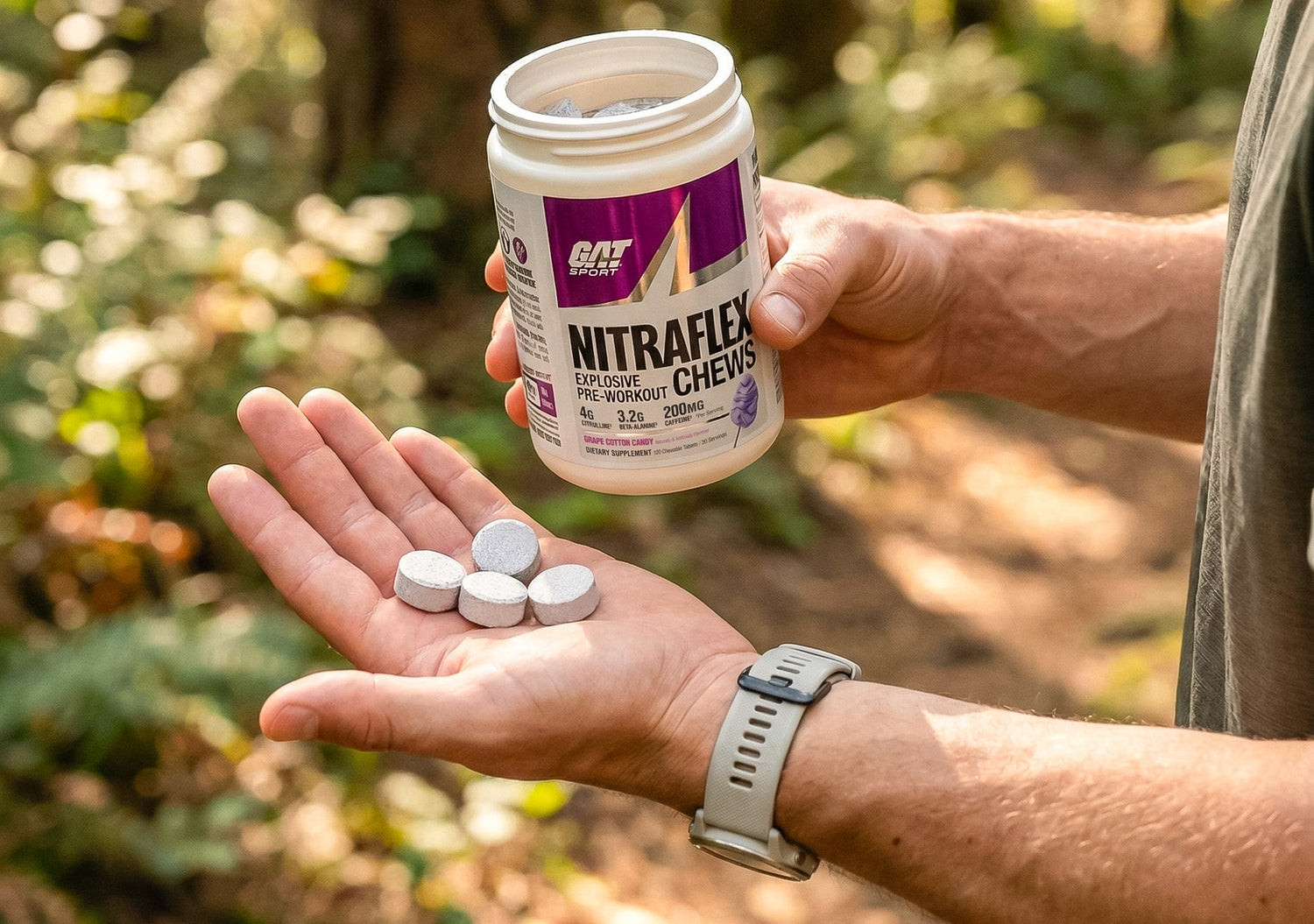
Nitraflex Pre-Workout Chews demonstrate how research-backed formulation addresses these myths directly. Every ingredient appears at clinically effective doses supported by peer-reviewed research, not token amounts designed for label claims.
Complete Formula Transparency: 200mg caffeine for energy and focus, 4g L-citrulline for nitric oxide support, 3.2g beta-alanine for muscular endurance, 2.5g betaine anhydrous for power output, 100mg L-theanine for smooth energy delivery, and 100mcg huperzine A for cognitive support.
Third-Party Testing: cGMP certified manufacturing ensures consistent dosing and purity. Third-party testing validates label accuracy and confirms absence of prohibited substances.
25 Years of Formula Development: The Nitraflex line represents decades of refinement based on user feedback, performance research, and formulation science. Each compound inclusion is supported by published research demonstrating measurable performance benefits.
Practical Application: Using Pre-Workout Effectively
Understanding these myths versus reality enables better pre-workout decisions:
For Heart Health Concerns: Healthy adults can use properly dosed pre-workout supplements safely. Consult healthcare providers if you have existing cardiovascular conditions or unusual sensitivity to caffeine.
For Tolerance Management: Plan periodic breaks from daily use rather than continuous chronic intake. Intermittent use patterns and scheduled withdrawal periods help preserve caffeine's ergogenic potential.
For Performance Optimization: Choose supplements with research-backed dosing of multiple ingredients. Single-ingredient or under-dosed products will not provide the multi-system benefits that quality pre-workout formulations deliver.
The Reality Check
Pre-workout supplementation is supported by decades of research demonstrating real performance benefits when products are properly formulated and used strategically. The myths surrounding heart risks, permanent tolerance, and ingredient effectiveness do not align with current scientific evidence.
Athletes who avoid pre-workout supplements due to these myths miss opportunities for meaningful performance enhancement. Those who use them without understanding tolerance patterns or ingredient synergies often experience suboptimal results.
The key is choosing products built on research rather than marketing, understanding how tolerance works, and following evidence-based protocols rather than fear-based decisions.
Nitraflex Pre-Workout Chews are third-party tested, cGMP certified, and built on 25 years of formula development. Every ingredient has a purpose. Every dose has research support.
Get the facts before your next session. Shop Nitraflex Pre-Workout Chews at gatsport.com.
References
[1] Green, Jonathan M., et al. "Low Doses of Caffeine Reduce Heart Rate During Submaximal Cycle Ergometry." International Journal of Sport Nutrition and Exercise Metabolism, vol. 17, no. 6, 2007, pp. 607-616, https://pubmed.ncbi.nlm.nih.gov/18156662/.
[2] Gonzaga, Luana Almeida, et al. "Caffeine Affects Autonomic Control of Heart Rate and Blood Pressure Recovery After Aerobic Exercise in Young Adults: A Crossover Study." Scientific Reports, vol. 7, 2017, article 14091, https://doi.org/10.1038/s41598-017-14540-4.
[3] Guest, Nanci S., et al. "International Society of Sports Nutrition Position Stand: Caffeine and Exercise Performance." Journal of the International Society of Sports Nutrition, vol. 18, no. 1, 2021, article 1, https://doi.org/10.1186/s12970-020-00383-4.
[4] Beaumont, Ross, et al. "Chronic Ingestion of a Low Dose of Caffeine Induces Tolerance to the Performance Benefits of Caffeine." Journal of Sports Sciences, vol. 35, no. 19, 2017, pp. 1920-1927, https://doi.org/10.1080/02640414.2016.1241421.
[5] Pickering, Craig, and John Kiely. "What Should We Do About Habitual Caffeine Use in Athletes?" Sports Medicine, vol. 49, no. 6, 2019, pp. 833-842, https://doi.org/10.1007/s40279-018-0980-7.
[6] Finn, I. B., and S. G. Holtzman. "Complete, Reversible, Drug-Specific Tolerance to Stimulation of Locomotor Activity by Caffeine." Psychopharmacology, vol. 84, no. 4, 1984, pp. 472-479, https://pubmed.ncbi.nlm.nih.gov/6438686/.
[7] Pérez-Guisado, Joaquín, and Philip M. Jakeman. "Citrulline Malate Enhances Athletic Anaerobic Performance and Relieves Muscle Soreness." Journal of Strength and Conditioning Research, vol. 24, no. 5, 2010, pp. 1215-1222, https://doi.org/10.1519/JSC.0b013e3181cb28e0.
[8] Schwedhelm, Edzard, et al. "Pharmacokinetic and Pharmacodynamic Properties of Oral L-Citrulline and L-Arginine: Impact on Nitric Oxide Metabolism." British Journal of Clinical Pharmacology, vol. 65, no. 1, 2008, pp. 51-59, https://doi.org/10.1111/j.1365-2125.2007.02990.x.
[9] Bellinger, Phillip M., and Clare L. Minahan. "Metabolic Consequences of β-Alanine Supplementation During Exhaustive Supramaximal Cycling and 4000-m Time-Trial Performance." Applied Physiology, Nutrition, and Metabolism, vol. 41, no. 8, 2016, pp. 864-871, https://doi.org/10.1139/apnm-2016-0095.
[10] Harris, R. C., et al. "The Absorption of Orally Supplied β-Alanine and Its Effect on Muscle Carnosine Synthesis in Human Vastus Lateralis." Amino Acids, vol. 30, no. 3, 2006, pp. 279-289, https://doi.org/10.1007/s00726-006-0299-9.
[11] Harty, Patrick S., et al. "Multi-Ingredient Pre-Workout Supplements, Safety Implications, and Performance Outcomes: A Brief Review." Journal of the International Society of Sports Nutrition, vol. 15, no. 1, 2018, article 41, https://doi.org/10.1186/s12970-018-0247-6.