

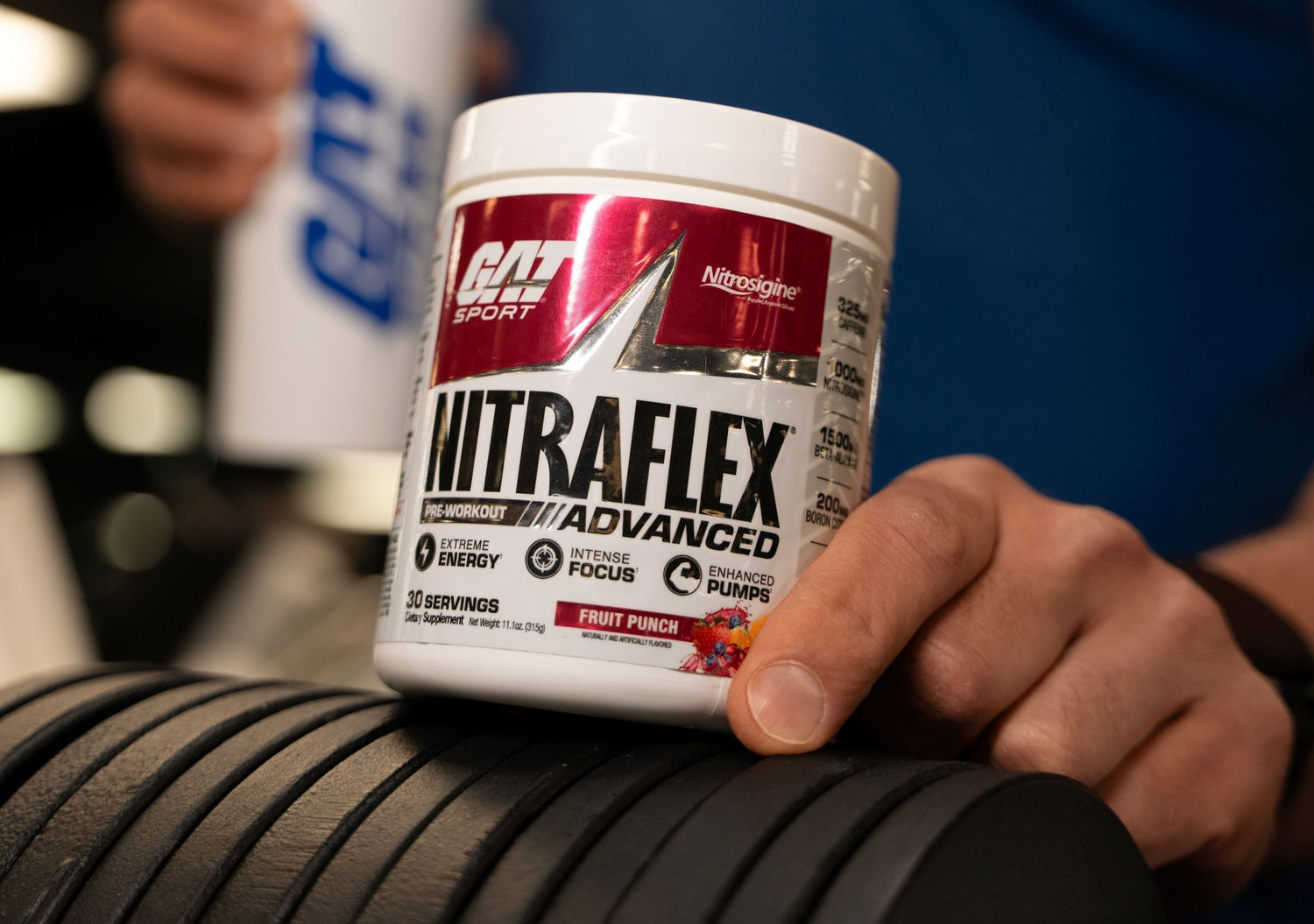
Red Bull has 80 mg of caffeine and enough sugar to stall your macros. A proper pre-workout has a full performance formula at two to three times the caffeine. This is not a close competition.
Walk into any gym or convenience store and you'll see the same scene: athletes grabbing an energy drink before training. It's convenient, tastes good, and delivers a quick jolt. But convenience comes at a cost. Most energy drinks give you caffeine and little else, often loaded with sugar that can sabotage fat-loss goals or cause an energy crash mid-session. True pre-workout supplements, on the other hand, are engineered as complete performance systems: delivering targeted ingredients that enhance blood flow, buffer fatigue, sharpen focus, and sustain energy without the downsides.
The difference isn't subtle. Energy drinks are beverages designed primarily for alertness. Pre-workouts are tools built for the gym. When you compare them side-by-side on what actually moves the needle in training: strength, endurance, pumps, focus, and recovery, pre-workouts win decisively for most athletes.
Why Athletes Default to Energy Drinks (And Why It's Costing Them)
Convenience drives the choice. Energy drinks are everywhere, cheap, and ready to drink. Many athletes assume "caffeine is caffeine," so why pay more for a powder or chew? The problem is that energy drinks prioritize taste and marketing over performance science. A typical can delivers 80–160 mg caffeine plus high sugar (often 25–50+ grams), taurine, B-vitamins, and little else of ergogenic value.
This approach falls short for serious training. Caffeine alone boosts alertness and endurance, but without supporting ingredients, you miss out on better blood flow, delayed fatigue, and smoother energy. Sugar can spike insulin and lead to a rebound crash, while the lack of nitric oxide support means smaller pumps and less efficient oxygen delivery to working muscles. Over time, relying on basic energy drinks limits training quality, slows progress, and can interfere with body composition goals.
The Performance Gap: What the Research Shows
Multiple studies highlight the limitations of energy drinks compared to dedicated pre-workout formulas. Energy drinks can provide a modest boost in alertness and some endurance tasks due to caffeine, but they rarely match the comprehensive benefits of well-formulated pre-workouts that include clinical doses of citrulline, beta-alanine, and synergistic compounds [1][2].
Citrulline stands out as a prime example. At 4–8 g, L-citrulline increases plasma arginine and nitric oxide production more effectively than arginine itself, improving blood flow, oxygen delivery, and repetitions to failure during resistance training. Meta-analyses show small but consistent improvements in high-intensity strength and power performance, with better effects on muscular endurance [3][4]. Energy drinks almost never contain meaningful amounts of citrulline.
Beta-alanine (3.2–6.4 g daily) raises muscle carnosine levels, acting as an intracellular buffer against acid buildup. The ISSN position stand confirms that 4–6 g/day for 2–4 weeks improves performance in tasks lasting 1–4 minutes and attenuates neuromuscular fatigue, with particular benefits in repeated high-intensity efforts [5]. Again, standard energy drinks lack this ingredient.
The combination of L-theanine with caffeine further widens the gap. Studies show that pairing L-theanine (often 100–200 mg) with caffeine produces smoother focus, better attention, and reduced jitteriness compared to caffeine alone. The combo improves cognitive performance and subjective alertness without the crash many experience from high-sugar energy drinks [6][7].
Caffeine dosage also matters. Effective ergogenic doses for performance range from 3–6 mg/kg body weight (roughly 200–400+ mg for most adults). Many energy drinks fall short or rely on sugar for palatability, while quality pre-workouts deliver precise, higher doses alongside performance enhancers. Overall, research comparing multi-ingredient pre-workouts to basic caffeinated beverages shows superior outcomes in strength, power, endurance, and training volume for the former [8].
Tale of the Tape: Head-to-Head Comparison
Here's a clear breakdown of how typical energy drinks stack up against a comprehensive pre-workout like those in the Nitraflex lineup:
Caffeine Delivery & Energy Profile
Energy drinks: 80–160 mg caffeine + sugar for a quick but often jagged lift.
Pre-workout: 200+ mg caffeine (e.g., in Nitraflex formulas) paired with L-theanine for smoother, longer-lasting focus without the hard crash. Research supports higher, strategic caffeine doses for better strength and endurance when combined with other actives.
Nitric Oxide & Blood Flow Support
Energy drinks: Minimal to none.
Pre-workout: Clinical doses of citrulline (often 3–6+ g) that enhance NO production, leading to better pumps, endurance, and nutrient delivery during lifts. Meta-analyses confirm benefits for repetition performance in resistance training.
Fatigue Buffering
Energy drinks: Rely almost entirely on caffeine.
Pre-workout: Beta-alanine at effective doses builds carnosine, delaying acid buildup and improving performance in repeated efforts. This is absent in standard energy drinks.
Sugar Content & Macro Impact
Energy drinks: Often 25–50+ g sugar per can, which can spike blood sugar and hinder fat-loss or steady energy goals.
Pre-workout: Typically, zero or very low sugar, preserving macros and avoiding insulin-related crashes.
Overall Ergogenic Value
Energy drinks provide basic stimulation.
Pre-workouts deliver a full system: caffeine + citrulline + beta-alanine + theanine + sometimes more, designed specifically for training performance. Studies on multi-ingredient pre-workouts frequently show advantages in power output, endurance, and training quality over simple caffeinated beverages.
The Nitraflex Advantage: Performance You Can Feel
Nitraflex Advanced and Nitraflex Sport are formulated as complete pre-workout systems, not just stimulants. They include high-dose citrulline for blood flow, beta-alanine for buffering, and balanced caffeine with supporting compounds for clean energy. The upcoming Nitraflex Pre-Workout Chews take convenience further: delivering a potent stack (including 200 mg caffeine, 4 g citrulline, 3.2 g beta-alanine, and 100 mg L-theanine) in a fast-acting chewable format that hits quicker than a can.
This isn't marketing hype. The ingredients align with ISSN recommendations and clinical research showing real improvements in strength, endurance, focus, and recovery when used consistently before training.
Making the Smart Switch
If you currently reach for an energy drink before the gym, consider the upgrade. Start with Nitraflex Sport or Advanced 20–30 minutes pre-workout. For on-the-go days, the new Pre-Workout Chews offer the same performance edge in a portable, tasty format. Pair either with proper nutrition and progressive training, and you'll notice better pumps, sustained energy, improved endurance in later sets, and sharper focus throughout the session.
Many athletes report ditching energy drinks entirely once they experience the difference a true pre-workout system provides: no sugar crash, better workouts, and faster progress toward their goals.
Bottom Line
Energy drinks give you caffeine. Pre-workouts give you a performance system. The tale of the tape is clear: for serious training, a dedicated pre-workout like the Nitraflex lineup outperforms basic energy drinks in almost every meaningful category.
Make the upgrade before May 5. Shop the full Nitraflex pre-workout lineup, including the new Pre-Workout Chews, at gatsport.com.
References
[1] Guest, N. S., et al. "International Society of Sports Nutrition Position Stand: Caffeine and Exercise Performance." Journal of the International Society of Sports Nutrition, vol. 18, no. 1, 2021, article 1.
[2] Curtis, J. M., et al. "Energy Drinks, Shots, and Pre-Workout Supplements: A Brief Review." NeuroSports, vol. 1, no. 2, 2024.
[3] Trexler, E. T., et al. "Acute Effects of Citrulline Supplementation on High-Intensity Strength and Power Performance: A Systematic Review and Meta-Analysis." Sports Medicine, vol. 49, no. 5, 2019, pp. 707–718.
[4] Vårvik, F. T., et al. "Acute Effect of Citrulline Malate on Repetition Performance During Strength Training: A Systematic Review and Meta-Analysis." International Journal of Sport Nutrition and Exercise Metabolism, vol. 31, no. 4, 2021, pp. 350–358.
[5] Trexler, E. T., et al. "International Society of Sports Nutrition Position Stand: Beta-Alanine." Journal of the International Society of Sports Nutrition, vol. 12, 2015, article 30.
[6] Giesbrecht, T., et al. "The Combination of L-Theanine and Caffeine Improves Cognitive Performance and Increases Subjective Alertness." Nutritional Neuroscience, vol. 13, no. 6, 2010, pp. 283–290.
[7] Kelly, S. P., et al. "L-Theanine and Caffeine in Combination Affect Human Cognition as Assessed by Acute Serial Tasks." Psychopharmacology, vol. 197, no. 1, 2008, pp. 113–122.
[8] Hoffman, J. R., et al. "Caffeine and Energy Drinks." Strength and Conditioning Journal, vol. 32, no. 1, 2010, pp. 15–20.