

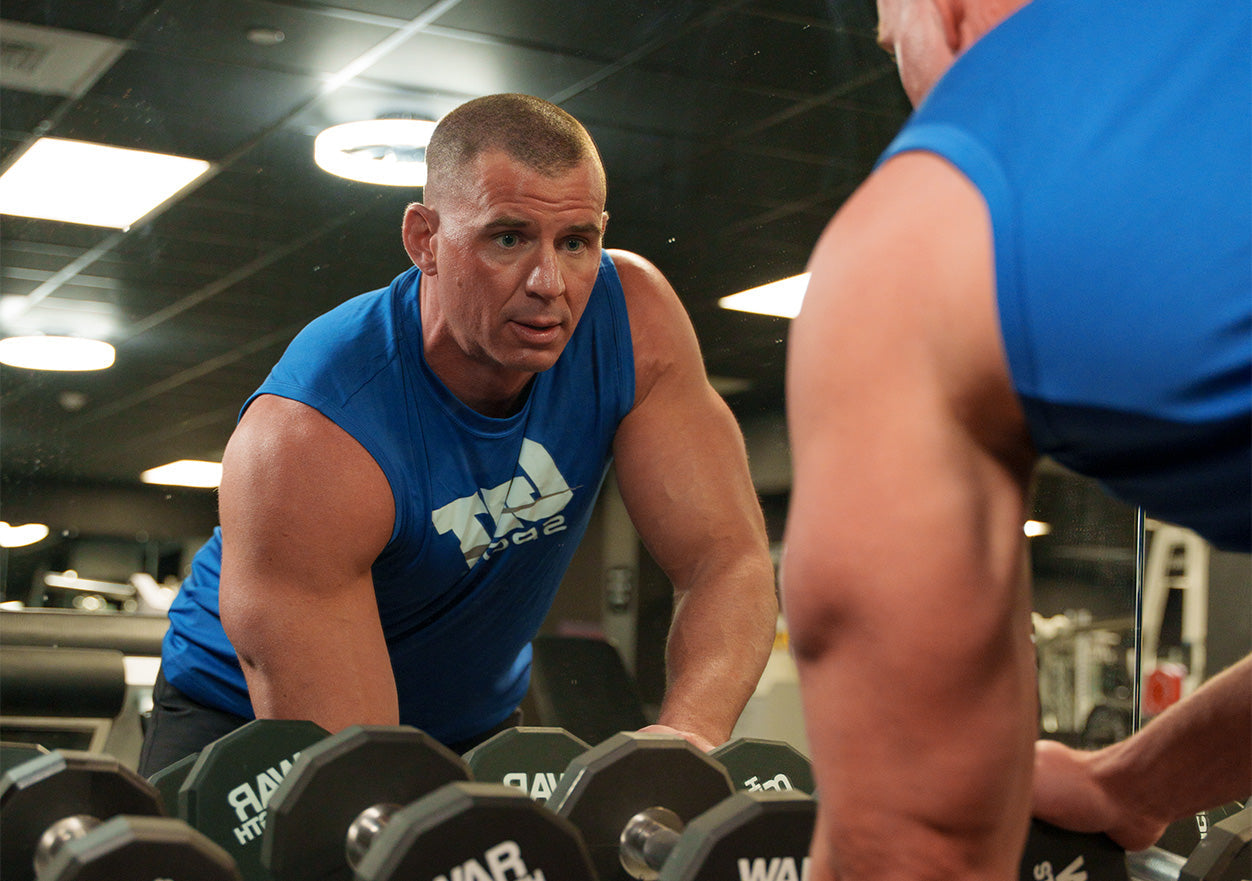
90 days. One quarter. Whether you crushed your Q1 fitness goals: new PRs, visible muscle gains, unstoppable energy, or barely survived the winter grind with inconsistent workouts and stalled progress, now is the time to extract maximum learning from your first 90 days of 2026. This isn't about beating yourself up over missed sessions or celebrating only the wins. It's about turning raw experience into a strategic advantage so Q2 becomes your breakout quarter. A true Q1 fitness reflection isn't passive; it's the highest-leverage activity you can do right now for 90-day progress and long-term quarterly goals fitness.
The Problem: Not Learning from Experience Means Repeating Mistakes
Most athletes set ambitious New Year's resolutions: drop body fat, build strength, improve endurance, then charge forward without pausing to analyze what actually happened. The result? The same pitfalls repeat: dehydration killing late-workout performance, poor recovery stalling gains, or motivation crashes because progress was never tracked. Without reflection, small issues compound into plateaus. You repeat ineffective habits, waste time on the wrong priorities, and wonder why Q2 feels like Groundhog Day. Research confirms this cycle: without deliberate review and progress monitoring, behavior change stalls and old patterns dominate.
The Science: Why Quarterly Reflection Drives Real Behavior Change
Behavior change and progress psychology rest on proven frameworks. Goal-setting theory shows that specific, challenging goals combined with regular feedback outperform vague intentions, especially in physical activity. Locke and Latham's foundational work summarizes decades of research demonstrating that specific, difficult goals reliably lead to higher task performance when paired with feedback and commitment [3].
A key meta-analysis of experimental studies found that interventions designed to increase monitoring of goal progress significantly promote goal attainment, with progress monitoring mediating improved outcomes. Changes in the frequency of progress monitoring explained the effects on behavior change [1].
Habit formation research reveals the 90-day window is gold: new behaviors take an average of 66 days to become automatic through daily repetition, with consistency being the biggest predictor (though the range varies widely from 18 to 254 days depending on the individual and behavior) [2]. Early indicators matter too; initial logging and wins predict long-term success.
Self-reflection boosts self-efficacy and sustained performance in exercise contexts. Studies show that physical fitness and exercise behaviors correlate with higher self-efficacy, and interventions enhancing self-efficacy improve exercise adherence [4].
Bottom line: Q1 fitness reflection isn't fluffy journaling. It's evidence-based psychology that prevents repetition and accelerates quarterly goals fitness.
The Solution: Structured Reflection Protocol + Q2 Optimization
Follow this proven 4-step protocol to turn Q1 data into Q2 dominance:
1. Collect and Review Objective Data
How to track fitness progress quarterly starts here:
- Performance benchmarks: Test 1RM lifts, timed endurance runs, or workout volume every 90 days.
- Body composition: Monthly measurements (waist, arms, chest), progress photos in consistent lighting/pose.
- Subjective logs: Energy levels, sleep quality, workout enjoyment, recovery speed.
- Training volume and adherence: Total sets × reps × weight lifted.
This multi-angle approach focuses on trends, not daily noise.
2. Celebrate Wins & Extract Lessons
For each goal, ask: What worked? (e.g., morning training consistency) What didn't? (e.g., mid-workout fatigue from poor hydration) Root-cause everything: nutrition gaps, recovery deficits, or training volume mismatches.
3. Identify Root Causes & Set Optimized Q2 Goals
Use specific, challenging goals. If Q1 showed low endurance, prioritize hyper-hydration and pump support. Adjust training split, nutrition timing, and sleep hygiene based on data.
4. Implement Immediate Optimization
Refresh your supplement stack to match new demands. This is where science meets real-world performance.

Product Integration: Refresh Your Stack with the Complete GAT Sport System
Your Q1 lessons deserve fuel that matches the insights. GAT Sport delivers a complete system: premium, verified formulations designed to transform effort into results across pre-, intra-, and post-workout phases.
Tailor your supplement stack refresh to Q1 data:
Endurance or pump issues? Add Nitraflex Glycerol: the ultra-premium liquid glycerol formula loaded with 20g glycerol per serving, plus betaine, beta-alanine, vitamin C, and sodium. It drives water deep into muscle cells for hyper-hydration, enhanced volume, stamina, strength, and workout capacity. Research on glycerol-induced hyperhydration shows it can improve fluid retention, support endurance performance, reduce perceived exertion, and enhance running economy in certain conditions, helping combat dehydration-related fatigue you may have noticed in Q1 [5][6].
Hydration or steady-state needs? Pair it with caffeine-free Nitraflex Hydration powder for clean, sustained fluid balance.
Recovery & growth lagging? Layer in Flexx EAAs + Hydration or JetMASS volumizing creatine for full-spectrum support.
Example Q2 stack based on common reflections: Nitraflex Glycerol (pre) + Nitraflex Sport (metabolic support) + recovery protein. This isn't guesswork; it's targeted optimization for your 90-day progress and GAT Sport Q2 goals.
Lock In Q2 Success Today
Your first 90 days of 2026 just handed you the blueprint. Now execute.
Download the free Q2 Planning Guide at gatsport.com (includes reflection templates, SMART goal worksheets, and stack builder). Then refresh your supplement stack with the Complete GAT Sport System: shop Nitraflex Glycerol and the full lineup today for evidence-backed performance that matches your lessons learned.
What was your biggest Q1 fitness reflection takeaway? Drop it in the comments and tag @GATSport; we may feature your story and help optimize your Q2 stack.
Here's to turning reflection into domination. Your best quarter starts now.
References
[1] Harkin, Benjamin, et al. "Does Monitoring Goal Progress Promote Goal Attainment? A Meta-Analysis of the Experimental Evidence." Psychological Bulletin, vol. 142, no. 2, 2016, pp. 198–229.
[2] Lally, Phillippa, et al. "How Are Habits Formed: Modelling Habit Formation in the Real World." European Journal of Social Psychology, vol. 40, no. 6, 2010, pp. 998–1009.
[3] Locke, Edwin A., and Gary P. Latham. "Building a Practically Useful Theory of Goal Setting and Task Motivation: A 35-Year Odyssey." American Psychologist, vol. 57, no. 9, 2002, pp. 705–717.
[4] Middelkamp, Jan, et al. "The Effects of a Self-Efficacy Intervention on Exercise Behavior in Sedentary Adults." Journal of Sports Science & Medicine, vol. 16, no. 2, 2017, pp. 243–250.
[5] Wagner, Donald R. "Hyperhydrating with Glycerol: Implications for Athletic Performance." Journal of the American Dietetic Association, vol. 99, no. 2, 1999, pp. 207–212.
[6] Herrera-Amante, C. A., et al. "Effects of Glycerol Hyperhydration on the Running Economy of Long-Distance Runners: A Randomized Crossover Clinical Trial." Frontiers in Nutrition, vol. 12, 2025, article 1630462.