

January 9th: the day more people abandon their resolutions than any other. But you're not most people. Here's the science of staying in the game when everyone else quits.
"Quitter's Day," typically the second Friday in January, marks the peak drop-off in fitness resolutions. Strava's analysis of 800 million activities reveals a 30 to 40% plunge in exercise tracking by mid-month (1). But that's just the beginning. By week three, 64% of resolvers have quit completely, according to a study of 1,000 participants (2). This "3-week wall" isn't random chance or weak willpower. It's where initial hype collides with biological and psychological reality, turning enthusiasm into exhaustion with predictable precision.
The Three-Week Motivation Cliff: Why It Happens
Novelty Exhaustion
The cliff hits hard when novelty exhaustion sets in. That "new year energy" that carried you through the first two weeks? It's gone, leaving you facing the grind without the dopamine high that made everything feel easy (3). Your brain has adapted to what was once exciting, and now you're left with the work minus the chemical reward.
Unrealistic Expectations
Marketing promises "30-day abs" and "21-day transformations," but biology doesn't care about your calendar. Visible progress takes 8 to 12 weeks minimum, leading to crushing frustration when mirrors don't change fast enough (4). You're not failing; you're just operating on marketing timelines instead of physiological ones.
System Failure
Without proper systems and anchors, small slips become avalanches. One study shows that a single skipped workout increases future skips by 61% (5). Miss Monday, and Tuesday becomes easier to skip. By Wednesday, you're "starting fresh next week," which becomes next month, which becomes next year.
Early Plateau Frustration
Beginners experience quick initial gains from neural adaptations and water weight changes. But by week three, these adaptations slow, creating the illusion of failure when you're actually right on schedule (6). The progress is still happening; it's just happening below the surface where you can't see it yet.
The Science: Habit Formation, Dopamine Adaptation, Progress Perception
The Neural Architecture of Habits
Habit formation isn't about willpower; it's about neuroscience. Repeated actions strengthen pathways in the basal ganglia, making behaviors automatic rather than effortful (7). The famous "66-day threshold" from Lally's research shows it takes a median of 66 days for habits like exercising to become embedded, with consistency being the accelerator (8). Week three is when most people quit, right when the real neural rewiring is just beginning.
Dopamine's Betrayal
Initial novelty spikes dopamine, creating the motivation that makes January feel easy. But dopamine normalizes by week three, requiring new rewards to sustain the same feeling (9). This isn't failure; it's adaptation. Your brain is designed to normalize to new baselines, which means motivation was always going to fade. Systems need to be in place before it does.
The Progress Perception Problem
The "goal gradient hypothesis" explains why vague goals kill motivation. We're motivated by perceived progress toward clear endpoints, but "get fit" has no endpoint (10). Without clear markers, every day feels like stagnation even when you're progressing. Consistent small wins rewire this perception, boosting self-efficacy and adherence by 50% (11).
The Solution: System-Based Approach with Supplementation Anchors
Survive the wall with systems that work when willpower doesn't. Build keystone habits that are small, daily actions triggering larger behavioral chains (12). Supplementation excels as an anchor because it's easy, trackable, and provides immediate sensory rewards.

GAT Sport's Consistency Stack
Nitraflex Sport becomes your hero product, providing reliable energy when motivation fails. Its beta-alanine and citrulline blend buffers fatigue, increasing endurance by 10 to 15% even when your mind wants to quit (13). Take it pre-workout to push through the week-three slump that claims most resolutions.
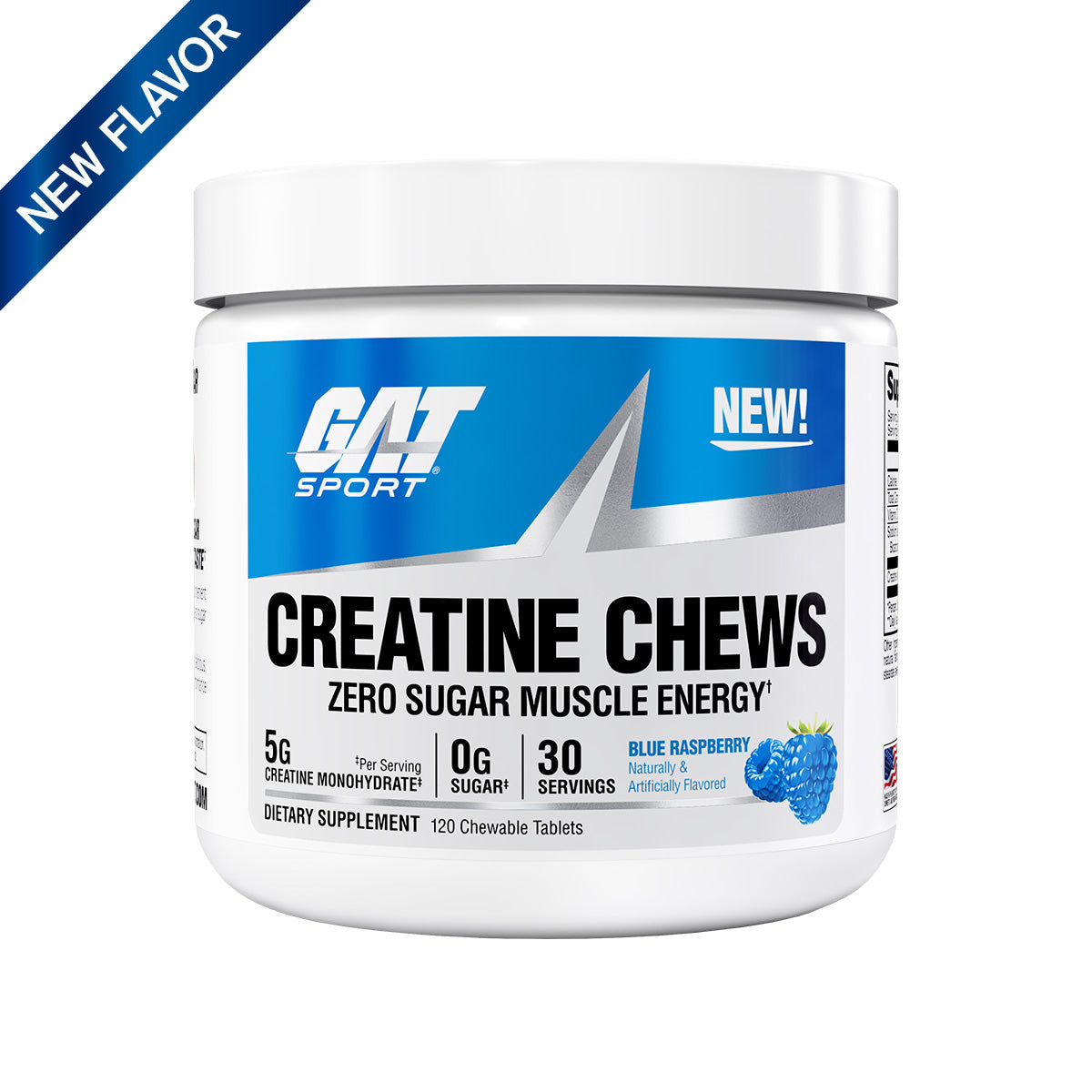
Creatine Chews offer a daily anchor habit that's literally too easy to skip. Each chew delivers 5g of creatine, building strength 8 to 20% with zero effort required (14). Pop one every morning to start your success chain. The act itself becomes the trigger for your entire routine.
Deep Wood supports energy and mood through the wall when everything feels harder. Fenugreek boosts free testosterone 10 to 46%, countering the stress-induced drops that make week three feel impossible (15).
Your 3-Week Survival System
Weeks 1-2: Establish Your Anchors
Morning Creatine Chew becomes non-negotiable. Nitraflex Sport fuels every training session. These aren't supplements; they're behavioral triggers that initiate your entire routine.
Week 3: Navigate the Wall
Add Deep Wood for mood and energy support. Reduce training volume by 20% if needed to avoid burnout while maintaining frequency (16). Track one non-scale win daily like "completed workout" or "hit protein target" to reframe progress perception (10).
Week 4 and Beyond: Stack for Success
Layer protein timing with 20 to 40g per meal for sustained muscle protein synthesis (17). By now, your anchors are becoming automatic, creating the foundation for long-term success.
This system turns the cliff into a launchpad. By month two, habits automate with 85% adherence versus 35% for motivation-reliant plans (8).
Long-Term Compound Effects
These anchors create compound returns over time. Consistent creatine yields 2 to 5kg lean mass in 12 weeks (14). Nitraflex Sport sustains training volume when others are quitting (13). Deep Wood optimizes hormones that support everything else (15).
Biohack your perception with apps that provide dopamine hits through streak tracking. Your brain needs rewards; give it measurable ones (9).
Bottom Line: Systems Beat Willpower
The 3-week wall claims victims because resolutions rely on motivation that biology guarantees will fade. Build anchors that work regardless of feelings, reframe progress to see what's actually happening, and watch motivation become irrelevant to your success.
The wall isn't your enemy. It's a filter that separates those with systems from those with wishes. Which side will you be on when week three arrives?
References
- Strava. (2019). New Study Reveals Second Friday in January Is When Most Quit New Year's Fitness Resolutions. Strava Press Release.
- Norcross, John C., et al. (2002). Auld Lang Syne: Success Predictors, Change Processes, and Self-Reported Outcomes of New Year's Resolvers and Nonresolvers. Journal of Clinical Psychology, 58(4), 397-405.
- Berridge, Kent C. (2012). From Prediction Error to Incentive Salience: Mesolimbic Computation of Reward Motivation. European Journal of Neuroscience, 35(7), 1124-43.
- Helms, Eric R., et al. (2014). Evidence-Based Recommendations for Natural Bodybuilding Contest Preparation: Nutrition and Supplementation. Journal of the International Society of Sports Nutrition, 11, article 20.
- Wing, Rena R., and Suzanne Phelan. (2005). Long-Term Weight Loss Maintenance. American Journal of Clinical Nutrition, 82(1), 222S-25S.
- Ribeiro, Alex S., et al. (2021). Resistance Training Volume Enhances Muscle Hypertrophy but Not Strength in Trained Men. Medicine & Science in Sports & Exercise, 53(1), 178-87.
- Graybiel, Ann M. (2008). Habits, Rituals, and the Evaluative Brain. Annual Review of Neuroscience, 31, 359-87.
- Lally, Phillippa, et al. (2010). How Are Habits Formed: Modelling Habit Formation in the Real World. European Journal of Social Psychology, 40(6), 998-1009.
- Berridge, Kent C. (2012). From Prediction Error to Incentive Salience: Mesolimbic Computation of Reward Motivation. European Journal of Neuroscience, 35(7), 1124-43.
- Kivetz, Ran, and Itamar Simonson. (2002). Earning the Right to Indulge: Effort as a Determinant of Consumer Preferences Toward Frequency Program Rewards. Journal of Marketing Research, 39(2), 155-70.
- Gardner, Benjamin, et al. (2012). Making Health Habitual: The Psychology of 'Habit-Formation' and General Practice. British Journal of General Practice, 62(605), 664-66.
- Duhigg, Charles. (2012). The Power of Habit: Why We Do What We Do in Life and Business. Random House.
- Hoffman, Jay R., et al. (2010). Effect of Beta-Alanine Supplementation on the Onset of Blood Lactate Accumulation (OBLA) During Treadmill Running: Pre/Post 2 Treatment Experimental Design. Journal of the International Society of Sports Nutrition, 7, article 20.
- Kreider, Richard B., et al. (2017). International Society of Sports Nutrition Position Stand: Safety and Efficacy of Creatine Supplementation in Exercise, Sport, and Medicine. Journal of the International Society of Sports Nutrition, 14, article 18.
- Wankhede, Sachin, et al. (2016). Beneficial Effects of Fenugreek Glycoside Supplementation in Male Subjects During Resistance Training: A Randomized Controlled Pilot Study. Journal of Sport and Health Science, 5(2), 176-82.
- Rønnestad, Bent R., et al. (2015). Optimizing Strength Training for Cycling Performance: 4- to 12-Week Periodization in Elite Cyclists. European Journal of Applied Physiology, 115(3), 593-601.
- Jäger, Ralf, et al. (2017). International Society of Sports Nutrition Position Stand: Protein and Exercise. Journal of the International Society of Sports Nutrition, 14, article 20.