

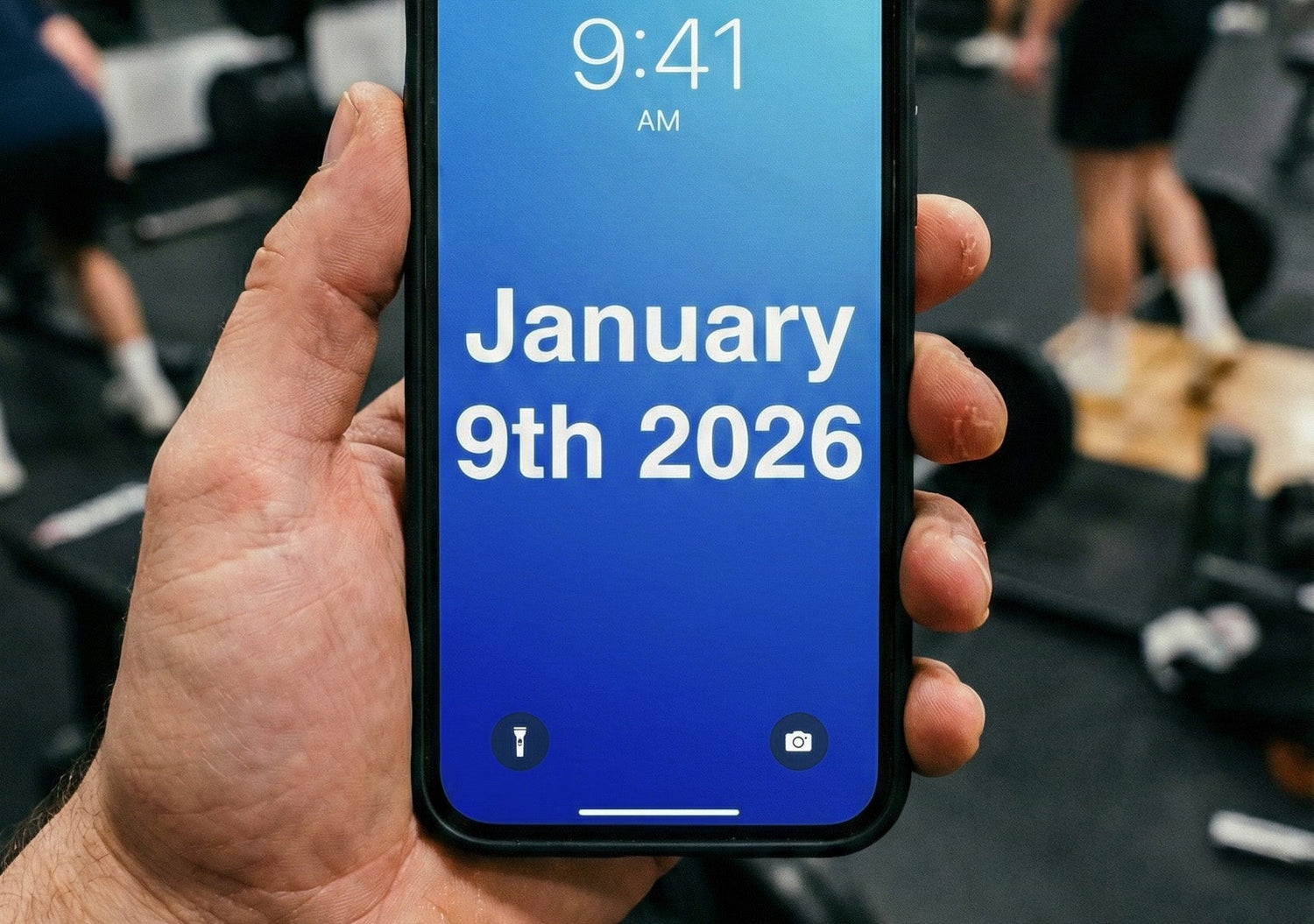
January 9th: the day more people abandon their resolutions than any other. But you're not most people. Here's the science of staying in the game when everyone else quits.
"Quitter's Day," the second Friday in January, marks the peak abandonment of New Year's resolutions. Strava's analysis of over 800 million activity logs reveals a sharp drop in exercise tracking by mid-January (1). Studies consistently report that 80-92% of resolutions fail by February, with most crumbling within the first two weeks (2). This isn't a moral failing; it's a clash between human psychology and poorly designed plans. But with neuroscience-backed strategies and daily anchors like strategic supplementation, you can defy the statistics and make 2026 your breakthrough year.
The Problem: Why Resolutions Crumble
Resolution failure stems from three deep-rooted psychological pitfalls that strike with predictable precision.
First, unrealistic expectations set the stage for defeat. People aim for drastic changes like "gym every day" or "lose 20 pounds in a month," ignoring that sustainable progress requires gradual adaptation. Research shows aggressive goals lead to burnout, with 35% of failed resolvers citing unrealistic targets as the primary cause (3). Your body doesn't care about your arbitrary timeline. It follows biological laws that can't be rushed without consequences.
Second, lack of systems leaves you reliant on fleeting motivation. Without structured routines, life disruptions including work stress, illness, or travel derail efforts. Adherence drops 61% after just one missed day (4). Motivation is a feeling; systems are infrastructure. When the feeling fades, which it always does, only infrastructure remains.
Finally, resolution psychology amplifies the issue. The "fresh start effect" boosts initial enthusiasm, but without reinforcement, dopamine-driven novelty fades, leading to the mid-January crash (5). This creates a vicious cycle of guilt and gym anxiety, where 23% quit by Quitter's Day and 43% by month's end (6). You're literally fighting your own neurobiology, and biology always wins unless you understand how to work with it.
The Science: Building Unbreakable Habits
Habit formation is neuroscience, not willpower. The basal ganglia, your brain's habit center, strengthens neural pathways through repeated cue-behavior-reward loops, making actions automatic over time (7). This isn't motivational theory; its observable brain architecture changing through repetition.
The famous "66-day habit threshold" comes from research where it took a median of 66 days for behaviors like eating fruit or exercising to become habitual, with ranges from 18 to 254 days depending on complexity (8). Simple habits form faster. Complex routines take longer. But all habits follow the same neurological pattern: repetition creates automation.
Dopamine plays the starring role in this process. It surges during early repetitions, creating incentive salience that motivates consistency, but only if rewards are immediate and reinforcing (9). Miss this window, and habits fizzle before they form. This is why waiting months to see physical changes fails while feeling immediate energy from pre-workout succeeds.
Consistency is the multiplier that makes everything work. Studies show that even minor daily actions build self-efficacy, reducing dropout by 50-70% compared to sporadic efforts (10). For fitness, this means anchoring routines with non-negotiable rituals that trigger larger behaviors, turning fleeting resolutions into lifelong revolutions.
The Solution: A Systematic Approach with Supplementation as Your Anchor
Beat Quitter's Day by building systems around unbreakable daily anchors. Start with identity shift: instead of "I want to get fit," adopt "I am someone who trains consistently." This isn't positive thinking; it's cognitive restructuring that drives behavior change.
Implement keystone habits, small actions that cascade into bigger wins. Supplementation excels here because it's measurable, rewarding, and easy to make automatic. You can't forget to train when taking your morning supplements triggers the entire routine.
GAT Sport's Strategic Stack
Creatine Chews become your daily anchor habit that's impossible to skip. Each serving delivers 5g of creatine monohydrate, backed by over 30 years of research showing 8-20% strength gains and 2-5kg lean mass increase with consistent use (11). No mixing, no mess, just pop one every morning to trigger your routine. This builds dopamine loops as you feel the energy and pump rewards within weeks (12).
Nitraflex Burn addresses resolution body recomposition goals with its thermogenic blend of caffeine, green tea extract, and grains of paradise. This combination supports fat oxidation and appetite control, with studies on similar formulations showing 5-10% greater fat loss over 8-12 weeks (13). Take it mid-morning for sustained focus without crashes that derail afternoon productivity.
Nitraflex Sport activates your morning routine with beta-alanine and citrulline providing clean energy for workouts. Research proves these ingredients enhance endurance and reduce fatigue by 10-15% (14). This isn't about feeling wired; it's about maintaining intensity when motivation wanes.
Your Systematic Protocol
Days 1-9 (Pre-Quitter's Day)
Morning starts with Creatine Chews plus Nitraflex Sport to energize a 20–30-minute workout. This isn't about perfection; it's about presence. Midday, take Nitraflex Burn for metabolic support when energy typically dips. Track one win daily, something as simple as "completed session" or "hit protein target."
Weeks 2-4
Stack habits by adding protein timing with 20-40g per meal around training for optimal muscle protein synthesis (15). The supplements you've been taking consistently now anchor larger nutritional habits.
Month 2 and Beyond
Progressive overload becomes automatic. Weekly reviews reinforce consistency rather than relying on daily motivation. By now, your habits are approaching the 66-day threshold where automation begins.
This approach leverages neuroscience: by January 9th, your anchors are already forming, turning potential quit day into victory day. Studies confirm keystone habits like daily supplementation increase overall adherence by 40-60%, creating positive spillover to nutrition and sleep (16).
The Long-Term Reality
Expect real, measurable results. Consistent creatine users see sustained gains without plateaus, contradicting the myth that benefits are temporary (11). Thermogenics like Nitraflex Burn enhance body recomposition when paired with training, not through magic but through sustained metabolic support (13). Nitraflex Sport's nootropics support cognitive consistency, reducing the decision fatigue that kills routines (14).
This isn't hype or hope. It's a system designed for the 8-20% who succeed, built on understanding why the 80-92% fail. The difference isn't willpower, genetics, or secret knowledge. It's systematic execution of proven principles anchored by daily habits that become automatic before motivation fades.
Bottom Line: Systems Beat Statistics
Quitter's Day claims victims because resolutions rely on motivation that always fails. Revolutions win with systems that work regardless of feelings. Anchor your 2026 with unbreakable habits and watch gains compound while others restart every January.
The gym will empty by January 9th. The equipment will be available. The parking will improve. But you'll still be there, not through willpower but through systems that make quitting harder than continuing. That's the difference between resolution and revolution.
Because success isn't about not being a quitter. It's about building systems that make quitting irrelevant.
References
- Strava. (2019). New Study Reveals Second Friday in January Is When Most Quit New Year's Fitness Resolutions. Strava Press Release.
- Norcross, John C., et al. (2002). Auld Lang Syne: Success Predictors, Change Processes, and Self-Reported Outcomes of New Year's Resolvers and Nonresolvers. Journal of Clinical Psychology, 58(4), 397-405.
- Trexler, Eric T., et al. (2014). Metabolic Adaptation to Weight Loss: Implications for the Athlete. Journal of the International Society of Sports Nutrition, 11, article 7.
- Dai, Hengchen, et al. (2014). The Fresh Start Effect: Temporal Landmarks Motivate Aspirational Behavior. Management Science, 60(10), 2563-82.
- Duhigg, Charles. (2012). The Power of Habit: Why We Do What We Do in Life and Business. Random House.
- Yin, Henry H., and Barbara J. Knowlton. (2006). The Role of the Basal Ganglia in Habit Formation. Nature Reviews Neuroscience, 7(6), 464-76.
- Lally, Phillippa, et al. (2010). How Are Habits Formed: Modelling Habit Formation in the Real World. European Journal of Social Psychology, 40(6), 998-1009.
- Berridge, Kent C. (2012). From Prediction Error to Incentive Salience: Mesolimbic Computation of Reward Motivation. European Journal of Neuroscience, 35(7), 1124-43.
- Wing, Rena R., and Suzanne Phelan. (2005). Long-Term Weight Loss Maintenance. American Journal of Clinical Nutrition, 82(1), 222S-25S.
- Kreider, Richard B., et al. (2017). International Society of Sports Nutrition Position Stand: Safety and Efficacy of Creatine Supplementation in Exercise, Sport, and Medicine. Journal of the International Society of Sports Nutrition, 14, article 18.
- Hoffman, Jay R., et al. (2010). Effect of Beta-Alanine Supplementation on the Onset of Blood Lactate Accumulation (OBLA) During Treadmill Running: Pre/Post 2 Treatment Experimental Design. Journal of the International Society of Sports Nutrition, 7, article 20.
- Auddy, Biswajit, et al. (2008). A Standardized Withania Somnifera Extract Significantly Reduces Stress-Related Parameters in Chronically Stressed Humans: A Double-Blind, Randomized, Placebo-Controlled Study. Journal of the American Nutraceutical Association, 11(1), 50-56.
- Guest, Nanci S., et al. (2021). International Society of Sports Nutrition Position Stand: Caffeine and Exercise Performance. Journal of the International Society of Sports Nutrition, 18(1), article 1.
- Jäger, Ralf, et al. (2017). International Society of Sports Nutrition Position Stand: Protein and Exercise. Journal of the International Society of Sports Nutrition, 14, article 20.
- Ormsbee, Michael J., et al. (2014). Pre-Exercise Nutrition: The Role of Macronutrients, Modified Starches and Supplements on Metabolism and Endurance Performance. Nutrients, 6(5), 1782-808.
- Gardner, Benjamin, et al. (2012). Making Health Habitual: The Psychology of 'Habit-Formation' and General Practice. British Journal of General Practice, 62(605), 664-66.