
Your body sends the bill for skipped recovery whether you read it or not. The question is whether you notice the early notices or wait until the account is overdrawn and your performance falls off a cliff. Most lifters do the latter. They push through the quiet warning signs, chalking up the fatigue and flat sessions to a bad week, until suddenly they are stalled, run down, and staring at a forced deload they could have avoided.
The good news is that under-recovery announces itself early if you know what to watch for. Your body gives you clear signals long before performance collapses and catching them early means a small adjustment now instead of a costly setback later. Here are the five most common signs you are under-recovered, and exactly how to fix each one.
What Are the Signs You Are Under-Recovered?
The most common signs of under-recovery are persistent fatigue that does not lift with a normal night's rest, disrupted sleep, changes in your morning heart rate or heart-rate variability, mood changes like irritability and low motivation, and stalled or declining performance in the gym. These markers are recognized indicators that your recovery is not keeping pace with your training and life stress. Spotting them early lets you adjust before they compound into a forced break. Here are the five to watch, with fixes for each.
1. Persistent, Heavy Fatigue
The first and most obvious sign is a tiredness that does not lift. Everyone feels worn out after a hard session, but under-recovery shows up as a deep, persistent fatigue that lingers day after day, even after a normal night's sleep. Your limbs feel heavy, warm-ups feel like work, and your usual energy is simply gone. This kind of lingering fatigue is a recognized hallmark of accumulated under-recovery and the overreaching that precedes true overtraining [1].
The fix: Do not push harder into it. Reduce your training volume or intensity for a few days to a week and let your body catch up. Prioritize sleep and nutrition, and treat the fatigue as information, not weakness to be overridden.
2. Disrupted Sleep
It sounds backward, but being under-recovered often wrecks the very sleep you need to recover. You might struggle to fall asleep despite being exhausted, wake through the night, or sleep the hours and still feel unrefreshed. Because sleep is where the bulk of recovery happens, this becomes a vicious cycle: under-recovery disrupts sleep, and poor sleep deepens under-recovery. The performance stakes are real, since research shows sleep loss measurably impairs strength, power, and reaction time [2], while proper sleep visibly improves them [3].
The fix: Protect your sleep aggressively. Hold a consistent sleep and wake schedule, keep your room cool and dark, and cut caffeine well before bed. If stress is keeping you up, address the wind-down routine before reaching for anything else.
3. Changes in Your Morning Heart Metrics
Your autonomic nervous system, which governs stress and recovery, offers an early window into your recovery state, and you can monitor it. Heart-rate variability, the small variation between heartbeats, is a recognized, non-invasive tool for tracking how well you are adapting to training, with the trend over days mattering more than any single reading [4]. A sustained downward drift in your HRV trend, or a resting heart rate that sits noticeably above your normal baseline for several mornings in a row, can signal that your body is under strain and not bouncing back.
The fix: Track a morning metric consistently, whether HRV through an app or simply your resting pulse, and watch the trend. When it drifts the wrong way for several days, treat it as a cue to back off training intensity and prioritize recovery until it returns toward baseline.
4. Mood Changes and Irritability
Under-recovery is not only physical; it hits your mind and mood first for many people. Increased irritability, unusual anxiety, low motivation, and a general flatness are well-documented psychological markers of overreaching and inadequate recovery [1]. If you find yourself dreading workouts you normally enjoy, snapping at people over nothing, or feeling inexplicably down, your nervous system may be telling you it is overloaded. Psychological stress and physical recovery are deeply linked, and high stress measurably slows your physical recovery [5].
The fix: Take mood seriously as a recovery signal. Reduce your total load, both training and life stress where you can, and build in genuine downtime. Managing your stress is not separate from your training; it directly protects your ability to recover and perform.
5. Stalled or Declining Performance
The sign that finally gets everyone's attention is when the numbers stop moving or start going backward. Weights that felt manageable now feel heavy, your usual reps disappear, and progress stalls despite consistent effort. A decline in performance that persists even when you are training hard is one of the clearest markers that recovery has fallen behind the demands you are placing on your body [1]. By the time this shows up plainly, the earlier signs have usually been flashing for a while.
The fix: Resist the urge to train even harder to force progress, which only digs the hole deeper. Instead, deliberately reduce your training stress for a week or two to let your body absorb the work and rebound. Often a short, planned pullback is exactly what unlocks the progress that grinding could not.
Support the Rebound
Catching these signs early is half the battle; supporting your recovery is the other half. Two basics make the rebound smoother.
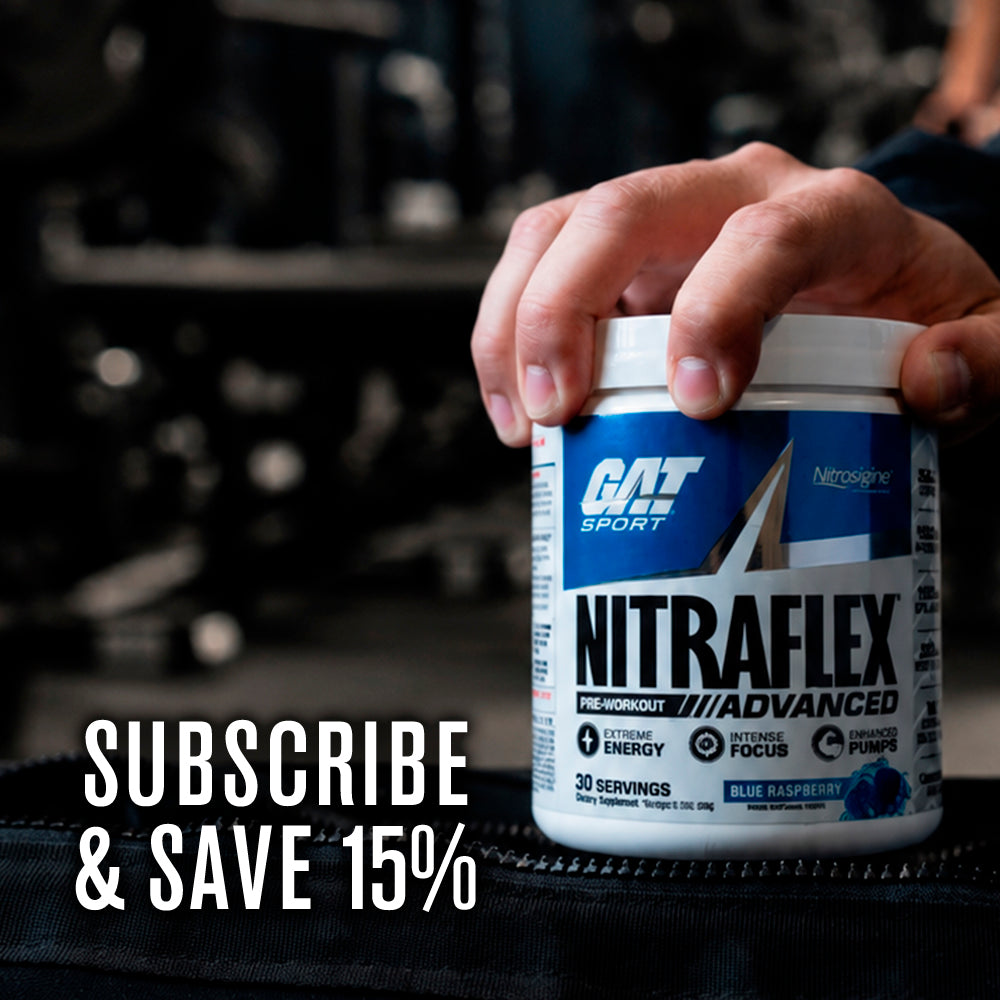
Hydration is foundational and easy to neglect. Even mild dehydration degrades focus and how you feel day to day [6], and when you are under-recovered, that added drain is the last thing you need. Nitraflex Hydration helps here, replenishing the fluid and electrolytes you lose to training and summer heat, so your daily readiness and recovery stay supported. Sip it through the day and around training to stay ahead of your losses.
Nutrition supports the deeper repair. Omega-3 fatty acids support the healthy inflammatory response involved in recovery, and research indicates they can modestly reduce markers of exercise-induced muscle soreness [7], with well-established benefits for heart and overall health [8]. GAT Sport Omega-3 Purified Fish Oil is a clean way to cover that gap and support the recovery your body is working to complete.
Read the Signs Early
Under-recovery is not a mystery that strikes without warning. It builds visibly, through fatigue, disrupted sleep, shifting heart metrics, mood changes, and stalling performance, giving you every chance to act before it costs you. The lifters who train consistently for years are not the ones who ignore these signals and grind through; they are the ones who read the bill early and pay it with a little rest before it compounds into a forced deload.
Check yourself against all five signs and act on any you recognize. Then recover smart, and compete harder, with GAT Sport at gatsport.com.
Key Takeaways
- Under-recovery announces itself early through fatigue, poor sleep, heart-metric changes, mood shifts, and stalled performance.
- Persistent fatigue that does not lift with normal rest is a hallmark of overreaching; the fix is to reduce load, not push harder.
- Track a morning metric like HRV or resting pulse and watch the trend, backing off when it drifts the wrong way.
- Mood changes and irritability are real recovery signals, since psychological stress slows physical recovery.
- Support the rebound with consistent electrolyte hydration and omega-3s, alongside reduced training stress.
Frequently Asked Questions
What are the signs you are under-recovered?
The most common signs are persistent fatigue that does not lift with normal sleep, disrupted sleep, changes in your morning heart-rate variability or resting heart rate, mood changes like irritability and low motivation, and stalled or declining performance in the gym. These are recognized markers that recovery is not keeping pace with your training and life stress. Spotting them early lets you adjust before they compound into a forced break.
How do you know if you are overtrained or just tired?
Ordinary tiredness lifts after a good night's sleep or a rest day, while under-recovery produces fatigue that persists for days despite adequate rest, often alongside disrupted sleep, mood changes, and stalling performance. True clinical overtraining is rare and involves a prolonged performance decline lasting weeks or months. Most lifters experiencing these signs are under-recovered, which is very fixable with reduced load and better recovery.
Does resting heart rate show under-recovery?
It can offer a clue, but the trend matters more than any single reading, and the evidence is mixed on resting heart rate alone. A resting pulse that sits well above your normal baseline for several consecutive mornings may signal strain, and heart-rate variability trends are considered a more sensitive autonomic marker. Track whichever you can consistently and watch the direction over days rather than reacting to one number.
How long does it take to recover from under-recovery?
It depends on how deep the under-recovery has become. Caught early, a few days to a week of reduced training volume, better sleep, and good nutrition often restores you. If the signs have been building for weeks, the rebound can take longer. The earlier you recognize the signals and reduce your training stress, the faster and easier the recovery.
What helps you recover faster?
The foundations are sleep, managed training load, and good nutrition. Prioritize seven to nine hours of quality sleep, reduce your training volume or intensity temporarily, and manage life stress, which directly affects physical recovery. Staying well hydrated with electrolytes and covering nutritional gaps with basics like omega-3s supports the process, but nothing replaces adequate sleep and a sensible reduction in training stress.
References
- Meeusen, Romain, et al. "Prevention, Diagnosis, and Treatment of the Overtraining Syndrome: Joint Consensus Statement of the European College of Sport Science and the American College of Sports Medicine." Medicine and Science in Sports and Exercise, vol. 45, no. 1, 2013, pp. 186-205, doi:10.1249/MSS.0b013e318279a10a.
- Craven, Jonathan, et al. "Effects of Acute Sleep Loss on Physical Performance: A Systematic and Meta-Analytical Review." Sports Medicine, vol. 52, no. 11, 2022, pp. 2669-2690, doi:10.1007/s40279-022-01706-y.
- Mah, Cheri D., et al. "The Effects of Sleep Extension on the Athletic Performance of Collegiate Basketball Players." Sleep, vol. 34, no. 7, 2011, pp. 943-950, doi:10.5665/sleep.1132.
- Plews, Daniel J., et al. "Training Adaptation and Heart Rate Variability in Elite Endurance Athletes: Opening the Door to Effective Monitoring." Sports Medicine, vol. 43, no. 9, 2013, pp. 773-781, doi:10.1007/s40279-013-0071-8.
- Stults-Kolehmainen, Matthew A., et al. "Chronic Psychological Stress Impairs Recovery of Muscular Function and Somatic Sensations Over a 96-Hour Period." Journal of Strength and Conditioning Research, vol. 28, no. 7, 2014, pp. 2007-2017, doi:10.1519/JSC.0000000000000335.
- Wittbrodt, Matthew T., and Melinda Millard-Stafford. "Dehydration Impairs Cognitive Performance: A Meta-Analysis." Medicine and Science in Sports and Exercise, vol. 50, no. 11, 2018, pp. 2360-2368, doi:10.1249/MSS.0000000000001682.
- Lv, Zheng-tao, et al. "Omega-3 Polyunsaturated Fatty Acid Supplementation for Reducing Muscle Soreness after Eccentric Exercise: A Systematic Review and Meta-Analysis of Randomized Controlled Trials." BioMed Research International, vol. 2020, 2020, article 8062017, doi:10.1155/2020/8062017.
- Siscovick, David S., et al. "Omega-3 Polyunsaturated Fatty Acid (Fish Oil) Supplementation and the Prevention of Clinical Cardiovascular Disease: A Science Advisory from the American Heart Association." Circulation, vol. 135, no. 15, 2017, pp. e867-e884, doi:10.1161/CIR.0000000000000482.