

Your pre-workout is not the problem. How you use it probably is. Most lifters buy a quality product, then quietly sabotage it with a handful of avoidable habits: bad timing, the wrong dose, or stacking it on top of three other sources of caffeine until they are wired, crashing, and sleeping terribly. The supplement takes the blame, but the routine around it is the real culprit.
As you settle into your fall training routine, this is the perfect moment to audit how you actually use your pre-workout. Small fixes here pay off immediately in better sessions, cleaner energy, and protected sleep. Here are seven common mistakes quietly undermining your training, and how to fix each one.
What Are Common Pre-Workout Mistakes?
The most common pre-workout mistakes are taking it at the wrong time, using the wrong dose for your body, stacking it with too many other stimulants, taking it too late in the day and wrecking your sleep, building tolerance through daily overuse, relying on it to fix bad sleep, and slamming the entire dose at once instead of pacing it. Nearly all of these come down to timing, dose, and stimulant management. Fix those, and your pre-workout starts working the way it should. Here are the seven in detail.
1. Taking It at the Wrong Time
Timing is the most common mistake, and it directly affects whether your pre-workout works. Take it too late and it kicks in halfway through your session; take it and rush into training immediately and it has not absorbed yet. Caffeine, the primary active ingredient in most pre-workouts, generally takes time to reach peak effect in your bloodstream. Aim to take your pre-workout roughly 30 to 60 minutes before you actually start lifting, so the energy and focus peak when you need them, not during your cooldown.
2. Using the Wrong Dose for Your Body
More is not automatically better and less may not be enough. The ISSN position stand on caffeine confirms that the ergogenic benefits appear reliably at doses of 3 to 6 milligrams per kilogram of body mass [1]. That means the right dose depends on your size, not on whatever a label calls "one scoop." A 250-pound lifter and a 130-pound lifter have very different caffeine needs. Know roughly where you fall in that range, and dose to your body rather than blindly following a generic serving size.
3. Stacking It With Too Many Stimulants
This is where lifters get into real trouble. They have a coffee, then a pre-workout, then an energy drink mid-session, and suddenly they have consumed a massive, jittery dose of caffeine without realizing it. The ISSN research is clear that individual tolerance to caffeine varies, and that benefits plateau rather than climbing endlessly with dose [1]. Piling stimulant on stimulant does not multiply your performance; it just multiplies the jitters, the crash, and the elevated heart rate. Count all your caffeine sources for the day, not just your pre-workout, and keep the total sensible.
4. Taking It Too Late in the Day
An evening or late-afternoon session fueled by a full-dose pre-workout is a recipe for wrecked sleep. Caffeine lingers in your system far longer than most people think. A landmark study found that a moderate dose of caffeine taken even 6 hours before bed significantly reduced total sleep time, demonstrating important disruptive effects on sleep [2]. Since sleep is where the bulk of your recovery and adaptation happens, sabotaging it with a late pre-workout undermines the very training you took the pre-workout to improve. For later sessions, this is exactly where a format you can dose carefully, or a lower-stimulant approach, becomes essential.
5. Building Tolerance Through Daily Overuse
If your pre-workout does not seem to hit like it used to, you have likely built up tolerance. Research on caffeine shows that regular, habitual use leads to habituation, where the body adapts and the same dose produces a smaller effect over time [3]. Lifters who slam a maximal dose every single day blunt their own response and end up chasing ever-larger amounts. The fix is strategic use: save your full pre-workout for the sessions that need it most, and consider lighter or stimulant-free options on easier days to keep your sensitivity high.
6. Relying on It to Fix Bad Sleep
A pre-workout can mask fatigue, but it cannot replace sleep. Lifters who consistently underslept and lean on ever-stronger stimulants to compensate are papering over a problem that keeps getting worse. Sleep has a direct, measurable effect on performance: research shows that extending sleep improves speed, accuracy, and reaction time in athletes [4]. No amount of caffeine recreates what proper sleep provides. Use your pre-workout to enhance a well-rested body, not to prop up a chronically exhausted one, and fix the sleep instead of drowning it in stimulants.
7. Slamming It All at Once Instead of Pacing It
When you down an entire scooped drink or an energy drink, you commit to the whole caffeine dose in one hit, with no ability to adjust. That all-or-nothing approach ignores that your ideal dose varies by day, session, and how much other caffeine you have had. A format you can pace piece by piece gives you control the fixed scoop never can. This is where Nitraflex Chews shine. Because you take them individually, you can dial your intake to match the session in front of you and your own sensitivity, rather than being locked into a single fixed hit. On a lighter day or a later session, take fewer; for a heavy session when you are fresh, take what you need. That control is exactly what solves several of the mistakes above at once.
Fix the Routine, Not Just the Product
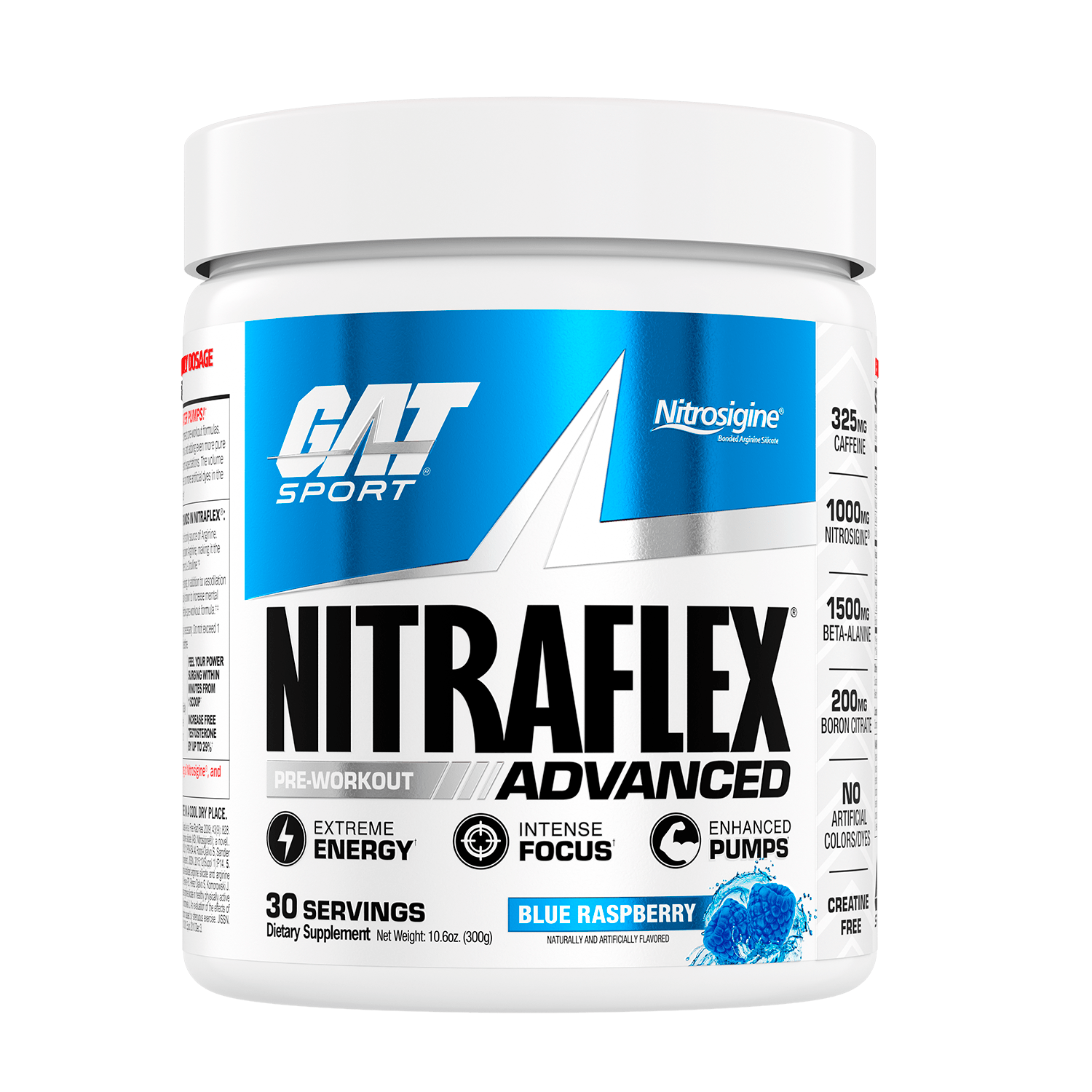
Notice how many of these mistakes come back to the same three things: timing, dose, and stimulant management. Get those right and your pre-workout finally delivers what it is supposed to. Nitraflex Chews make several of these fixes easy by giving you a portable, no-mix format you can pace and control, so you dial your caffeine instead of slamming it. For your full, unhurried sessions when you want the complete experience, Nitraflex Advanced delivers the standard pre-workout in a single scoop. Either way, the goal is the same: use the tool deliberately.
Your pre-workout is a genuinely useful tool when you respect how it works. Slamming it at the wrong time, in the wrong dose, on top of three other stimulants, and too late to sleep, that is what quietly kills your training. Fix the routine, and the same product you already own suddenly performs.
Check your routine against all seven mistakes and fix the obvious ones. Then go compete harder this fall with GAT Sport at gatsport.com.
Key Takeaways
- Most pre-workout problems come from how you use it, not the product itself: timing, dose, and stimulant management are the keys.
- Take your pre-workout roughly 30 to 60 minutes before training, and dose caffeine to your body weight, around 3 to 6 mg/kg.
- Count all your daily caffeine sources; stacking stimulants multiplies side effects, not performance.
- Caffeine taken even 6 hours before bed can significantly reduce sleep, so avoid late-day full doses.
- A format you can pace, like chews, lets you control your intake instead of committing to a fixed scoop all at once.
Frequently Asked Questions
What are common pre-workout mistakes?
The most common mistakes are taking it at the wrong time, using the wrong dose for your body weight, stacking it with too many other stimulants, taking it too late and disrupting sleep, building tolerance through daily overuse, using it to mask bad sleep, and slamming the whole dose at once instead of pacing it. Nearly all trace back to timing, dose, and stimulant management, which are the three things to get right.
When should you take pre-workout?
Take your pre-workout roughly 30 to 60 minutes before you start training. This gives the caffeine time to absorb and reach peak effect, so your energy and focus arrive when you are actually lifting, not during your warm-up or your cooldown. Timing it correctly is one of the simplest and most impactful fixes for getting more out of your pre-workout.
Can pre-workout ruin your sleep?
Yes, if taken too late in the day. Caffeine lingers in your system for many hours, and research found that a moderate dose taken even 6 hours before bed significantly reduced total sleep time. Since sleep drives recovery and performance, a late-day full-dose pre-workout can undermine your training. For evening sessions, use a lower dose, a stimulant-free option, or a format you can carefully control.
Why doesn't my pre-workout work anymore?
You have likely built up caffeine tolerance. Regular, habitual use leads to habituation, where your body adapts and the same dose produces a smaller effect over time. The solution is strategic use: reserve your full pre-workout for the sessions that need it most and use lighter or stimulant-free options on easier days. This keeps your caffeine sensitivity high, so the product works when you really want it.
How much caffeine should be in a pre-workout?
It depends on your body weight. The ISSN position stand identifies 3 to 6 milligrams per kilogram of body mass as the effective range for performance benefits. A larger lifter needs more than a smaller one to reach the same effect, which is why dosing to your body rather than a generic scoop size matters. Staying within this range, and counting all caffeine sources, keeps it effective without overdoing it.
References
- Guest, Nanci S., et al. "International Society of Sports Nutrition Position Stand: Caffeine and Exercise Performance." Journal of the International Society of Sports Nutrition, vol. 18, no. 1, 2021, article 1, doi:10.1186/s12970-020-00383-4.
- Drake, Christopher, et al. "Caffeine Effects on Sleep Taken 0, 3, or 6 Hours before Going to Bed." Journal of Clinical Sleep Medicine, vol. 9, no. 11, 2013, pp. 1195-1200, doi:10.5664/jcsm.3170.
- Pickering, Craig, and Jozo Grgic. "Caffeine and Exercise: What Next?" Sports Medicine, vol. 49, no. 7, 2019, pp. 1007-1030, doi:10.1007/s40279-019-01101-0.
- Mah, Cheri D., et al. "The Effects of Sleep Extension on the Athletic Performance of Collegiate Basketball Players." Sleep, vol. 34, no. 7, 2011, pp. 943-950, doi:10.5665/sleep.1132.