

Pull up your calendar and count the Saturdays between now and New Year's Eve. Thirteen. That is not a countdown to the holidays. That is a full training block, the exact length coaches use to take a lifter from base work to a peak, and it happens to end the year.
Most lifters will never see it that way, which is why most year-end PR attempts fail before they start. The failure is rarely effort. It is structure. Testing a max in December after three months of drifting is a coin flip; testing it after thirteen planned weeks is a result you built. Periodized, structured training tends to produce greater maximal strength gains than training without a plan [1], and the calendar has just handed you a perfectly sized block. Here is how to map it, week by real week, around the actual holidays sitting in your way.
How Do You Plan a Training Block That Ends With a PR in December?
Work backward from test week. Give the final days of December to max attempts, taper the week before, spend three weeks before that on heavy intensification, and fill October and November with volume accumulation. Manage effort with repetitions in reserve, keep training through Thanksgiving at reduced volume, and hold your daily creatine constant across all thirteen weeks.
The 13-Week Map
Every date below is real. The block starts Monday, October 5 and ends with a bar in your hands during the last week of the year. RIR means repetitions in reserve, how many reps you leave in the tank on your top sets, using the scale validated in the research as a practical way to gauge effort [2]. The targets in this table are coaching guidance for autoregulating the block, not prescriptions from any single study.
|
Week |
Dates |
Phase |
Focus |
Target RIR |
|
1 |
Oct 5 to 11 |
Accumulation |
Establish baseline volume, clean technique |
3 |
|
2 |
Oct 12 to 18 |
Accumulation |
Add a set to main lifts |
2 to 3 |
|
3 |
Oct 19 to 25 |
Accumulation |
Load creeps up, reps steady |
2 to 3 |
|
4 |
Oct 26 to Nov 1 |
Accumulation |
Highest set count of the block |
2 |
|
5 |
Nov 2 to 8 |
Accumulation |
Hold volume, push loads |
2 |
|
6 |
Nov 9 to 15 |
Accumulation |
Heaviest volume work |
1 to 2 |
|
7 |
Nov 16 to 22 |
Accumulation |
Close the volume phase strong |
1 to 2 |
|
8 |
Nov 23 to 29 |
Thanksgiving bridge |
Volume cut roughly in half, intensity kept |
2 to 3 |
|
9 |
Nov 30 to Dec 6 |
Intensification |
Sets of 4 to 6, heavy |
1 to 2 |
|
10 |
Dec 7 to 13 |
Intensification |
Heavy triples and doubles |
1 to 2 |
|
11 |
Dec 14 to 20 |
Intensification |
Heaviest working sets of the block |
1 |
|
12 |
Dec 21 to 27 |
Taper |
Volume drops hard, crisp moderate singles |
2 to 3 |
|
13 |
Dec 28 to 31 |
Test |
Work up, attempt PRs |
0 on the day |
Weeks 1 to 7: Build the Engine
October and early November are for accumulating the volume that everything later converts into strength. Add work gradually, keep most sets 2 to 3 reps shy of failure early, and let that tighten toward 1 to 2 as the phase matures. These are the longest sessions of the block, and if your sessions run long enough to need intra-workout fuel, a carbohydrate like Cyclic Dextrin sipped through the biggest days keeps the work quality high.
Week 8: The Thanksgiving Bridge
Here is where most December PRs quietly die, so plan this week before it arrives. Do not take it off. In a controlled study of trained lifters, inserting a complete one-week break at the midpoint of a training program produced modestly smaller muscle gains than training straight through [3]. But do not grind either. The minimal-dose research shows performance holds on dramatically reduced volume as long as intensity stays in the plan [4]. So: two short sessions, main lifts, weights that feel heavy and crisp, half your normal sets. Eat the meal. Keep the thread.
Weeks 9 to 11: Convert It
After the bridge, the block sharpens. Reps drop to the 4 to 6 range, then to triples and doubles, with loads climbing each week and top sets living 1 to 2 reps from failure. By week 11 you are handling the heaviest weights of the block. This is also where session quality matters most, which is exactly the sub-hero's job below.
Week 12: Taper Through the Holiday
The taper is conveniently scheduled by the calendar itself: Christmas week is your cutback week. Slash volume, keep the bar moving with light-to-moderate crisp singles, and rest. One honest note on the evidence here: peaking research in strength athletes is thinner than in endurance sports, and the best available review, while finding that tapers cutting volume roughly 32 to 67 percent produced no performance decrements and frequent improvements in powerlifters, is explicit that practitioners still work partly from experience [5]. Treat the taper as well-informed coaching practice: less work, held sharpness, no heroics.
Week 13: Test
Between December 28 and 31, warm up like it is a meet, work up in singles, and take your attempts. Nothing new on test day. Everything you did since October 5 shows up here.
The Hero Habit: Creatine, Every Day, All Thirteen Weeks
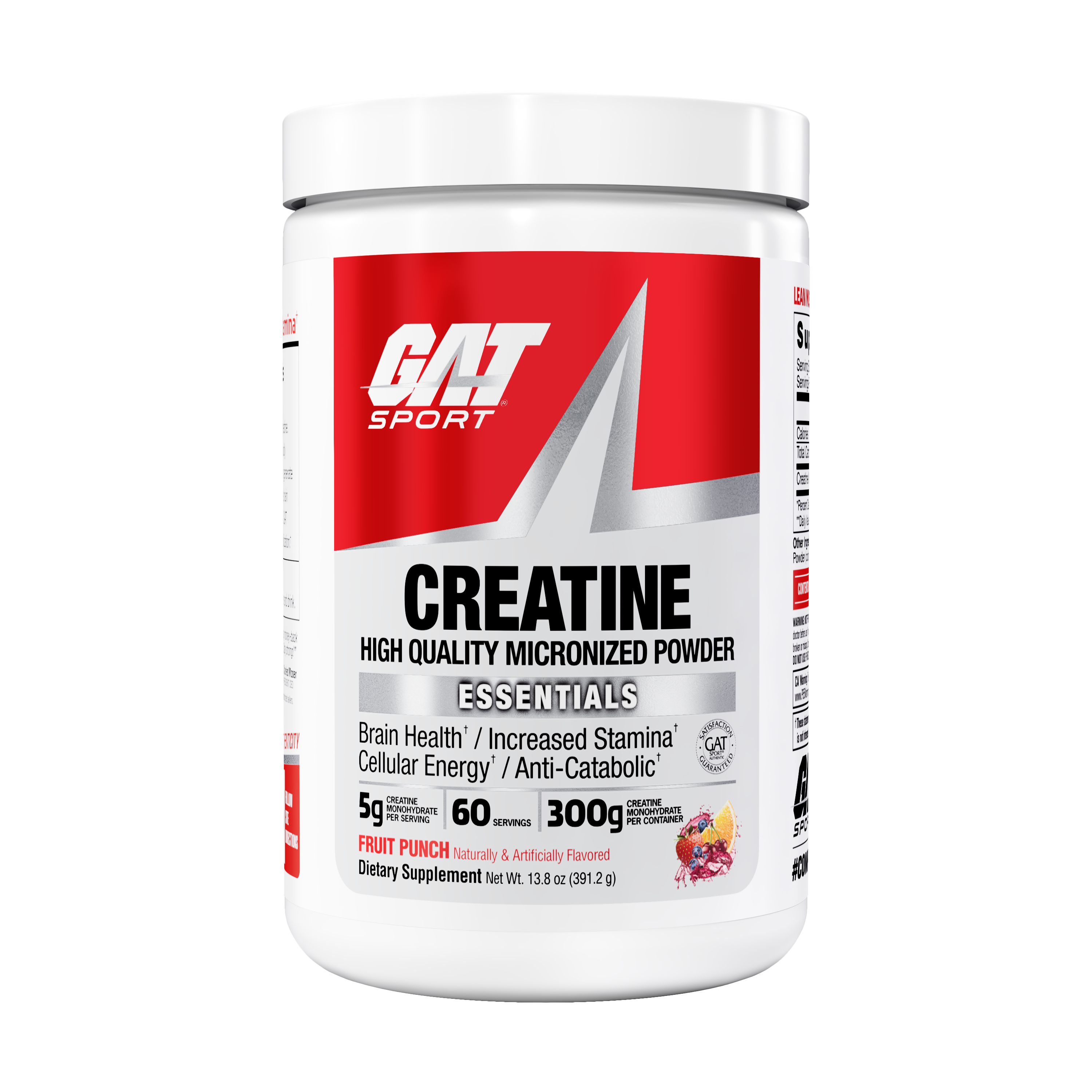
One supplement maps onto a 13-week block better than anything else sold, and it is the least exciting one. The ISSN names creatine monohydrate the most effective ergogenic nutritional supplement available for increasing high-intensity exercise capacity and lean body mass during training [6], which is a precise description of what weeks 1 through 11 demand.
The loading question answers itself when you have thirteen weeks. In the classic loading study, 20 grams a day for 6 days raised muscle creatine stores about 20 percent, and 3 grams a day got to the same roughly 20 percent by day 28 [7]. Load if you want the stores full by mid-October; skip it and a steady 3 to 5 grams daily has you fully saturated with two months of block still to run. Starting now matters. The method does not. Creatine Monohydrate goes in every day, training days, rest days, Thanksgiving, Christmas, until the bar is loaded in week 13. That is the entire protocol.
The Sub-Hero: Nitraflex Advanced on the Days That Decide the Block
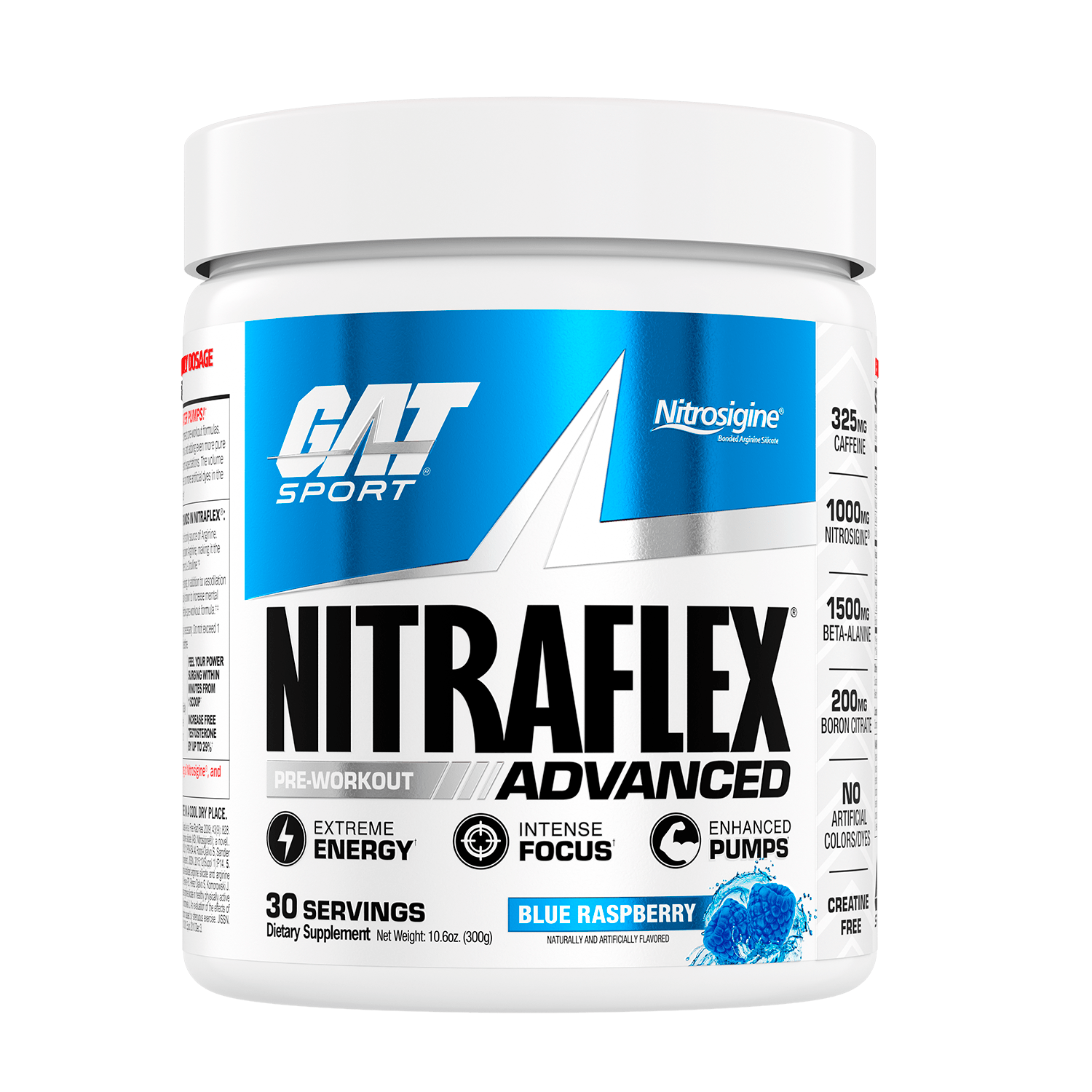
Creatine works silently in the background; the intensification phase needs something that shows up loud on the day. Nitraflex Advanced is the heavy-day anchor for weeks 9 through 11 and test week, delivering 325 mg of caffeine per scoop, squarely inside the 3 to 6 milligrams per kilogram range the ISSN identifies as performance-enhancing for both anaerobic and aerobic work [8]. It sits alongside creatine rather than competing with it because the jobs never overlap: creatine builds the block's capacity daily, the pre-workout sharpens its biggest sessions. Two cautions from the label and the sleep science: one scoop per day, and never within five hours of bed, because a December peak runs on recovery as much as effort. For evening lifters deep in the intensification weeks, that timing rule is part of the program, not a footnote.
When a Week Gets Wrecked
Travel, illness, a work fire: at least one week of the thirteen will not survive contact. The plan absorbs it. If you lose a week in the accumulation phase, resume where you left off and trim week 7; the volume phase has slack built in. If it happens during intensification, repeat the week you missed and simplify the taper to a few days. And if you are sick, rest fully and return a notch lighter than you left. What you never do is attempt to make up lost volume by cramming, because arriving at week 13 fatigued defeats the block's entire architecture. A wrecked week costs you a little. Abandoning the map costs you December.
Thirteen Weeks, One Bar
The lifters who hit PRs in the last days of December will not be the ones who trained hardest in any single session. They will be the ones who, back in the first week of October, counted the Saturdays and built something. The calendar has already done the periodizing for you: volume while October is quiet, a bridge over Thanksgiving, heavy work in the cold weeks, a taper Christmas gives you for free, and a test before the year closes.
Map your 13 weeks tonight, start the block Monday, and take your creatine every day between now and test week. Then go put something on the bar the year has to remember, with GAT Sport at gatsport.com.
Key Takeaways
- Thirteen weeks separate early October from New Year's Eve, exactly the length of a full accumulation-to-peak strength block.
- Work backward from test week: taper in week 12, intensify in weeks 9 to 11, accumulate volume through October and November.
- Train through Thanksgiving at half volume with intensity kept; a full week off mid-block produced smaller gains in trained lifters.
- Autoregulate with repetitions in reserve, tightening from about 3 RIR early to 1 RIR at the peak.
- Creatine loading is optional since 3 grams daily reaches the same saturation by four weeks; daily consistency across all thirteen weeks is what matters.
Frequently Asked Questions
How do you peak for a max lift at the end of the year?
Work backward from your test date in late December. Spend October and most of November accumulating training volume, run three weeks of heavy intensification with sets of 1 to 6 reps through mid-December, taper during Christmas week by cutting volume hard while keeping the bar moving, then test in the final days of the year. A structured, periodized path to the attempt reliably beats simply testing after months of unplanned training.
Should you train through Thanksgiving week?
Yes, at reduced volume with intensity kept. Research in trained lifters found a complete one-week mid-program break produced modestly smaller gains than continuing, while minimal-dose research shows performance holds on far less volume when the weights stay heavy. Two short, crisp sessions built around your main lifts protect the block and still leave the whole holiday for everything else.
Do you need to load creatine before a strength block?
No. Loading at 20 grams a day fills muscle creatine stores in about 6 days, but 3 grams a day reaches the same roughly 20 percent increase by day 28. With a 13-week block, both routes have you fully saturated with most of the block remaining. What actually matters is starting now and never missing a day through test week.
What does RIR mean in a training program?
RIR stands for repetitions in reserve, the number of reps you could still perform when you end a set. It comes from a validated resistance-training effort scale and lets you autoregulate: 3 RIR means comfortably hard, 1 RIR means near your limit. In a peaking block, targets tighten from about 3 RIR in early volume work down to 1 RIR at the heaviest weeks, keeping effort matched to each phase.
How long should a taper be before testing a max?
For a strength peak, roughly a week of sharply reduced volume works well for most lifters, and the powerlifting review data shows tapers cutting volume by about a third to two thirds produced no performance losses and frequent improvements. Keep intensity present with crisp, moderate singles, rest more than feels necessary, and change nothing new during test week itself.
References
- Williams, Tyler D., et al. "Comparison of Periodized and Non-Periodized Resistance Training on Maximal Strength: A Meta-Analysis." Sports Medicine, vol. 47, no. 10, 2017, pp. 2083-2100, doi:10.1007/s40279-017-0734-y.
- Zourdos, Michael C., et al. "Novel Resistance Training-Specific Rating of Perceived Exertion Scale Measuring Repetitions in Reserve." Journal of Strength and Conditioning Research, vol. 30, no. 1, 2016, pp. 267-275, doi:10.1519/JSC.0000000000001049.
- Coleman, Max, et al. "Gaining More from Doing Less? The Effects of a One-Week Deload Period during Supervised Resistance Training on Muscular Adaptations." PeerJ, vol. 12, 2024, article e16777, doi:10.7717/peerj.16777.
- Spiering, Barry A., et al. "Maintaining Physical Performance: The Minimal Dose of Exercise Needed to Preserve Endurance and Strength over Time." Journal of Strength and Conditioning Research, vol. 35, no. 5, 2021, pp. 1449-1458, doi:10.1519/JSC.0000000000003964.
- Travis, S. Kyle, et al. "Tapering and Peaking Maximal Strength for Powerlifting Performance: A Review." Sports, vol. 8, no. 9, 2020, article 125, doi:10.3390/sports8090125.
- Kreider, Richard B., et al. "International Society of Sports Nutrition Position Stand: Safety and Efficacy of Creatine Supplementation in Exercise, Sport, and Medicine." Journal of the International Society of Sports Nutrition, vol. 14, 2017, article 18, doi:10.1186/s12970-017-0173-z.
- Hultman, Eric, et al. "Muscle Creatine Loading in Men." Journal of Applied Physiology, vol. 81, no. 1, 1996, pp. 232-237, doi:10.1152/jappl.1996.81.1.232.
- Guest, Nanci S., et al. "International Society of Sports Nutrition Position Stand: Caffeine and Exercise Performance." Journal of the International Society of Sports Nutrition, vol. 18, no. 1, 2021, article 1, doi:10.1186/s12970-020-00383-4.