


Cardio gets all the credit for heart health, but strength training quietly earns its keep too. September, with its back-to-routine energy, is a good month to set the record straight. Ask most people how to protect their heart and they will say "do more cardio." They are not wrong, but they are only telling half the story. The barbell and the dumbbell rack have a genuine, evidence-backed role in cardiovascular health that rarely gets mentioned, and ignoring it means leaving real benefits on the table.
Here is the assumption that holds lifters back. Many think of the weight room as purely a place to build muscle and improve their appearance, a mirror tool and nothing more. They miss that the same training reshaping their physique is also working on their blood pressure, their cholesterol, their blood sugar, and their long-term cardiovascular risk. Strength is not just about looking capable; it is a legitimate longevity and heart-health tool. Let us bust the myths and set the record straight.
Does Strength Training Help Your Heart?
Yes. Strength training genuinely benefits your heart. Research shows resistance training improves major cardiovascular risk factors including blood pressure, cholesterol and lipids, blood sugar, and body composition, and it is associated with lower rates of heart disease and death. While aerobic exercise remains essential, the combination of strength and cardio delivers the most complete cardiovascular protection. Your lifting is doing more for your heart than you realize. Here are the myths worth clearing up.
Myth 1: "Only cardio helps your heart."
This is the big one, and major cardiology bodies have formally corrected it. In a 2023 scientific statement, the American Heart Association concluded that resistance training has favorable effects on cardiovascular disease and its risk factors, improving blood pressure, blood sugar, lipids, and body composition [1]. This is not a fringe idea; it is the official position of the leading cardiovascular authority.
Strength training helps your heart through multiple avenues at once: lowering blood pressure, improving how your body handles blood sugar, supporting healthier cholesterol and lipid levels, and building the lean muscle that improves your overall metabolic health. Cardio is genuinely important, but it is not the only training your heart benefits from.
The takeaway: Do not think of strength training as separate from heart health. Every time you lift, you are working on cardiovascular risk factors, not just muscle.
Myth 2: "Lifting is only about muscles and looks."
The idea that the weight room is purely cosmetic dramatically undersells what resistance training does for your lifespan. The benefits go far deeper than the mirror. A large meta-analysis found that resistance training is associated with a roughly 15 percent lower risk of death from all causes and a lower risk of cardiovascular disease, compared to doing none [2]. The AHA statement echoes this, noting that adults who do resistance training have about a 15 percent lower risk of all-cause mortality and a 17 percent lower risk of cardiovascular disease [1].
Strikingly, the maximum benefit shows up at a very achievable dose. Both the mortality research and the AHA statement point to roughly 30 to 60 minutes of resistance training per week being associated with the greatest risk reduction [1, 2]. That is a remarkably small-time investment for a meaningful drop in your risk of dying early.
The takeaway: Lifting is a longevity tool, not just a physique tool. The muscle you can see is the visible byproduct of training that is quietly protecting your heart and extending your life.
Myth 3: "Strength and cardio are competitors, so pick one."
Some lifters treat strength and aerobic training as an either-or choice, worried that doing both means doing neither well. For heart health, the opposite is true: they are partners, and the combination is more powerful than either alone. The AHA statement specifically highlights that combining resistance training with aerobic exercise produces the most pronounced cardiovascular benefits [1].
This makes sense, because each type of training hits cardiovascular health from a different angle. Aerobic work builds your cardiorespiratory fitness and endurance, while resistance training builds muscle and improves strength, blood sugar handling, and body composition. Together they cover the full spectrum of cardiovascular risk factors more completely than a single mode can.
The takeaway: Do not choose between strength and cardio for your heart. Build a routine that includes both, and you get the most complete cardiovascular protection available.
Myth 4: "Diet has nothing to do with your training results for your heart."
Training is powerful, but it works best alongside nutrition, and certain nutrients specifically support the cardiovascular health your training is building. Omega-3 fatty acids are a prime example. These fats, found in fatty fish, play established roles in heart health, and one of their best-documented effects is on triglycerides, a type of blood fat linked to cardiovascular risk. An American Heart Association science advisory concluded that omega-3 fatty acids effectively lower triglyceride levels, with the effect being dose-dependent and most pronounced at higher intakes [3]. Most people, however, do not eat enough fatty fish to get meaningful amounts through diet alone [4].
This is where GAT Sport Omega-3 Purified Fish Oil fits as a sensible foundation, providing a clean, convenient source of the EPA and DHA omega-3s that support heart health and healthy triglyceride levels, complementing the cardiovascular work your training is already doing. It is worth noting that omega-3 supplements support general health rather than replacing medical treatment; anyone managing a diagnosed heart condition or high triglycerides should work with their doctor.
The takeaway: Support your heart-healthy training with heart-healthy nutrition. Omega-3s are one of the clearest examples of a nutrient that complements what your training is doing for your cardiovascular system.
Myth 5: "If you train and eat reasonably well, you have every nutritional base covered."
Even a solid diet commonly leaves gaps, and some of the missing nutrients matter for cardiovascular and overall health. Analyses of typical diets show that inadequate intakes of several essential vitamins and minerals are common [4]. Those quiet shortfalls can undercut the healthy foundation your training is building.
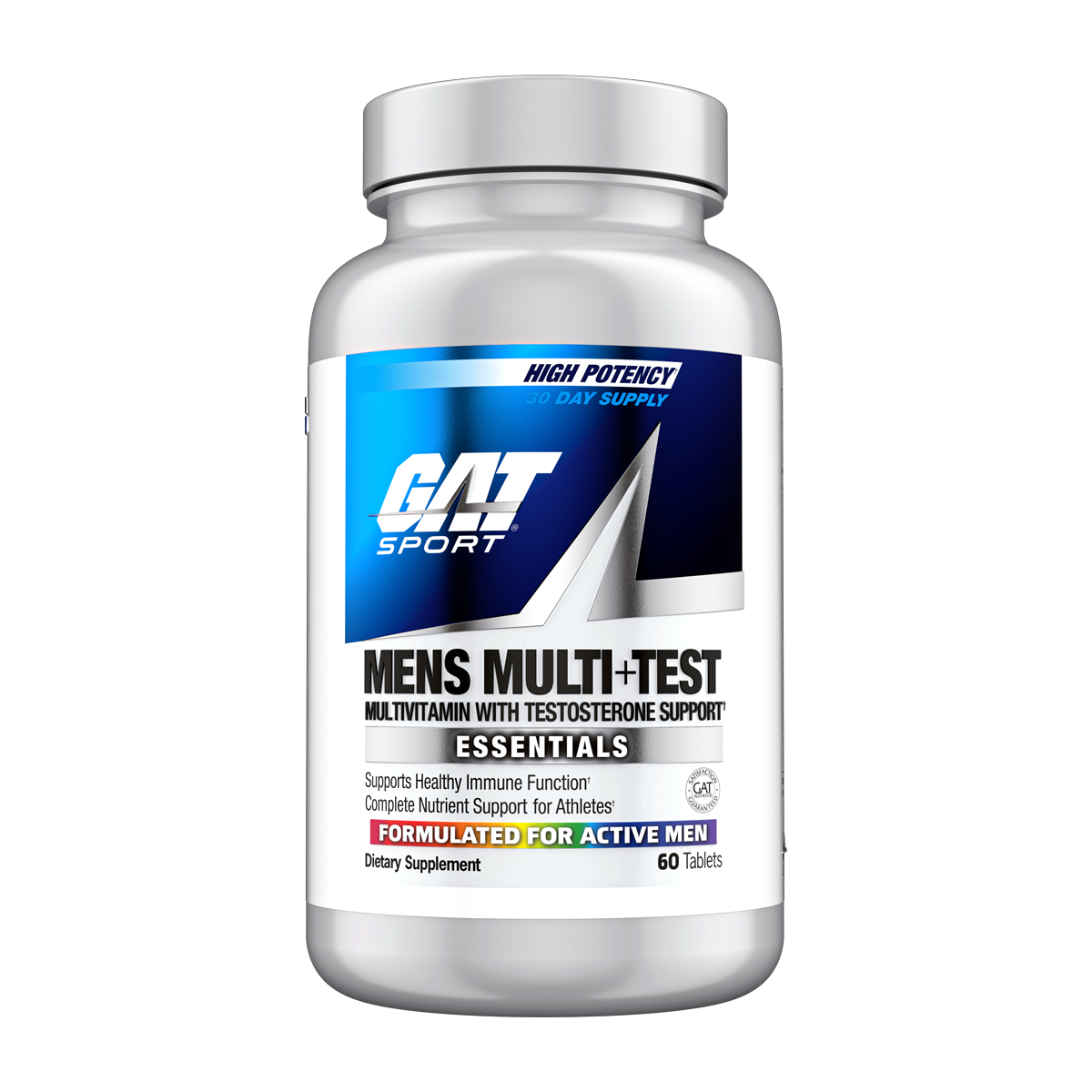
A daily multivitamin is inexpensive insurance against these gaps. Men's Multi + Test provides a daily base of essential vitamins and minerals, helping ensure that the nutritional foundation supporting your heart, your training, and your overall health is covered. It does not replace a good diet built on whole foods; it insures against the gaps a normal diet tends to leave.
The takeaway: Do not assume "eating reasonably well" covers every base. A daily multivitamin fills common gaps, so your nutrition fully supports the healthy body your training is building.
The Honest Bottom Line
The truth about lifting and your heart is simple: strength training is a legitimate, evidence-backed tool for cardiovascular health, not just a way to build muscle. It improves blood pressure, cholesterol, blood sugar, and body composition, and it is linked to living longer with a lower risk of heart disease. The most complete approach combines strength and aerobic training, supported by heart-healthy nutrition like omega-3s and a solid micronutrient foundation.
So, the next time someone implies the weight room is only for looks, you will know better. Your training is quietly protecting the most important muscle you have.
Learn how your training supports your heart and add the missing pieces. Then keep building a body that lasts, and compete harder, with GAT Sport at gatsport.com.
Key Takeaways
- Strength training improves blood pressure, cholesterol, blood sugar, and body composition, making it a genuine heart-health tool.
- Resistance training is linked to roughly 15 percent lower all-cause mortality and lower cardiovascular disease risk, with benefits maximized around 30 to 60 minutes per week.
- Strength and aerobic training are partners, not competitors; combining them delivers the most complete cardiovascular protection.
- Omega-3 fatty acids support heart health and lower triglycerides, and most people do not get enough through diet.
- A daily multivitamin insures against common micronutrient gaps that a normal diet leaves behind.
Frequently Asked Questions
Does strength training help your heart?
Yes. Research, including a 2023 American Heart Association scientific statement, shows resistance training improves major cardiovascular risk factors including blood pressure, cholesterol, blood sugar, and body composition. It is also associated with a lower risk of heart disease and all-cause mortality. While aerobic exercise remains essential, strength training is a legitimate and evidence-backed contributor to heart health, and combining both provides the most complete cardiovascular protection.
How much strength training do you need for heart health?
Research suggests the maximum benefit comes at a very achievable dose. Both large mortality studies and the American Heart Association point to roughly 30 to 60 minutes of resistance training per week being associated with the greatest reduction in all-cause mortality and cardiovascular disease risk. This means even two focused strength sessions per week can meaningfully support your heart, making it accessible for almost any schedule.
Is cardio or weightlifting better for your heart?
Neither is strictly better; they work best together. Aerobic exercise builds cardiorespiratory fitness, while resistance training improves strength, blood sugar handling, lipids, and body composition. The American Heart Association notes that combining resistance and aerobic training produces the most pronounced cardiovascular benefits. Rather than choosing one, a routine that includes both covers the full range of cardiovascular risk factors most completely.
Do omega-3s help your heart?
Omega-3 fatty acids support heart health, and one of their best-documented effects is lowering triglycerides, a blood fat linked to cardiovascular risk, with the effect being dose-dependent. Most people do not eat enough fatty fish to get meaningful amounts through diet, so supplementing can help fill that gap. That said, omega-3 supplements support general health rather than replacing medical care, so anyone with a diagnosed condition should consult their doctor.
Can lifting lower cholesterol and blood pressure?
Yes. The American Heart Association's 2023 scientific statement concluded that resistance training improves lipids, including cholesterol, and can help lower blood pressure, along with improving blood sugar and body composition. These improvements in traditional cardiovascular risk factors are part of why resistance training is associated with lower rates of heart disease and death. Combining it with aerobic exercise enhances these benefits further.
References
- Paluch, Amanda E., et al. "Resistance Exercise Training in Individuals With and Without Cardiovascular Disease: 2023 Update: A Scientific Statement From the American Heart Association." Circulation, vol. 149, no. 3, 2024, pp. e217-e231, doi:10.1161/CIR.0000000000001189.
- Shailendra, Prathiyankara, et al. "Resistance Training and Mortality Risk: A Systematic Review and Meta-Analysis." American Journal of Preventive Medicine, vol. 63, no. 2, 2022, pp. 277-285, doi:10.1016/j.amepre.2022.03.020.
- Skulas-Ray, Ann C., et al. "Omega-3 Fatty Acids for the Management of Hypertriglyceridemia: A Science Advisory From the American Heart Association." Circulation, vol. 140, no. 12, 2019, pp. e673-e691, doi:10.1161/CIR.0000000000000709.
- Engel, Matthew G., et al. "Micronutrient Gaps in Three Commercial Weight-Loss Diet Plans." Nutrients, vol. 10, no. 1, 2018, article 108, doi:10.3390/nu10010108.