


You know exactly how you think this goes. You sign up for the hybrid race in October. By November the conditioning volume has swallowed your training week. By December your shirts fit looser in the wrong way, and by the time you cross the finish line in spring, years of size have quietly jogged away.
That is the fear, anyway. The physique athlete stepping toward functional goals carries it like a second gym bag, and the entire "cardio kills gains" folklore exists to feed it. But this exact question, what happens to muscle when you train strength and endurance at the same time, is one of the most heavily studied in exercise science, and the answer is far kinder than the folklore.
The size loss that does happen in these transitions usually is not cardio's fault. It is the switch itself, executed badly: lifters slash their hypertrophy work to make room, pile on conditioning volume overnight, keep eating like a physique athlete while training like an endurance one, and then blame the running for what the plan did. Done correctly, the move from physique to functional costs far less muscle than you think. Possibly none.
Can You Add Conditioning Without Losing Muscle?
Yes. Meta-analyses of concurrent training show that adding aerobic work to lifting does not compromise muscle size or maximal strength, though explosive power can suffer when both happen in the same session. Keep a maintenance floor of intense lifting, separate hard conditioning from heavy lifting, and fuel the added work properly.
What the Interference Research Actually Says
Forty-three studies. That is the size of the most current meta-analysis on concurrent aerobic and strength training, and its headline finding should retire most of the fear: adding aerobic training to lifting did not compromise muscle hypertrophy or maximal strength development compared with lifting alone [1]. The one adaptation that did suffer was explosive strength, and the blunting was worst when aerobic and strength work were crammed into the same session [1].
For a trained lifter, and a physique athlete is exactly that, the scheduling detail matters even more. A meta-analysis stratified by training status found lower-body 1RM development was impaired by concurrent training in trained individuals, but a subgroup analysis showed the impairment appeared only when both types of training were performed in the same session; separated into different sessions, the effect essentially vanished [2]. Interference, in other words, is less a law of physiology than a scheduling error.
Modality writes the rest of the fine print. The classic interference meta-analysis found that lifting concurrently with running produced significant decrements in hypertrophy and strength, while lifting concurrently with cycling did not, and that interference scaled with the frequency and duration of the endurance work [3]. High-impact, high-damage conditioning costs more than low-impact work, and more of it costs more than less.
The Five Rules of the Switch
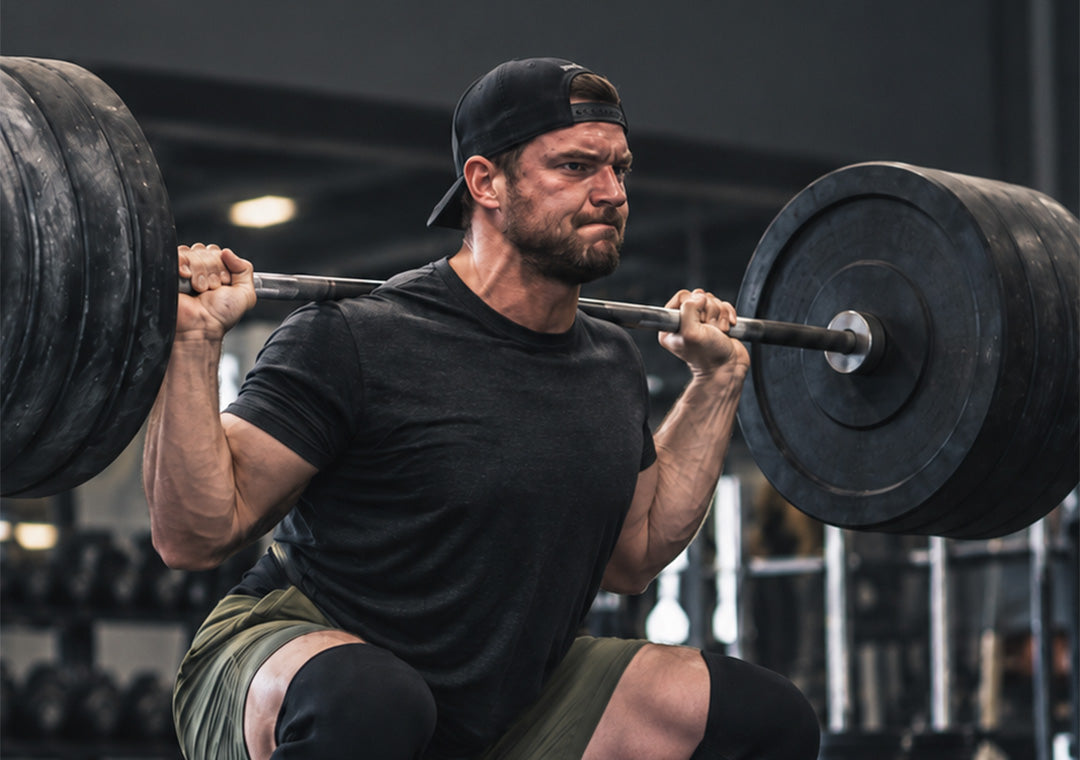
1. Keep a hypertrophy floor and keep it heavy. Do not slash lifting to a token day. Muscle can be maintained on surprisingly low volume, but only if training intensity is preserved [4], so hold two or three lifting sessions with honest loads while conditioning takes the spotlight.
2. Separate the hard stuff. The trained-lifter impairment lived almost entirely in same-session training [2], and explosive qualities suffered most there too [1]. Put hard conditioning and heavy lifting several hours apart, or on different days entirely, and save same-session pairings for easy aerobic work.
3. Let the bike absorb the volume. As conditioning hours climb, shift the added volume toward lower-impact modes. Running interfered with size and strength where cycling did not [3], so build the aerobic base on the bike, rower, or ski erg and keep running doses purposeful rather than default.
4. Fuel the new work like it is work. This is where physique habits sabotage functional goals: a 90-minute mixed session is not a fasted pump workout. For extended high-intensity sessions, sports nutrition guidance calls for roughly 30 to 60 grams of carbohydrate per hour [5], with carbohydrate availability treated as a cornerstone of high-quality training [6]. Underfueling the new conditioning is how "cardio ate my muscle" stories are actually written.
5. Protect the amino acid side when life gets messy. Big conditioning blocks blunt appetite and scatter meal timing exactly when the body is juggling two recovery bills. Essential amino acids drive muscle protein synthesis even at modest doses, and EAA needs rise when calories dip into a deficit [7], which is precisely the terrain of a physique-to-functional transition.
Fueling the Long Sessions
The rules above are the plan; the intra-workout bottle is where rule four gets executed. GAT Sport Cyclic Dextrin is Cluster Dextrin, a highly branched cyclic dextrin, an easy-drinking carbohydrate built for exactly the long mixed sessions this switch creates, with a scoop supplying about 25 grams of carbohydrate, so one to two scoops across an hour lands you inside the 30 to 60 gram fueling window [5].
Honesty about the HBCD-specific research, because this audience reads panels: the strongest recent trial found intra-session HBCD during resistance training was well tolerated and improved repetition velocity in men, though not in women, with no clear effect on perceived exertion [8], and a small, manufacturer-affiliated study reported lower perceived exertion during endurance exercise with HBCD versus maltodextrin [9]. The settled science here is the carbohydrate strategy itself [5, 6]; the HBCD-specific edge is promising but early. What the format reliably delivers is a light, well-tolerated way to actually get the carbs in mid-session, which is the part most lifters fail at.
The Muscle Insurance Policy
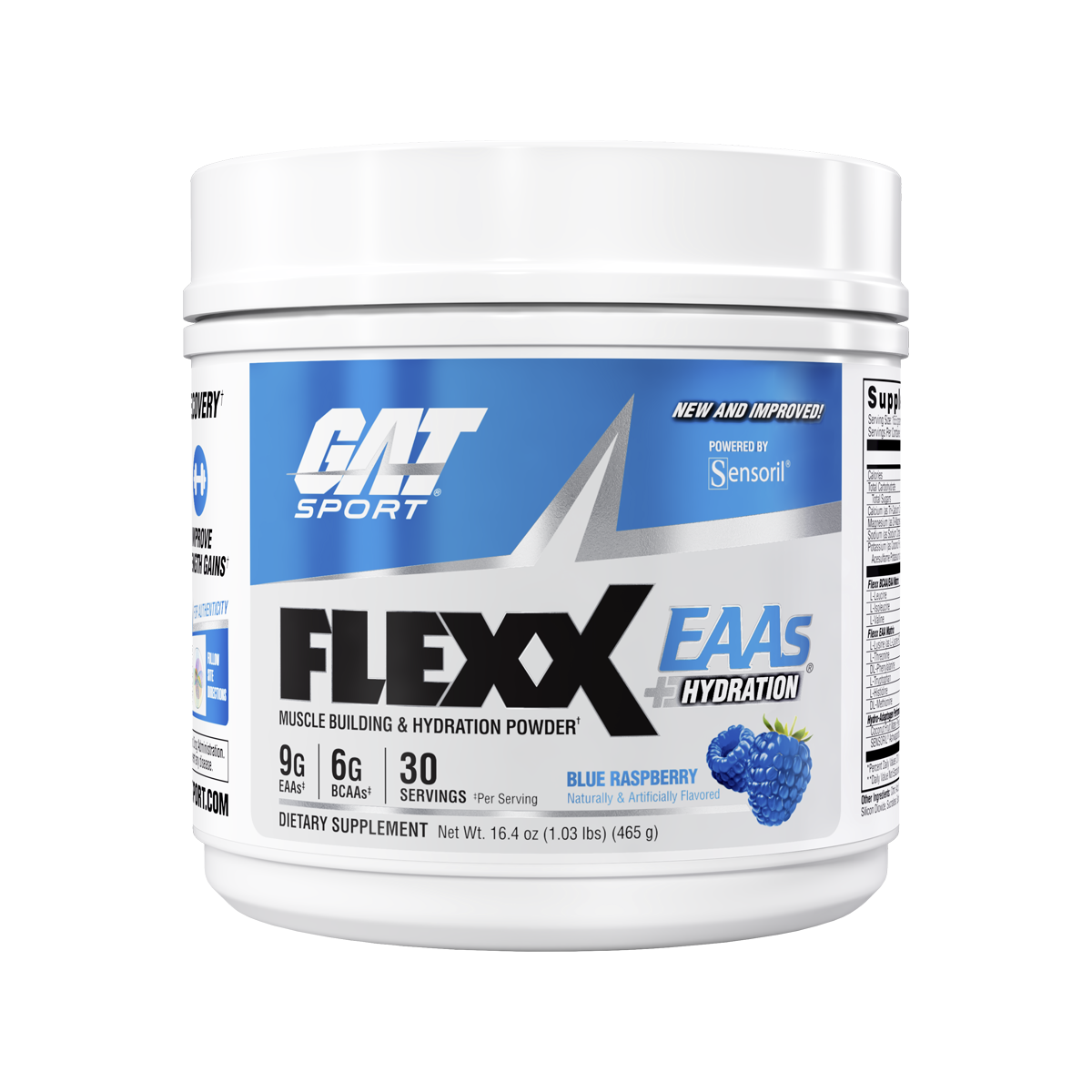
Flexx EAAs earn their own slot in this transition for the reason rule five exists: as conditioning volume climbs and appetite wobbles, free-form essential amino acids protect the muscle protein synthesis signal at modest doses, and they matter more, not less, if you are also leaning out [7]. They pair with the carbohydrate rather than replacing it, because the two do different jobs, the carbs fuel the session in front of you, the aminos defend the tissue you spent years building. And on the sweat-heavy conditioning days this new life includes, sweat rates and electrolyte losses vary too widely between athletes for one-size advice [10], so a serving of Nitraflex Hydration in the bottle, scaled to how hard you actually sweat, keeps the fluid side individualized.
The Size Stays If You Let It
The physique athlete's fear gets the causality backward. Conditioning does not take muscle; chaotic switching does. Hold the lifting floor with real intensity, put distance between the hard sessions, ride more than you run as volume climbs, and fuel and protect the new workload like the training stress it is. The research says the size you built can make the trip with you.
Switch the goal, not the foundation. Fuel your next conditioning block with GAT Sport Cyclic Dextrin, and come back Thursday for part two, where we bust the myth that hybrid athletes cannot build size at all.
Key Takeaways
- Across 43 studies, concurrent aerobic and strength training did not compromise hypertrophy or maximal strength, though explosive strength suffered when both landed in the same session.
- In trained lifters, lower-body strength was impaired only by same-session combinations, making separation by hours or days the key scheduling move.
- Running interfered with size and strength where cycling did not, so shift climbing conditioning volume toward lower-impact modes.
- Hold a two-to-three-session lifting floor with intensity kept, since muscle maintains on low volume when loads stay honest.
- Fuel long sessions with 30 to 60 grams of carbohydrate per hour and keep EAA intake high when appetite and meal timing get messy.
Frequently Asked Questions
Will cardio make me lose muscle if I switch to hybrid training?
Not if the switch is structured. Meta-analyses of concurrent training show adding aerobic work does not compromise muscle size or maximal strength, with interference appearing mainly in explosive strength and in same-session combinations. Muscle loss during these transitions usually comes from slashing lifting volume and underfueling the new workload, both of which are controllable, rather than from the cardio itself.
How should I schedule lifting and conditioning in the same week?
Keep two to three lifting sessions with heavy, intense work as your floor, and separate hard conditioning from heavy lifting by several hours or a full day where possible. Research in trained lifters found strength development was impaired only when both types of training shared a session. Same-day training works when one of the two efforts is genuinely easy.
What kind of cardio preserves the most muscle?
Lower-impact modes. The classic interference meta-analysis found lifting combined with running produced significant decrements in muscle size and strength while cycling did not, likely because running's impact and eccentric loading add recovery cost. Build most of your aerobic volume on the bike, rower, or similar low-impact tools, and dose running deliberately for race-specific preparation.
How many carbs do I need during long training sessions?
For extended high-intensity sessions, sports nutrition guidelines recommend roughly 30 to 60 grams of carbohydrate per hour, typically as an easily digested drink consumed throughout the session. This matters most for sessions beyond about an hour, exactly the territory hybrid training lives in. Underfueling this work degrades session quality and is a common hidden cause of muscle loss during goal transitions.
Do I still need EAAs if I already eat enough protein?
Total daily protein remains the foundation, but the transition period creates gaps: conditioning blunts appetite, sessions displace meals, and many lifters drift into a caloric deficit, where essential amino acid needs rise. Free-form EAAs stimulate muscle protein synthesis at modest doses, making them practical insurance for the days when the new schedule wrecks the old eating pattern.
References
- Schumann, Moritz, et al. "Compatibility of Concurrent Aerobic and Strength Training for Skeletal Muscle Size and Function: An Updated Systematic Review and Meta-Analysis." Sports Medicine, vol. 52, no. 3, 2022, pp. 601-612, doi:10.1007/s40279-021-01587-7.
- Petré, Henrik, et al. "Development of Maximal Dynamic Strength during Concurrent Resistance and Endurance Training in Untrained, Moderately Trained, and Trained Individuals: A Systematic Review and Meta-Analysis." Sports Medicine, vol. 51, no. 5, 2021, pp. 991-1010, doi:10.1007/s40279-021-01426-9.
- Wilson, Jacob M., et al. "Concurrent Training: A Meta-Analysis Examining Interference of Aerobic and Resistance Exercises." Journal of Strength and Conditioning Research, vol. 26, no. 8, 2012, pp. 2293-2307, doi:10.1519/JSC.0b013e31823a3e2d.
- Spiering, Barry A., et al. "Maintaining Physical Performance: The Minimal Dose of Exercise Needed to Preserve Endurance and Strength over Time." Journal of Strength and Conditioning Research, vol. 35, no. 5, 2021, pp. 1449-1458, doi:10.1519/JSC.0000000000003964.
- Kerksick, Chad M., et al. "International Society of Sports Nutrition Position Stand: Nutrient Timing." Journal of the International Society of Sports Nutrition, vol. 14, 2017, article 33, doi:10.1186/s12970-017-0189-4.
- Burke, Louise M., et al. "Carbohydrates for Training and Competition." Journal of Sports Sciences, vol. 29, suppl. 1, 2011, pp. S17-S27, doi:10.1080/02640414.2011.585473.
- Ferrando, Arny A., et al. "International Society of Sports Nutrition Position Stand: Effects of Essential Amino Acid Supplementation on Exercise and Performance." Journal of the International Society of Sports Nutrition, vol. 20, no. 1, 2023, article 2263409, doi:10.1080/15502783.2023.2263409.
- Morenas-Aguilar, María Dolores, et al. "Highly Branched Cyclic Dextrin Supplementation and Resistance Training: A Randomized Double-Blinded Crossover Trial Examining Mechanical, Metabolic, and Perceptual Responses." Clinical Nutrition ESPEN, vol. 65, 2025, pp. 305-314, doi:10.1016/j.clnesp.2024.12.002.
- Furuyashiki, Takashi, et al. "Effects of Ingesting Highly Branched Cyclic Dextrin during Endurance Exercise on Rating of Perceived Exertion and Blood Components Associated with Energy Metabolism." Bioscience, Biotechnology, and Biochemistry, vol. 78, no. 12, 2014, pp. 2117-2119, doi:10.1080/09168451.2014.943654.
- Sawka, Michael N., et al. "American College of Sports Medicine Position Stand: Exercise and Fluid Replacement." Medicine and Science in Sports and Exercise, vol. 39, no. 2, 2007, pp. 377-390, doi:10.1249/mss.0b013e31802ca597.
Frequently asked questions
What is the main takeaway from this article?
“Physique to Functional: Switching Goals Without Losing Size” is designed to turn practical training and nutrition guidance into clear actions you can apply to your routine.
How should I put this advice into practice?
Start with one recommendation, apply it consistently, and adjust it to your goals, training experience, and recovery needs.