



Run the arithmetic on two lifters. The first has a perfect week, six sessions, every set logged, and then the crash: one session the next week, one the week after, zero the week after that. Nine sessions for the month. The second lifter never has a perfect week in her life. Three unremarkable sessions, every week, including the bad ones. Twelve sessions, and a pattern she can repeat in December.
One perfect week feels productive. Four average weeks actually are. That is the whole equation, and November, the month this chapter is named for, is where it gets graded. The routine breaks here on schedule: travel, holidays, deadlines, five o'clock darkness. Lifestyle lifters meet that pressure by swinging between all-in weeks and nothing weeks, and the average of that oscillation is a stall that gets blamed on the program, the supplements, or age. The next four weeks are a consistency test, so here is the math that makes it passable.
Is Consistency More Important Than Intensity in Training?
Over months, yes. Progress tracks the training you accumulate, sessions completed and weekly sets totaled, while a single intense week cannot compound if the weeks around it are empty. Intensity matters inside each session, but the minimum effective doses are far smaller than most lifters assume, which makes consistency the variable worth protecting.
The Math Nobody Runs
The research on muscle growth is, at its core, an accumulation story. Weekly training volume shows a clear dose-response relationship with hypertrophy: more weekly sets produce more growth over time [1]. Notice what the unit is. Not peak sessions. Not best week. Weekly sets totaled and repeated, which is why the lifter with twelve steady sessions out-earns the lifter with nine volatile ones despite never once feeling heroic.
The time-efficiency research adds the liberating corollary: weekly volume matters more than how it is split across days [2]. Three sessions or five, morning or night, full-body or split, the month does not care, provided the weekly total lands. The shape of your week is negotiable. The sum is the metric.
The Floor Is Lower Than You Think
What makes consistency achievable is how little a week needs to contain to count. The floors, from the research, in descending order of ambition:
The progress floor. For lifters short on time, the practical minimum is about 4 weekly sets per muscle group in the 6 to 15 RM range [2]. That fits inside two half-hour sessions.
The strength floor. In resistance-trained men, a single hard set of 6 to 12 reps at roughly 70 to 85 percent of max, taken to failure 2 to 3 times per week, produced significant, if suboptimal, gains in squat and bench strength over 8 to 12 weeks [3]. Worth stating plainly: that review studied trained men, and comparable data for trained women do not yet exist [3], another corner of the literature that owes her better. The principle it demonstrates that honest effort in tiny doses still moves the needle, is the useful part.
The maintenance floor. Strength can be held with as little as one session per week when the load stays heavy [4]. A genuinely wrecked week has an exit this small.
And one more floor, of a different kind. In a study of new gym members, exercise habits became automatic through consistent repetition, roughly four sessions a week sustained over six weeks, with consistency and simplicity predicting habit strength [5]. Read those floors together and a strategy appears: keep the hard work small and protected, and let short, simple sessions, a brisk lift, twenty minutes, nothing clever, keep the repetition count high enough that showing up stops requiring a decision.
Your November Floor
So set the floor now, before the month starts swinging. Three sessions per week, defined in advance, with a 25-minute fallback version for the weeks that collapse. Track exactly one number on the fridge or in your notes app: sessions completed this month. Not PRs, not perfect macros, not streaks. Twelve to fourteen checkmarks by November 30th are a passed test, and every floor above says it is enough to keep building.
The Supplement That Only Works If You Do
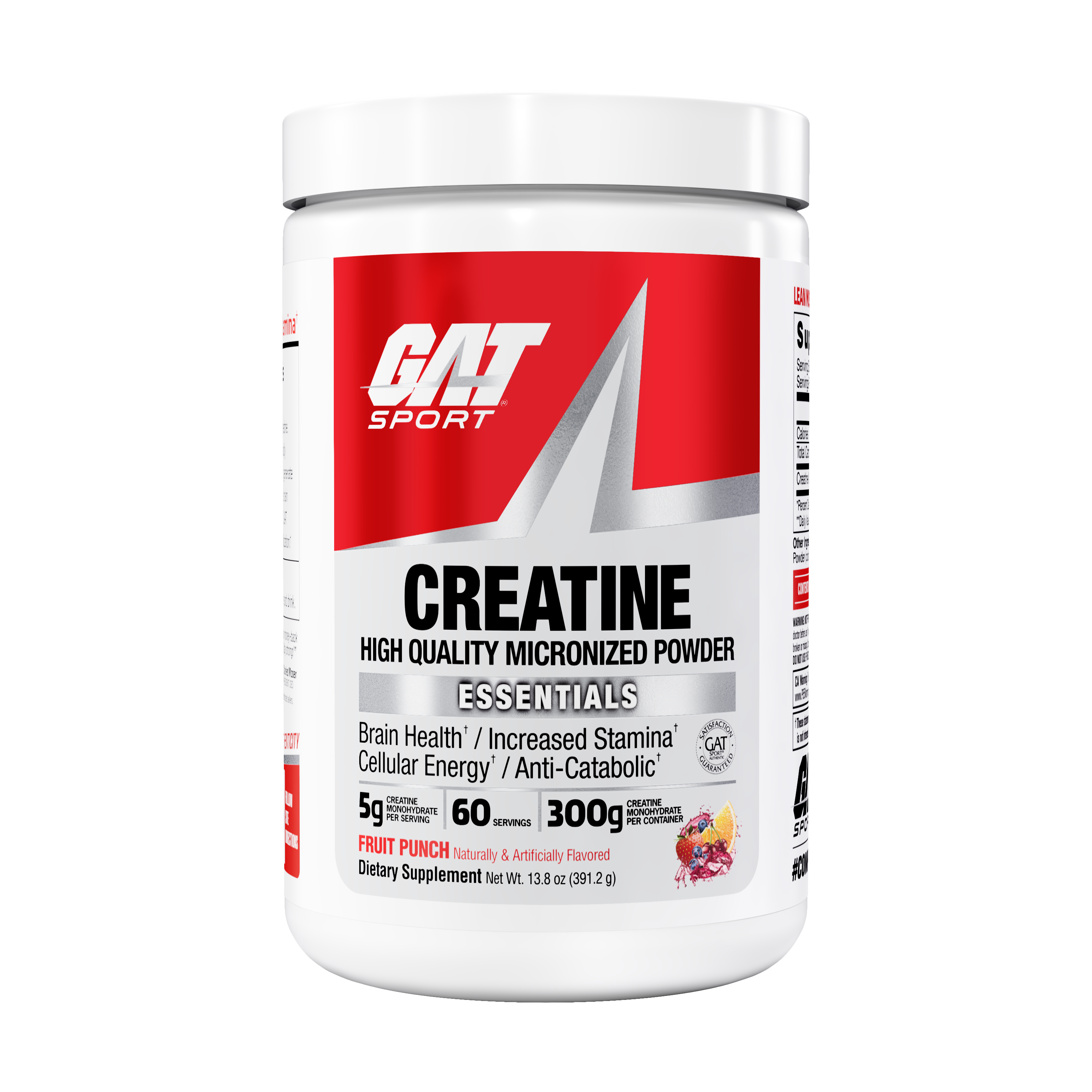
There is a reason Creatine Monohydrate headlines the consistency chapter: it is the rare supplement whose mechanism is consistency. The classic loading research showed muscle creatine stores rose about 20 percent whether subjects loaded 20 grams daily for six days or simply took 3 grams daily for 28 days [6]. Same destination, no loading drama, one small scoop repeated. The tissue does the accumulating for you, which also means the all-or-nothing pattern fails here exactly the way it fails in training; stop for weeks and the stores drain back down, restart and the clock restarts with them.
Daily creatine at 3 to 5 grams supports high-intensity performance and training adaptations and is safe for long-term daily use in healthy people [7]. It does not care when you take it, with what, or whether you trained that day. It asks for the one thing this entire article is about.
The Other Daily Anchor
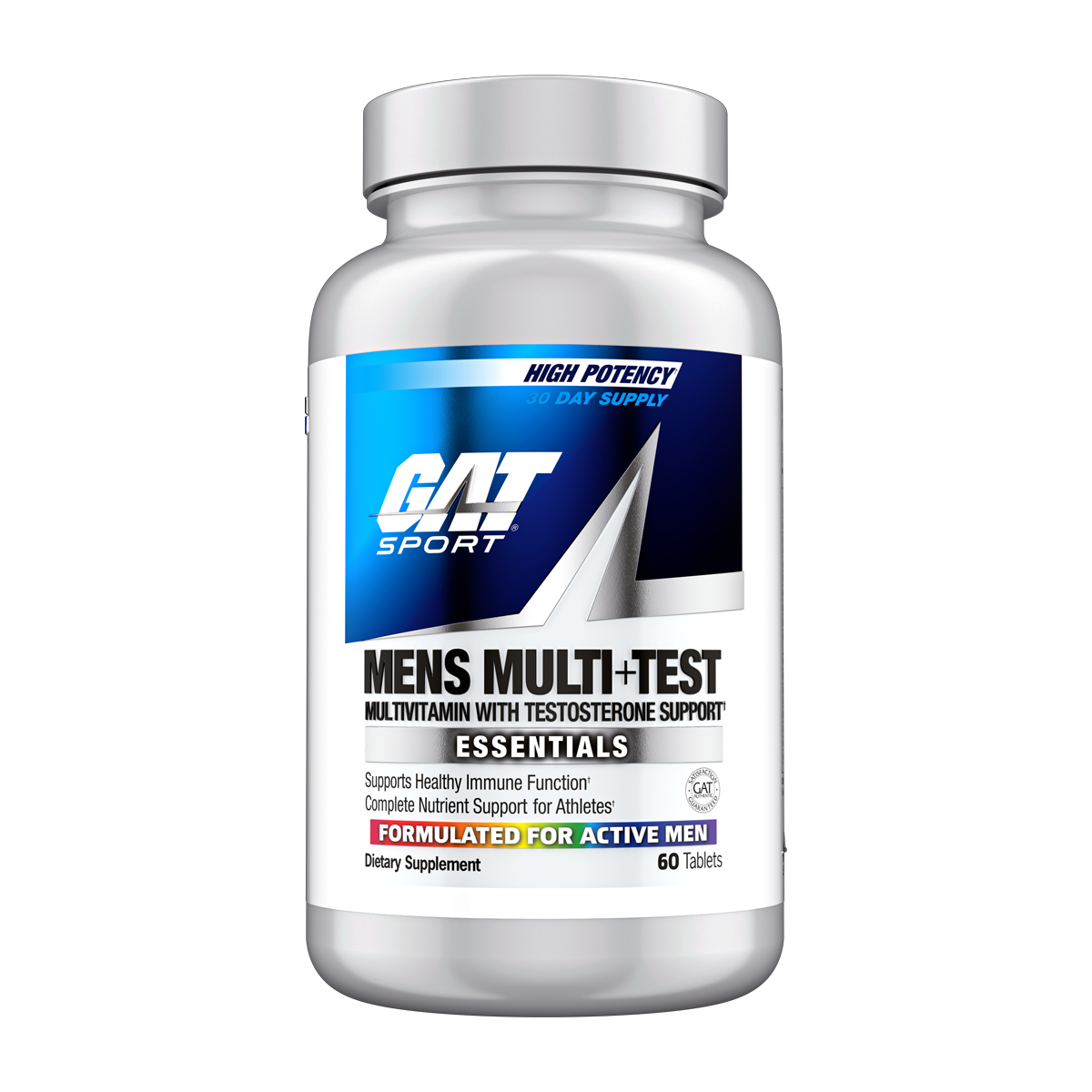
Men's Multi + Test runs on the identical behavior with a different job: a daily men's multivitamin providing broad vitamin and mineral coverage as insurance for the stretches when November eating drifts from the plan. It pairs with creatine rather than competing because they split the daily stack cleanly, creatine carries the performance side with the deepest evidence in the category, while the multi backstops micronutrient intake underneath it. Same shelf, same morning, two boxes checked in ten seconds, and if fatty fish rarely makes your plate, GAT Sport Omega-3 Purified Fish Oil sits beside them covering that gap too.
Pass the Test
The perfect week is a performance. The average week, repeated, is a program. Hold the three-session floor, deploy the fallback version without shame, count the checkmarks, and let the daily habits compound in the background while the month does its worst. Four average weeks from now, the equation pays out, and December meets a lifter still mid-program.
Aim for average, repeated. Start the daily habit that rewards it: GAT Sport Creatine Monohydrate, at gatsport.com.
Key Takeaways
- Progress follows accumulated weekly volume over months, with a clear dose-response between weekly sets and muscle growth, so sessions completed beats peak weeks.
- Weekly volume matters more than how it is split across days, and about 4 weekly sets per muscle group at 6 to 15 RM is a practical floor for time-pressed lifters.
- A single hard set 2 to 3 times weekly produced significant strength gains in resistance-trained men, and one heavy session per week maintains strength.
- Habits form through consistent, simple repetition, so protect a three-session November floor with a 25-minute fallback.
- Creatine rewards the same behavior: 3 grams daily raised muscle stores about 20 percent over 28 days, no loading required.
Frequently Asked Questions
Is it better to work out consistently or intensely?
Consistently, if you have to choose, because intensity cannot compound across empty weeks. The research ties muscle growth to accumulated weekly volume and shows strength responding to even single hard sets repeated two to three times weekly, which means moderate sessions sustained for months outperform heroic weeks followed by crashes. The ideal is both: honest effort inside sessions, and a session count that survives real life.
What is the minimum amount of training needed to make progress?
Less than most lifters believe. Time-efficiency research points to about 4 weekly sets per muscle group in the 6 to 15 RM range as a practical floor, and in resistance-trained men, even a single set to failure 2 to 3 times per week produced significant strength gains. Those minimums are not optimal, but they are forward motion, which is what a brutal month actually requires.
How many days a week should I lift to maintain what I have?
One, if the load stays heavy. Maintenance research shows strength can be preserved with a single weekly session when intensity is kept, making volume the variable you cut in a crisis and load the one you protect. For most lifestyle lifters, a three-session floor with a one-session emergency minimum covers every version of a bad month.
How long does creatine take to work at 3 grams a day?
About four weeks to full effect. The foundational research found 3 grams daily raised muscle creatine stores roughly 20 percent over 28 days, matching what aggressive 20-gram loading achieved in six days, just on a gentler timeline. Take it every day, training or not, and note that stores drain back down over weeks if you stop, so the habit matters more than the clock.
How do I stay consistent with workouts in November?
Lower the bar on purpose and defend it. Set a floor of three weekly sessions, write a 25-minute fallback workout for collapsed days, schedule sessions around known disruptions like travel before the week starts, and track one number only: sessions completed. Pair the training floor with daily anchors that take seconds, creatine, your multivitamin, a fixed bedtime, so part of the program runs even on the days the gym does not happen.
References
- Schoenfeld, Brad J., et al. "Dose-Response Relationship between Weekly Resistance Training Volume and Increases in Muscle Mass: A Systematic Review and Meta-Analysis." Journal of Sports Sciences, vol. 35, no. 11, 2017, pp. 1073-1082, doi:10.1080/02640414.2016.1210197.
- Iversen, Vegard M., et al. "No Time to Lift? Designing Time-Efficient Training Programs for Strength and Hypertrophy: A Narrative Review." Sports Medicine, vol. 51, no. 10, 2021, pp. 2079-2095, doi:10.1007/s40279-021-01490-1.
- Androulakis-Korakakis, Patroklos, et al. "The Minimum Effective Training Dose Required to Increase 1RM Strength in Resistance-Trained Men: A Systematic Review and Meta-Analysis." Sports Medicine, vol. 50, no. 4, 2020, pp. 751-765, doi:10.1007/s40279-019-01236-0.
- Spiering, Barry A., et al. "Maintaining Physical Performance: The Minimal Dose of Exercise Needed to Preserve Endurance and Strength over Time." Journal of Strength and Conditioning Research, vol. 35, no. 5, 2021, pp. 1449-1458, doi:10.1519/JSC.0000000000003964.
- Kaushal, Navin, and Ryan E. Rhodes. "Exercise Habit Formation in New Gym Members: A Longitudinal Study." Journal of Behavioral Medicine, vol. 38, no. 4, 2015, pp. 652-663, doi:10.1007/s10865-015-9640-7.
- Hultman, Eric, et al. "Muscle Creatine Loading in Men." Journal of Applied Physiology, vol. 81, no. 1, 1996, pp. 232-237, doi:10.1152/jappl.1996.81.1.232.
- Kreider, Richard B., et al. "International Society of Sports Nutrition Position Stand: Safety and Efficacy of Creatine Supplementation in Exercise, Sport, and Medicine." Journal of the International Society of Sports Nutrition, vol. 14, 2017, article 18, doi:10.1186/s12970-017-0173-z.
Frequently asked questions
What is the main takeaway from this article?
“The Consistency Equation: Why Four Average Weeks Beat One Perfect One” is designed to turn practical training and nutrition guidance into clear actions you can apply to your routine.
How should I put this advice into practice?
Start with one recommendation, apply it consistently, and adjust it to your goals, training experience, and recovery needs.