

Most testosterone boosters reliably boost one thing: the price of your urine. The supplement world is packed with exotic-sounding ingredients promising to flood your system with testosterone, and the majority of them do very little once you look at the actual research. Meanwhile, the levers that genuinely support healthy testosterone are far less glamorous, and far more effective, than anything in a flashy tub.
Here is the pattern that costs men money and results. They go hunting for the magic ingredient, the rare herb or trademarked compound that will supposedly transform their hormones, while completely ignoring the fundamentals that actually determine where their testosterone sits. Those fundamentals are not sexy, but they work. Let us separate what moves the needle from what just empties your wallet.
Do Testosterone Boosters Actually Work?
It depends entirely on what is in them. Most products built around exotic, under-dosed, or unproven ingredients do little to nothing for a healthy man. What genuinely supports healthy testosterone is less exciting: quality sleep, a lean body composition, resistance training, and correcting real nutrient deficiencies like low vitamin D or zinc. Fix those fundamentals first, and you address the factors that actually influence your levels, rather than paying for hope in a bottle. Here are the myths worth clearing up.
Myth 1: "The right supplement ingredient can dramatically raise your testosterone."
This is the hope the entire category sells, and for most men it does not hold up. The majority of "testosterone-boosting" ingredients either lack solid human evidence, appear in doses far below what any study used, or work only in men who were deficient to begin with. Chasing them while your sleep, weight, and training are a mess is like tuning the stereo in a car with no engine.
That does not mean every ingredient is worthless. Some compounds do have real, clinically studied effects on testosterone when they are properly dosed, which is exactly why dosing and evidence matter so much. The problem is not the concept of supplementation; it is the sea of products relying on tiny amounts of unproven ingredients and a bold label.
The takeaway: Judge any testosterone product by whether its ingredients are backed by real research at the doses actually used. Most fail that test. The ones worth considering are transparent about what is inside and why.
Myth 2: "Sleep does not have much to do with testosterone."
If any single fundamental deserves your attention first, it is sleep, and the research here is striking. In a controlled study, healthy young men who slept less than five hours a night for just one week saw their daytime testosterone drop significantly, by an amount comparable to aging ten to fifteen years [1]. One week. Most of your daily testosterone release happens during sleep, so shortchanging it directly undercuts your levels.
No supplement can outrun chronic sleep deprivation. If you are consistently sleeping five or six hours and reaching for a test booster, you are trying to patch a problem with the wrong tool while ignoring its actual cause.
The takeaway: Prioritize seven to nine hours of quality sleep before you spend a dollar on any booster. It is the single most powerful and most overlooked lever you have.
Myth 3: "Your body fat has nothing to do with your hormones."
Body composition is one of the biggest drivers of testosterone in men and carrying excess fat works directly against you. Fat tissue increases the activity of aromatase, an enzyme that converts testosterone into estrogen, which is part of why heavier men tend to have lower testosterone. The encouraging flip side is that losing fat helps reverse it. A review of the evidence found that weight loss, particularly through fat reduction, has a positive influence on testosterone, with both moderate and significant reductions in body fat associated with meaningful increases in levels [2].
This makes getting leaner one of the most reliable, and free, ways to support your hormones. It is not a quick fix, but it addresses a root cause rather than masking it.
The takeaway: If you are carrying excess body fat, losing it is one of the most effective things you can do for your testosterone. The gym and the kitchen beat the supplement aisle here.
Myth 4: "Lifting weights is just for muscle, not hormones."
Resistance training earns a place among the fundamentals because it supports healthy testosterone on more than one front. It builds the lean muscle mass and improves the body composition that are themselves tied to better hormonal profiles, and the same review on body composition notes that exercise, particularly resistance training, helps improve testosterone by reducing fat mass [2]. In other words, the training you already do for strength is quietly working on your hormones too.
The lesson is not that a single workout spikes your testosterone in any lasting way, but that a consistent training habit, by keeping you lean and muscular, supports the environment in which healthy testosterone is maintained.
The takeaway: Keep training hard and consistently. It is a foundational support for healthy testosterone, not just a way to build muscle.
Myth 5: "Covering your nutrient bases does nothing for testosterone."
Here is where sensible supplementation actually fits, not as an exotic booster, but as insurance against deficiencies that genuinely impair testosterone. Certain micronutrients, notably vitamin D and zinc, play real roles in testosterone production, and being deficient in them can drag your levels down. The catch, and it is an important one, is that correcting a deficiency helps, while piling on extra in a man who is already replete generally does not.
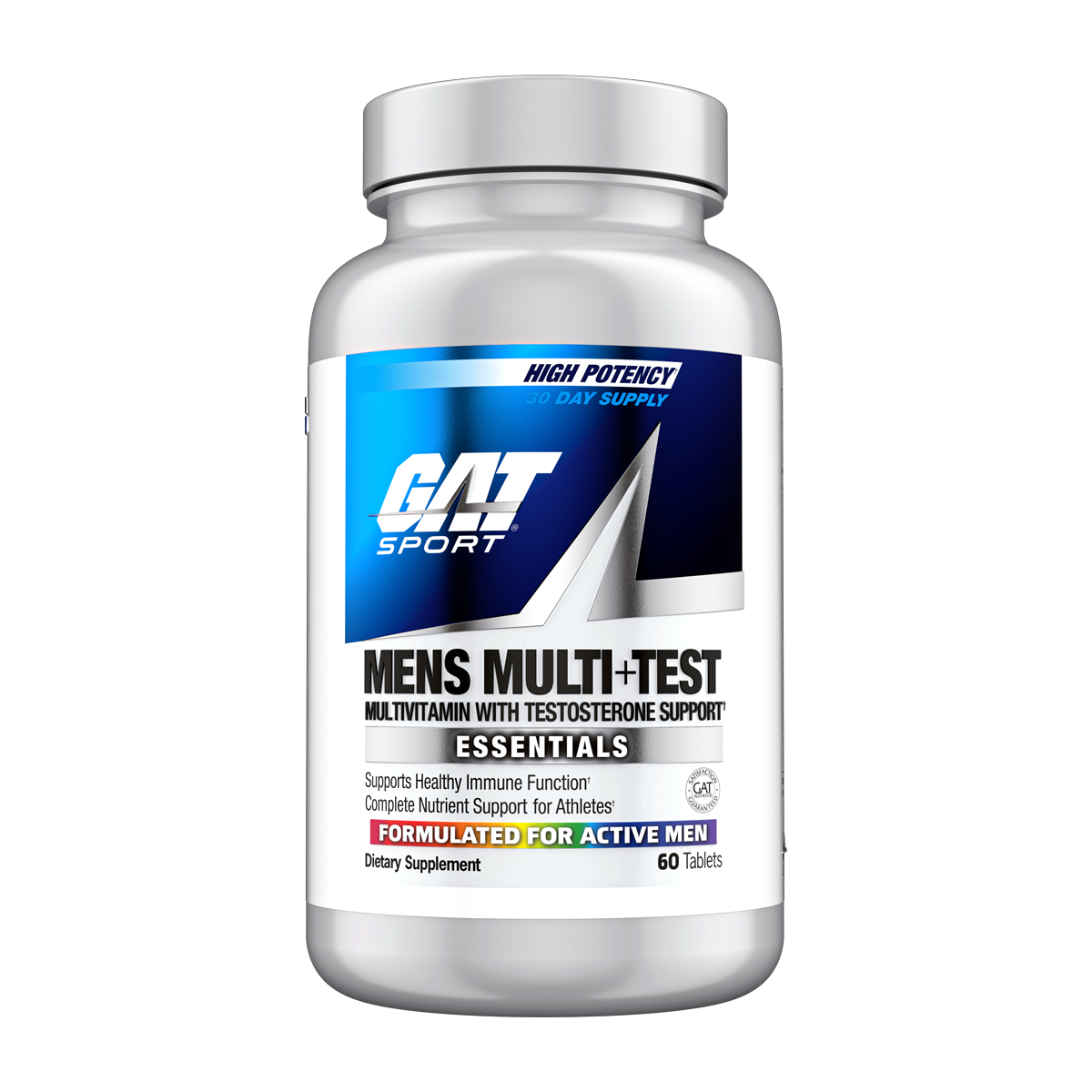
The reason this matters is that these deficiencies are common. A meta-analysis of over 2,300 athletes found that 56 percent had inadequate vitamin D levels, with the risk rising in winter and among those who train indoors [3]. Zinc shortfalls are likewise not rare. So, covering these bases is a legitimate, evidence-based support, which is exactly the role a sensible daily multivitamin plays. Men's Multi + Test is built for this: it provides a foundation of essential vitamins and minerals, including nutrients like zinc and vitamin D that support healthy testosterone when you are filling a gap, without overpromising a dramatic spike it cannot deliver.
Omega-3s round out the nutritional foundation for overall male health. They support cardiovascular and general wellbeing, and most men do not get enough through diet [4]. GAT Sport Omega-3 Purified Fish Oil is a clean way to cover that gap, supporting the healthy body in which good hormonal function is maintained.
The takeaway: Cover your micronutrient bases, especially vitamin D and zinc, with a quality daily multivitamin. It fixes real deficiencies that impair testosterone, which is very different from chasing a magic booster.
The Honest Bottom Line
So, do testosterone boosters work? The exotic, hype-driven ones mostly do not. But the real levers absolutely do, and they are within your control right now: sleep seven to nine hours, get and stay lean, train consistently, and cover genuine nutrient gaps like vitamin D and zinc. That unglamorous list will do more for your testosterone than a cabinet full of trending powders.
The supplement industry profits from you believing the answer is a special ingredient. Usually, it is not. It is the fundamentals, supported by sensible basics rather than replaced by them. Fix those, and you will have done more than any miracle booster ever could.
Learn what really supports healthy testosterone and stop wasting money. Then go build a stronger, healthier body, and compete harder, with GAT Sport at gatsport.com.
Key Takeaways
- Most exotic testosterone boosters do little; the fundamentals move the needle, and ingredient dosing and evidence are what matter.
- Sleep is the top lever: one week of short sleep dropped young men's testosterone like aging ten to fifteen years.
- Excess body fat lowers testosterone through aromatase activity and losing fat reliably helps raise it.
- Consistent resistance training supports healthy testosterone by improving body composition and reducing fat mass.
- Correcting real deficiencies in vitamin D and zinc supports testosterone, which is where a quality daily multivitamin fits.
Frequently Asked Questions
Do testosterone boosters actually work?
It depends on the ingredients. Most products built on exotic, under-dosed, or unproven compounds do little for a healthy man, while properly dosed, clinically studied ingredients can have real effects. More reliably, the fundamentals genuinely support healthy testosterone: quality sleep, a lean body composition, resistance training, and correcting real deficiencies like low vitamin D or zinc. Fixing those addresses the actual drivers of your levels rather than paying for hype.
What actually raises testosterone naturally?
The most reliable levers are lifestyle fundamentals. Getting seven to nine hours of quality sleep, losing excess body fat, and training consistently all support healthy testosterone, as does correcting genuine nutrient deficiencies in vitamin D and zinc. These address root causes rather than masking them. No supplement outperforms fixing these basics, which is why they should always come before any specialized product.
Does sleep really affect testosterone?
Yes, significantly. Most of your daily testosterone is released during sleep, and research found that healthy young men who slept under five hours a night for one week saw their testosterone drop by an amount comparable to aging ten to fifteen years. Chronic short sleep directly undercuts your levels, so no supplement can compensate for it. Prioritizing sleep is the single most powerful natural lever available.
Can losing weight increase testosterone?
Yes. Excess body fat lowers testosterone partly by increasing aromatase, an enzyme that converts testosterone to estrogen. Research shows that weight loss, particularly fat reduction, has a positive effect on testosterone, with both moderate and larger reductions in body fat linked to meaningful increases. For men carrying extra weight, getting leaner is one of the most reliable and cost-free ways to support healthy hormone levels.
Do vitamin D and zinc boost testosterone?
They support healthy testosterone mainly by correcting deficiencies. Both nutrients play real roles in testosterone production, and being low in them can reduce your levels. Since deficiencies, especially vitamin D, are common, correcting them helps. However, taking extra when you are already sufficient generally does not raise testosterone further. This is why a quality daily multivitamin that covers these bases is a sensible, evidence-based support.
References
- Leproult, Rachel, and Eve Van Cauter. "Effect of 1 Week of Sleep Restriction on Testosterone Levels in Young Healthy Men." JAMA, vol. 305, no. 21, 2011, pp. 2173-2174, doi:10.1001/jama.2011.710.
- Okobi, Okelue E., et al. "Impact of Weight Loss on Testosterone Levels: A Review of BMI and Testosterone." Cureus, vol. 16, no. 12, 2024, article e76139, doi:10.7759/cureus.76139.
- Farrokhyar, Forough, et al. "Prevalence of Vitamin D Inadequacy in Athletes: A Systematic-Review and Meta-Analysis." Sports Medicine, vol. 45, no. 3, 2015, pp. 365-378, doi:10.1007/s40279-014-0267-6.
- Siscovick, David S., et al. "Omega-3 Polyunsaturated Fatty Acid (Fish Oil) Supplementation and the Prevention of Clinical Cardiovascular Disease: A Science Advisory from the American Heart Association." Circulation, vol. 135, no. 15, 2017, pp. e867-e884, doi:10.1161/CIR.0000000000000482.