
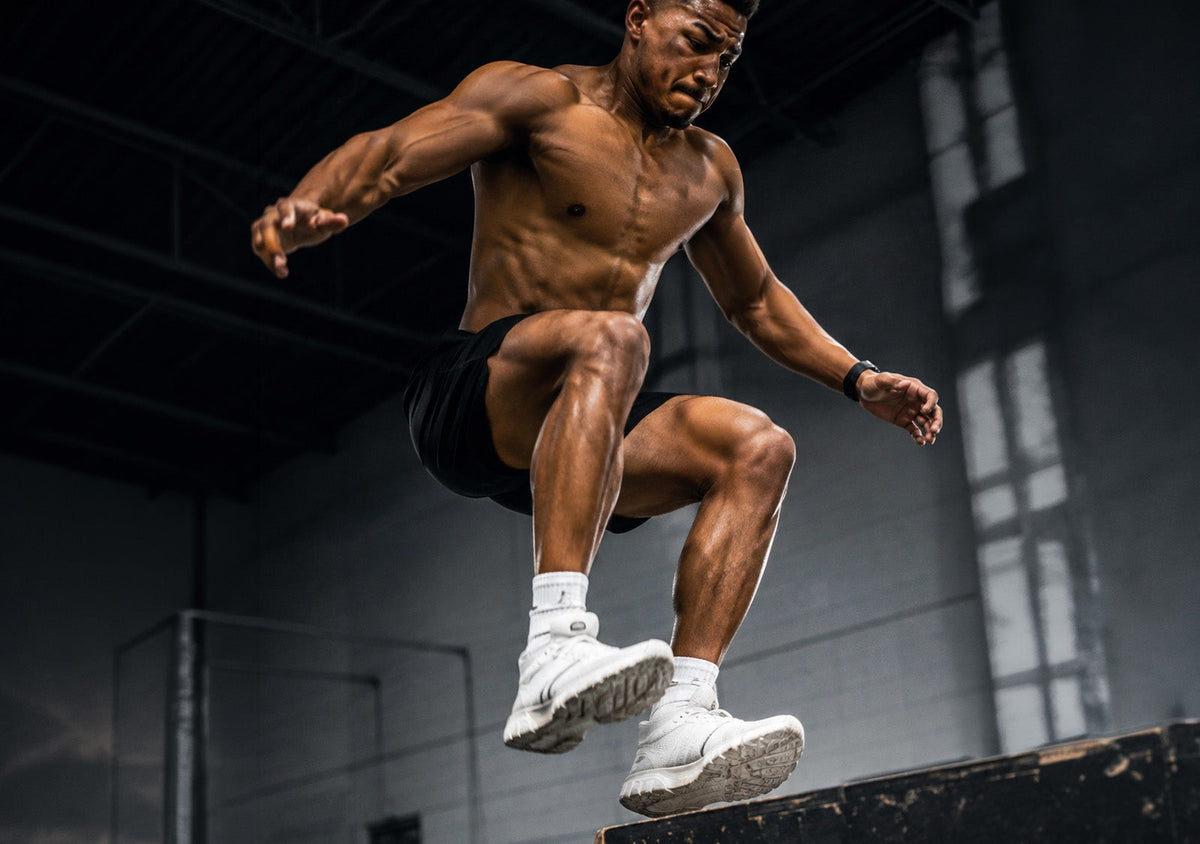
Strong legs win games and lose excuses. They are the engine behind every sprint, jump, cut, and tackle in sport, and the base under every heavy lift in the gym. They are also where most lifters quietly cut corners. Leg day gets done, sort of, but it rarely gets built with the same intent as a bench session, and it almost never gets built for what legs actually do in sport: produce force fast.
That is the gap this article closes. For most lifters, lower-body training starts and ends at the squat rack. Squats are essential, but a program that stops there builds legs that are strong and slow, missing the explosive work and the single-leg work that turn gym strength into sport performance. Sport is not performed slowly on two feet. It is performed fast, and mostly on one leg at a time. If you want legs that perform, not just legs that look good, you have to train all three layers. Here is how.
How Do You Build Lower-Body Power?
You build lower-body power by combining three types of training: heavy strength work like squats and hinges to build the force foundation, explosive work like jumps and sprints to train your legs to express that force quickly, and unilateral exercises like lunges and single-leg hops to transfer it to the one-leg-at-a-time reality of sport. Strength is the base, speed is the expression, and single-leg work is the bridge to the field. Train all three each week and your legs start performing, not just posing.
Here is why each layer matters, and two complete weekly programs that put them together.
The Three Layers of Powerful Legs
Power is force expressed quickly. Building it means developing the force, developing the quickness, and developing them in the positions sport actually uses.
Layer 1: Heavy Strength Is the Foundation
There is no shortcut around this one: the stronger you are, the more raw force you have available to express as power. A comprehensive review of the strength and performance literature concluded that greater muscular strength is strongly associated with improved force-time characteristics, enhances general sport skills like jumping, sprinting, and change of direction, and even reduces injury risk [1]. The authors put it plainly: there may be no substitute for greater muscular strength when it comes to improving performance across a wide range of skills [1].
So, the heavy squat and the heavy hinge stay at the center of the program. They are not just physique builders; they are the force factory everything else draws on. A lifter who doubles their squat has dramatically raised the ceiling on how much power their legs can ever produce.
Layer 2: Explosive Work Teaches Speed
Strength alone is not power, though, because sport rarely gives you time to grind. You have fractions of a second to apply force in a jump or a sprint stride, and that quality has to be trained directly. This is where plyometrics earn their place. A meta-analysis of 26 controlled trials found that plyometric training produces significant, practical improvements in vertical jump height, ranging from roughly 4.7 to 8.7 percent depending on the type of jump [2]. Jumps, bounds, and sprints teach your nervous system to express your strength rapidly, converting the force you built under the bar into force you can use in the tenth of a second a game gives you.
The practical rule: do your explosive work fresh, early in the session, when your nervous system can produce true speed. A few high-quality jumps before your squats beat a fatigued jump circuit at the end.
Layer 3: Single-Leg Work Bridges to Sport
Watch any sport and count how often an athlete produces force off both feet at once. Sprinting, cutting, bounding, most takeoffs: they happen one leg at a time. Training science backs the intuition that this matters. A meta-analysis comparing unilateral and bilateral resistance training found the effects follow the principle of specificity: unilateral training was more effective at improving unilateral tasks, while bilateral training better improved bilateral ones [3]. Since so much of sport is a unilateral task, single-leg strength and power work is not an accessory afterthought; it is the bridge that carries your gym strength onto the field. Split squats, lunges, step-ups, and single-leg jumps also expose and fix the side-to-side imbalances that two-legged lifts can hide.
Two Weekly Programs That Prioritize Lower-Body Power
Here are two complete weekly templates built on all three layers. Both put explosive work first while you are fresh, anchor the week with heavy strength, and thread unilateral work throughout. Rest 2 to 3 minutes on heavy strength sets and keep every jump and sprint crisp: the moment quality drops; the power work is over.
Program 1: The Lifter's Power Week (4 Days)
For the lifter who wants serious lower-body power without giving up upper-body training.
Day 1: Lower Strength + Elastic Power
- Box jumps: 4 sets of 3, maximum intent, full recovery
- Back squat: 4 sets of 3 to 5 at heavy but crisp loads
- Romanian deadlift: 3 sets of 6 to 8
- Bulgarian split squat: 3 sets of 6 to 8 per leg
- Standing calf raise: 3 sets of 10 to 12
Day 2: Upper Body
- Your normal pressing and pulling work
Day 3: Lower Speed + Unilateral Power
- Short sprints: 6 sprints of 15 to 20 yards, walk-back recovery
- Broad jumps: 4 sets of 3
- Single-leg hops: 3 sets of 5 per leg, stick each landing
- Walking lunges: 3 sets of 10 per leg, moderate load, moving with intent
- Sled push or hill sprints: 4 short, hard efforts (optional finisher)
Day 4: Upper Body + Posterior Chain
- Your upper session, plus trap-bar deadlift or hip thrust: 3 sets of 5, and a loaded carry: 3 sets of 40 yards
Program 2: The Athlete's In-Season Week (3 Days)
For the athlete or time-pressed lifter balancing training with sport, practice, or a packed schedule.
Day 1: Strength-Power Contrast
- Squat: work up to 3 sets of 3, heavy and fast
- Immediately after each squat set: 3 box jumps (a contrast pairing that primes explosiveness)
- Single-leg Romanian deadlift: 3 sets of 8 per leg
- Lateral lunge: 2 sets of 8 per side
Day 2: Speed and Reactive Work
- Sprints: 6 to 8 efforts of 10 to 20 yards, full recovery
- Bounds: 3 sets of 6 alternating bounds
- Lateral hops: 3 sets of 5 per side
- Core: 2 to 3 sets of planks or carries
Day 3: Hinge Strength + Capacity
- Trap-bar deadlift: 4 sets of 4 to 6
- Step-ups onto a knee-height box: 3 sets of 8 per leg
- Kettlebell swing: 3 sets of 10, maximum snap
- Sled drag or farmer's carry: 3 to 4 trips
Run either program for 6 to 8 weeks, progressing the loads on the strength lifts and the intent on every jump and sprint, and retest a vertical jump, broad jump, or sprint time to watch the power show up.
Fueling Legs That Perform
Power training is high-output work, and the fueling should match it.
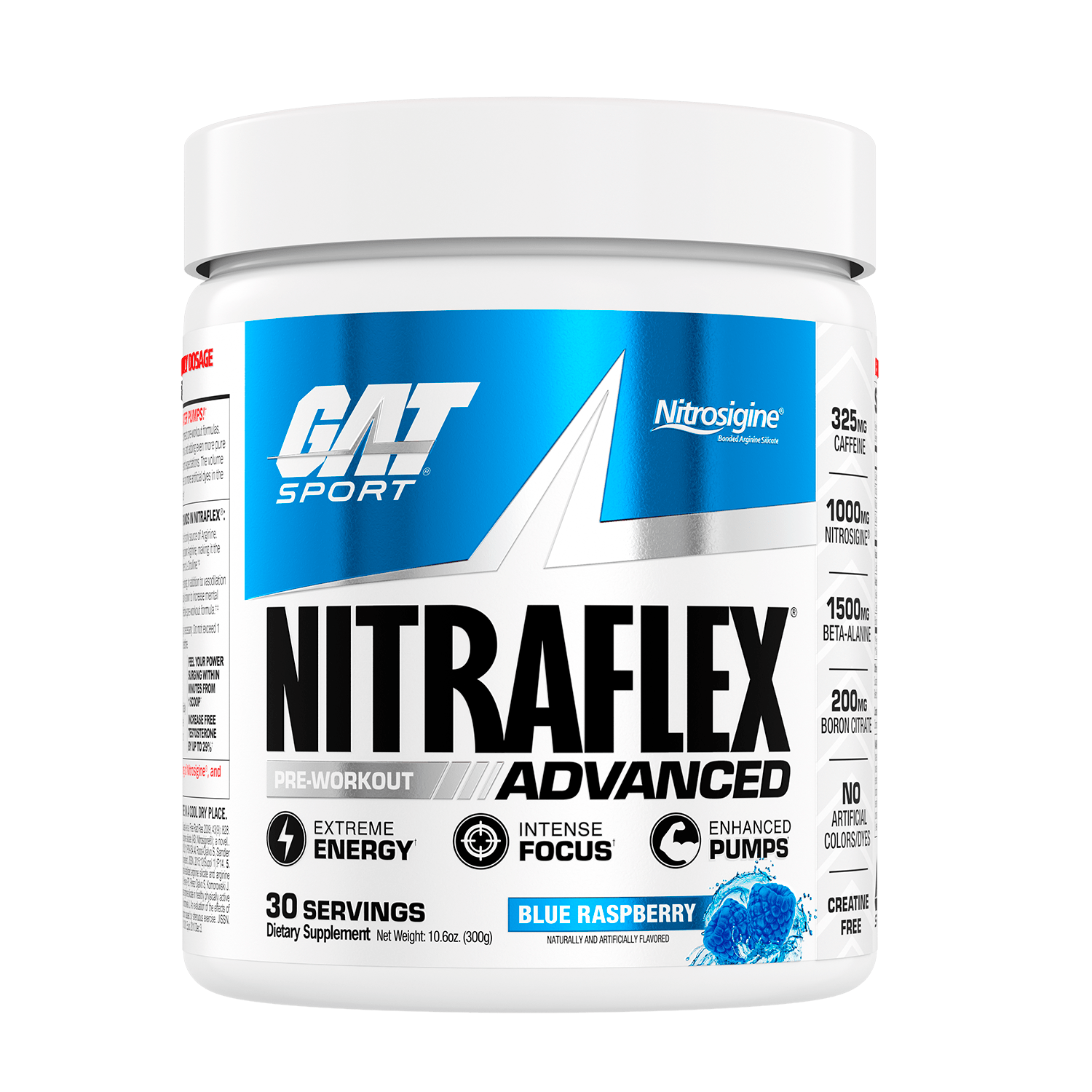
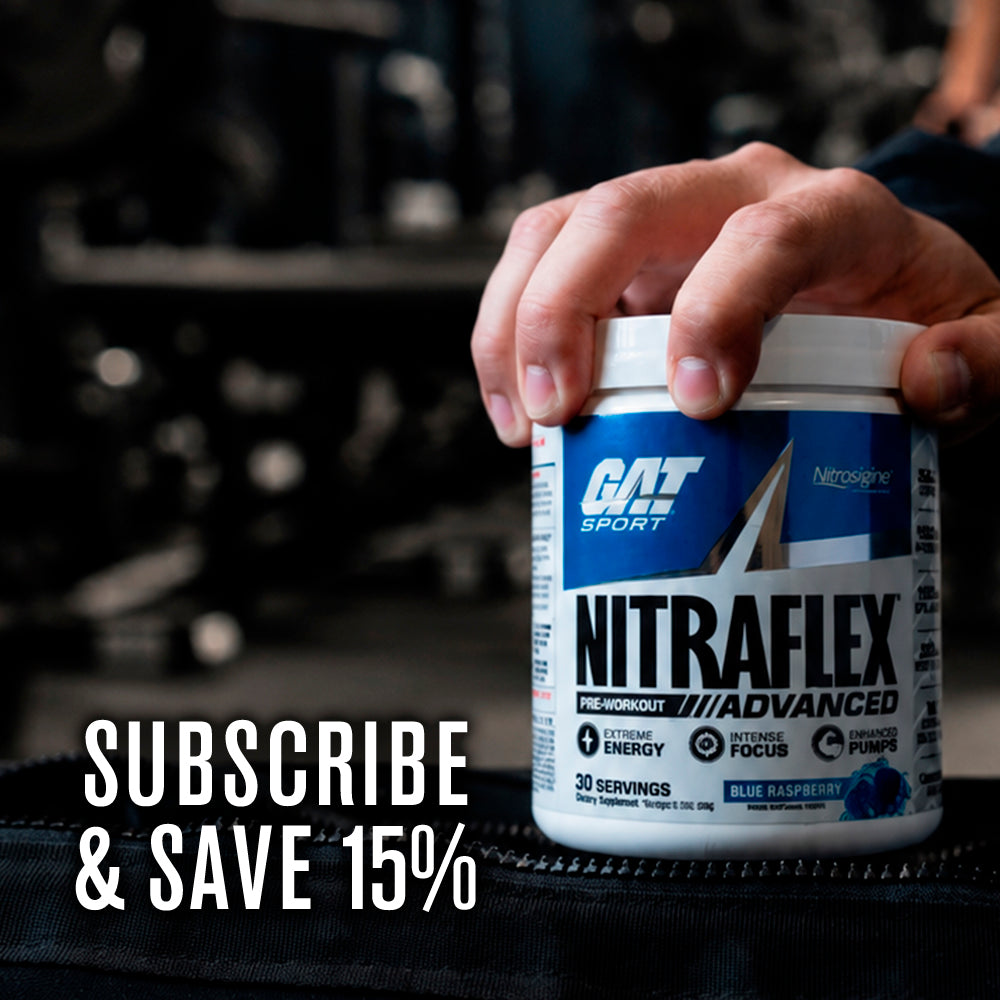
Leg days built on heavy squats, jumps, and sprints are exactly when Nitraflex Advanced earns its spot: the energy and focus to attack explosive work with the full intent it requires, because half-hearted jumps build nothing. The ISSN position stand on caffeine confirms that pre-workout supplements containing caffeine enhance both anaerobic and aerobic performance at doses of 3 to 6 milligrams per kilogram of body mass [4], and anaerobic output is precisely what a power session runs on. On rushed days when you are training between commitments, Nitraflex Chews deliver that same pre-workout support in a portable, no-mix format so a busy schedule never costs you a quality session.
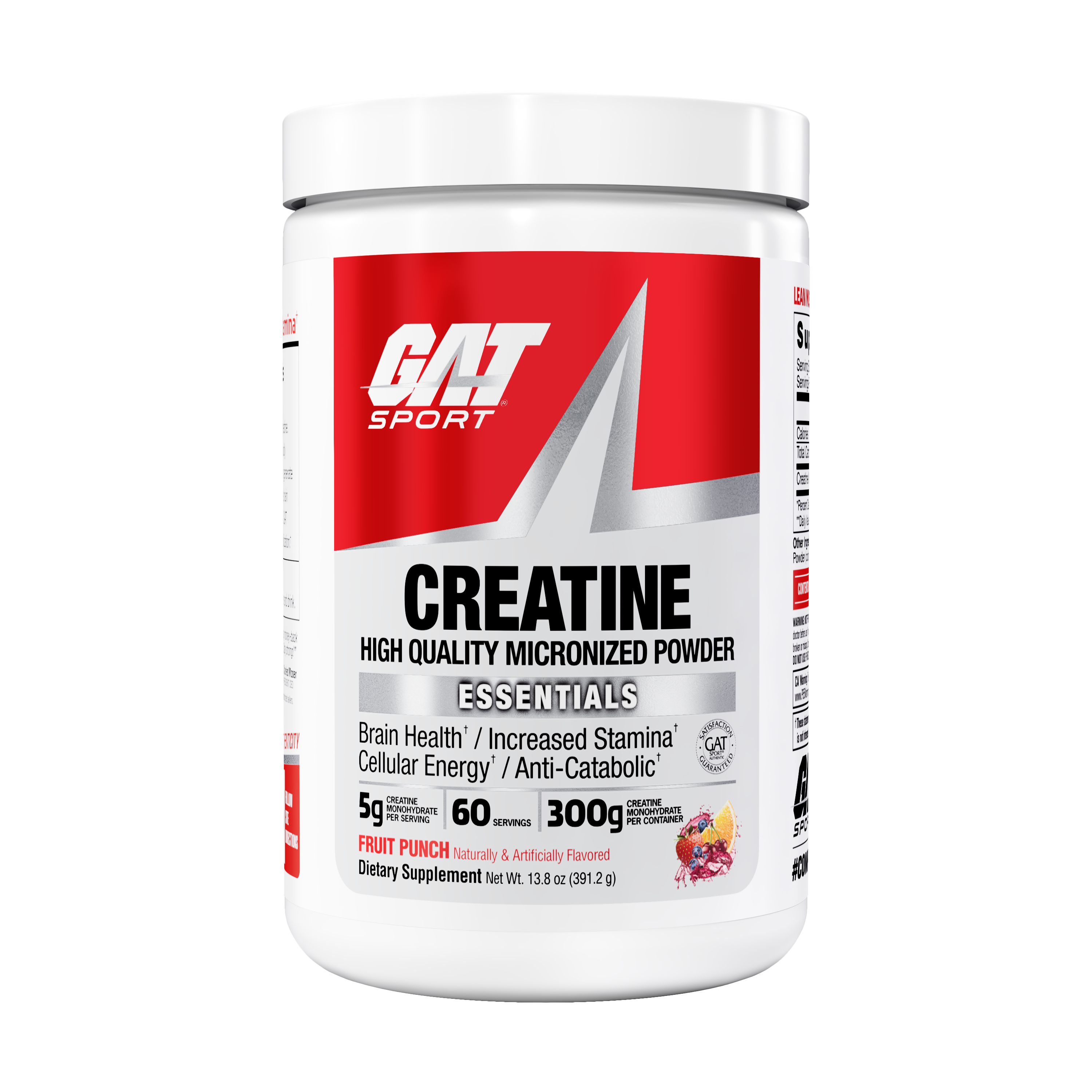
Creatine is the other non-negotiable here, and the evidence is unusually specific to this exact goal. A meta-analysis of randomized controlled trials focused on the lower body concluded that creatine supplementation is effective for improving lower limb strength performance in efforts lasting under three minutes, independent of population, training protocol, or dosing details [5]. That is squats, jumps, and sprints in a sentence. More broadly, the ISSN identifies creatine monohydrate as the most effective ergogenic nutritional supplement available for increasing high-intensity exercise capacity and lean body mass during training [6]. Creatine Monohydrate works through daily saturation, so take a consistent daily dose through the whole block, every day, training or not.
Legs That Show Up When It Counts
A big squat is a fine trophy, but sport does not ask your legs how much they can grind; it asks how much force they can produce right now, usually on one leg, with no warning. Building that takes all three layers: the heavy strength that raises your force ceiling, the jumps and sprints that teach your legs to use it fast, and the single-leg work that delivers it in the positions games are actually played in. Train the layers, fuel the work, and your legs stop being decoration and start being a weapon.
Add the power work to your leg day and build legs that perform. Then go compete harder, off both feet and one, with GAT Sport at gatsport.com.
Key Takeaways
- Lower-body power takes three layers: heavy strength as the foundation, explosive jumps and sprints for speed, and unilateral work for sport transfer.
- Greater muscular strength enhances jumping, sprinting, and change of direction while reducing injury risk, making squats and hinges the base.
- Plyometric training improves vertical jump by roughly 4.7 to 8.7 percent, teaching your legs to express strength fast.
- Training effects follow specificity: single-leg training best improves the single-leg tasks that dominate sport.
- Do explosive work fresh and first, fuel sessions with a focused pre-workout, and keep daily creatine constant, since it is proven effective for lower limb performance.
Frequently Asked Questions
How do you build explosive lower-body power?
Combine three types of training each week: heavy strength work like squats and hinges to build your force foundation, explosive movements like jumps and short sprints to train speed of force expression, and unilateral exercises like lunges and single-leg hops for sport transfer. Do the explosive work early in sessions while fresh, progress the strength lifts over time, and give every jump and sprint maximum intent.
Are squats enough to build power for sport?
No. Squats build the strength foundation that power depends on, and research confirms greater strength enhances jumping, sprinting, and change of direction. But power also requires training speed directly through jumps and sprints, and sport happens mostly one leg at a time, which is where unilateral work earns its place. Squats are the base of the program, not the whole program.
Do plyometrics really increase vertical jump?
Yes. A meta-analysis of 26 controlled trials found plyometric training produces significant improvements in vertical jump height, ranging from about 4.7 to 8.7 percent depending on the jump type. Jumps, bounds, and drop jumps train the stretch-shortening cycle and teach your nervous system to express force rapidly, which is exactly the quality that separates strong legs from powerful ones.
Why do athletes need single-leg exercises?
Because sport is largely a single-leg activity: sprinting, cutting, bounding, and most jumps happen off one leg. Research comparing unilateral and bilateral training found improvements follow the principle of specificity, with single-leg training best improving single-leg tasks. Unilateral exercises like split squats, lunges, and single-leg hops bridge gym strength to sport movement and also expose side-to-side imbalances that two-legged lifts hide.
Does creatine help with power and explosiveness?
Yes. A meta-analysis of randomized controlled trials found creatine supplementation effective for lower limb strength performance in efforts under three minutes, which covers squats, jumps, and sprints, independent of population or protocol. The ISSN also identifies creatine monohydrate as the most effective supplement for high-intensity exercise capacity. It works through daily saturation, so a consistent daily dose matters more than timing.
References
- Suchomel, Timothy J., et al. "The Importance of Muscular Strength in Athletic Performance." Sports Medicine, vol. 46, no. 10, 2016, pp. 1419-1449, doi:10.1007/s40279-016-0486-0.
- Markovic, Goran. "Does Plyometric Training Improve Vertical Jump Height? A Meta-Analytical Review." British Journal of Sports Medicine, vol. 41, no. 6, 2007, pp. 349-355, doi:10.1136/bjsm.2007.035113.
- Liao, Kai-Fang, et al. "Effects of Unilateral vs. Bilateral Resistance Training Interventions on Measures of Strength, Jump, Linear and Change of Direction Speed: A Systematic Review and Meta-Analysis." Biology of Sport, vol. 39, no. 3, 2022, pp. 485-497, doi:10.5114/biolsport.2022.107024.
- Guest, Nanci S., et al. "International Society of Sports Nutrition Position Stand: Caffeine and Exercise Performance." Journal of the International Society of Sports Nutrition, vol. 18, no. 1, 2021, article 1, doi:10.1186/s12970-020-00383-4.
- Lanhers, Charlotte, et al. "Creatine Supplementation and Lower Limb Strength Performance: A Systematic Review and Meta-Analyses." Sports Medicine, vol. 45, no. 9, 2015, pp. 1285-1294, doi:10.1007/s40279-015-0337-4.
- Kreider, Richard B., et al. "International Society of Sports Nutrition Position Stand: Safety and Efficacy of Creatine Supplementation in Exercise, Sport, and Medicine." Journal of the International Society of Sports Nutrition, vol. 14, no. 18, 2017, doi:10.1186/s12970-017-0173-z.