

Hybrid racing did something no powerlifting forum ever could. It made strong people admit that running between stations is hard.
Picture the scene, because it repeats every weekend somewhere: a lifter with a 500-pound deadlift moves a heavy sled like it owes him money, then spends the following 800 meters learning humility at nine minutes per mile. The sled was never the problem. The space between the sleds was.
That is the gap hybrid racing exposed in an entire generation of strength-first athletes: big numbers, short tank. The squat is world-class and the recovery between efforts is not, so the moment work gets repeated, sweaty, and back-to-back, the wheels come off. The good news is that the fix does not require surrendering a single pound of strength, and the sport that exposed the problem also wrote the syllabus for solving it.
How Do You Improve Work Capacity Without Losing Strength?
Add conditioning deliberately while protecting your lifting. Research shows aerobic training does not compromise muscle or maximal strength when the two are scheduled into separate sessions, so keep heavy work heavy, build the engine two to three times a week, practice working under fatigue, and support long sessions with fluids, electrolytes, and carbohydrate.
Five Lessons From the Course
Strength Is the Cheapest Ticket Through the Stations
Start with the reassuring part: the strength you built is not the enemy of the engine; it is the foundation under it. Greater muscular strength is associated with better sprinting, jumping, and change-of-direction performance [1], and it does something even more valuable in repeated-effort formats: it shrinks the relative cost of every station. A sled that is 40 percent of your max is a warm-up; the same sled at 80 percent of a weaker athlete's max is a crisis. Stay strong, and everything on the course gets cheaper.
The Engine Can Be Added Without a Strength Tax
The old fear says conditioning melts strength. The modern evidence says scheduling does. Across 43 studies, adding aerobic training to lifting did not compromise muscle growth or maximal strength [2], and in trained lifters specifically, lower-body strength development suffered only when lifting and endurance work were crammed into the same session [3]. Separate them by several hours or a full day, and the interference essentially disappears [3]. Two to three dedicated conditioning sessions a week, kept away from your heaviest lifting, builds the tank without touching the total.
Fitness You Can Only Use Fresh Is Half a Fitness
Here is the lesson lifters resist most, and it is pure coaching rather than a lab finding: the race never asks you to perform fresh. Every station arrives on legs that just ran, with a heart rate that never fully settled. So once a week, train the transition itself. Row hard, then lunge. Run, then carry. Not to failure, not heroically, just enough that working at quality under fatigue becomes a rehearsed skill instead of a race-day surprise. Strong athletes do not lose these events at the stations. They lose them in the ugly minutes after.
Sweat Is a Budget, Not a Vibe
Long mixed sessions are sweaty by design, and the fluid research is blunt about the stakes: dehydration beyond about 2 percent of body weight impairs performance, sweat rates vary enormously between athletes, and in the right circumstances, electrolyte-containing beverages outperform plain water for the job [4]. That is the exact use case Nitraflex Hydration was built for: each serving delivers a sodium-forward electrolyte profile of 300 mg sodium and 100 mg potassium in a 3 to 1 ratio that mirrors how sweat actually loses them, plus 25 mg magnesium and 10 mg calcium, alongside 1,000 mg of taurine and 100 mg of L-theanine. Weigh yourself before and after one long session to learn your personal sweat rate [4], then bring the bottle to every session that will earn it. Hydration is a plan you run, not a feeling you chase.
Past the Hour, Feed the Work
The final lesson is arithmetic. When sessions stretch beyond about 60 minutes, sports nutrition guidance calls for 30 to 60 grams of carbohydrate per hour to sustain the output [5], and long station-style workouts sit squarely in that territory. A scoop or two of Cyclic Dextrin in the second bottle covers the window without sitting heavy, so the last third of the session is trained rather than survived.
The Scoop for Race-Style Days
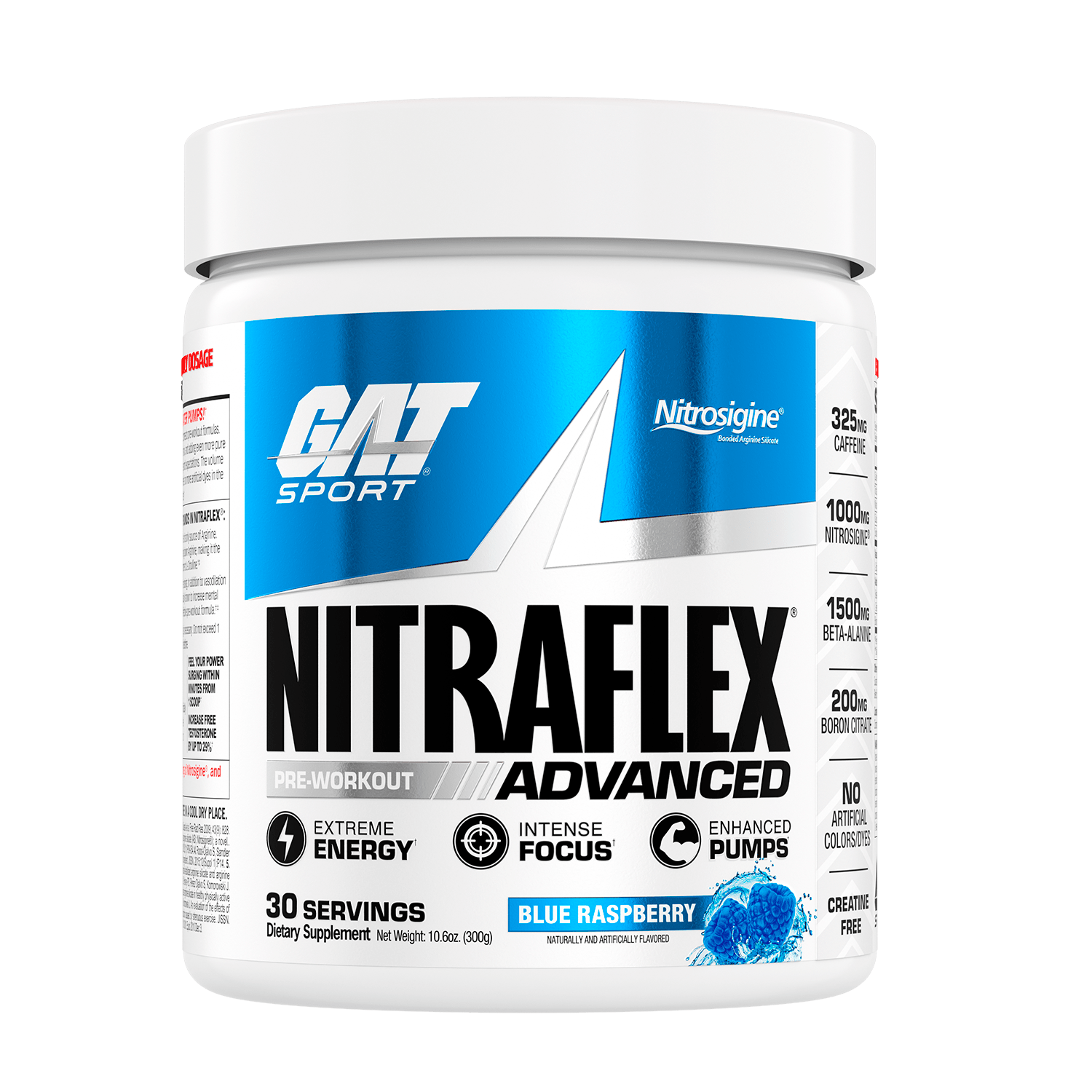
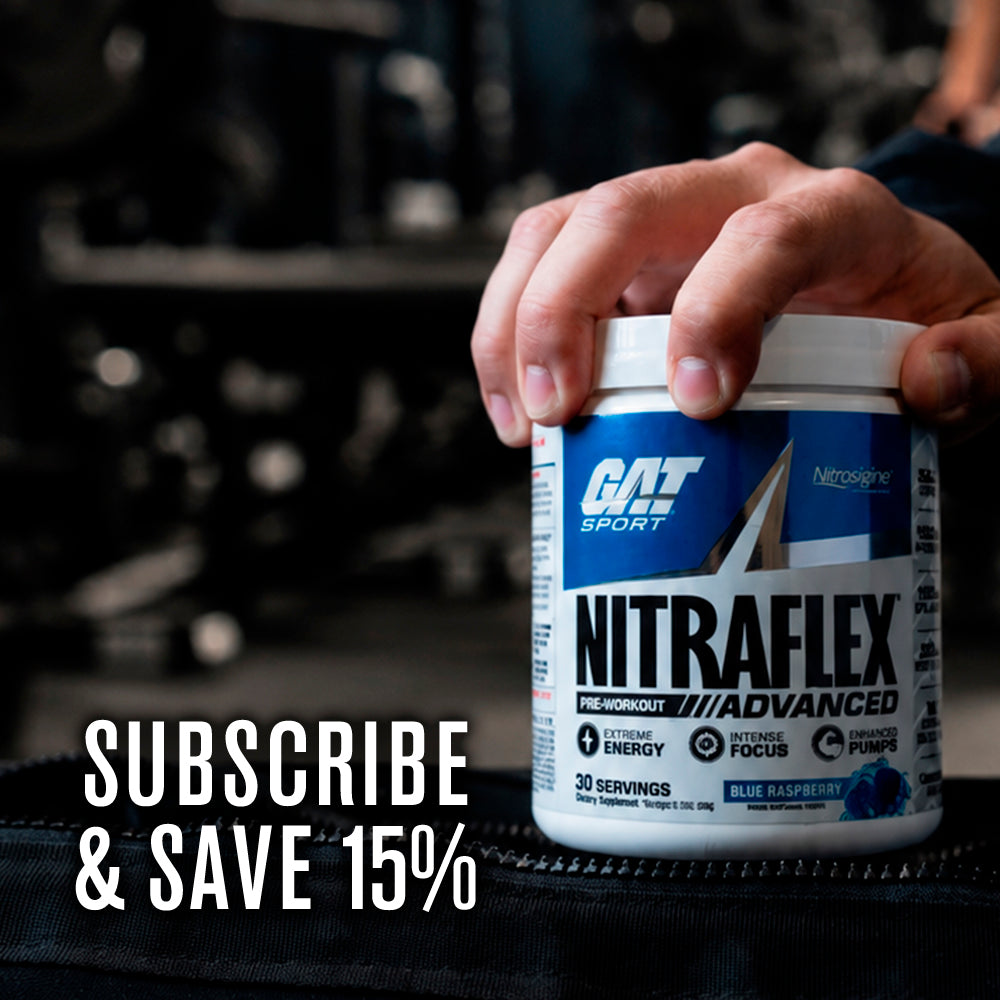
The five lessons cover the plan; one product slots into the sessions themselves. Nitraflex Sport is the pre-workout GAT Sport built for exactly this kind of work: conditioning days and race-style sessions where the effort is long, repeated, and sweaty. Each scoop carries 200 mg of natural caffeine from coffee bean extract, a moderate dose suited to sustained efforts, which matters because the caffeine research shows its most consistent benefits in aerobic endurance work [6]. It is also Informed Sport certified, with every batch third-party tested for banned substances, and its formula includes an electrolyte blend that starts the hydration job before the first station.
It sits alongside Nitraflex Hydration rather than competing with it because the two work different problems: the pre-workout supplies the stimulus and focus to start the session hard, while the hydration formula replaces what the session takes out, sip by sip, all the way through. One scoop of Sport 30 minutes before, the Hydration bottle during, and never stack additional stimulants on top.
The Tank Is Trainable
The most useful thing hybrid racing taught lifters is that the gas tank is not a talent. It is a training block, built the same way the deadlift was: scheduled, progressed, and fueled. Keep the strength that makes every station cheap, add the conditioning the research says costs you nothing when placed well, rehearse the ugly transitions, and treat fluids and fuel as part of the program instead of an afterthought.
Build the engine to match the numbers. Hydrate your next long session with GAT Sport Nitraflex Hydration, at gatsport.com.
Key Takeaways
- Strength makes every repeated effort relatively cheaper, and greater strength is associated with better sprinting and change of direction, so protect it while building the engine.
- Concurrent training research across 43 studies shows conditioning does not compromise muscle or maximal strength, with trained-lifter interference appearing only in same-session combinations.
- Train transitions deliberately once a week, since races demand quality work under fatigue rather than fresh-legged efforts.
- Keep dehydration under about 2 percent of body weight, learn your personal sweat rate, and use an electrolyte plan for long, sweaty sessions.
- Sessions beyond an hour call for 30 to 60 grams of carbohydrate per hour.
Frequently Asked Questions
How do strength athletes improve conditioning for hybrid races?
Add two to three dedicated conditioning sessions per week, scheduled several hours or a full day away from heavy lifting, since research shows strength interference appears mainly in same-session training. Build one interval session, one longer steady effort, and one weekly transition workout that pairs stations with running, then support the volume with a hydration plan and carbohydrate for sessions past an hour.
Will adding conditioning make me weaker?
Not when it is scheduled well. A meta-analysis of 43 studies found concurrent aerobic and strength training did not compromise hypertrophy or maximal strength, and the trained-lifter strength impairment appeared only when both were trained in the same session. Keep your heavy lifting sessions intact and separated from hard conditioning, and the strength stays while the engine grows.
How much should you drink during long training sessions?
Enough to keep body weight loss under about 2 percent, which is the threshold where performance measurably declines. Because sweat rates vary widely between athletes, weigh yourself before and after a representative session: the difference, adjusted for what you drank, is your personal sweat rate, and it turns hydration from guesswork into a plan you can execute every long session.
Are electrolyte drinks better than water for training?
For short, easy sessions, water is fine. For long, sweaty, or intense work, the fluid-replacement research recognizes circumstances where beverages containing electrolytes and carbohydrate outperform plain water, because sweat takes sodium and other minerals with it, not just fluid. A sodium-forward electrolyte formula matched to sweat losses supports fluid retention across exactly the kind of sessions hybrid training creates.
Do I need carbs during a workout?
Under an hour, generally no. Beyond about 60 minutes of sustained, high-effort work, sports nutrition guidance recommends 30 to 60 grams of carbohydrate per hour to maintain output, typically as an easily digested drink consumed through the session. Long station-style and mixed-modality workouts routinely cross that line, which is where intra-workout carbohydrate earns its place.
References
- Suchomel, Timothy J., et al. "The Importance of Muscular Strength in Athletic Performance." Sports Medicine, vol. 46, no. 10, 2016, pp. 1419-1449, doi:10.1007/s40279-016-0486-0.
- Schumann, Moritz, et al. "Compatibility of Concurrent Aerobic and Strength Training for Skeletal Muscle Size and Function: An Updated Systematic Review and Meta-Analysis." Sports Medicine, vol. 52, no. 3, 2022, pp. 601-612, doi:10.1007/s40279-021-01587-7.
- Petré, Henrik, et al. "Development of Maximal Dynamic Strength during Concurrent Resistance and Endurance Training in Untrained, Moderately Trained, and Trained Individuals: A Systematic Review and Meta-Analysis." Sports Medicine, vol. 51, no. 5, 2021, pp. 991-1010, doi:10.1007/s40279-021-01426-9.
- Sawka, Michael N., et al. "American College of Sports Medicine Position Stand: Exercise and Fluid Replacement." Medicine and Science in Sports and Exercise, vol. 39, no. 2, 2007, pp. 377-390, doi:10.1249/mss.0b013e31802ca597.
- Kerksick, Chad M., et al. "International Society of Sports Nutrition Position Stand: Nutrient Timing." Journal of the International Society of Sports Nutrition, vol. 14, 2017, article 33, doi:10.1186/s12970-017-0189-4.
- Guest, Nanci S., et al. "International Society of Sports Nutrition Position Stand: Caffeine and Exercise Performance." Journal of the International Society of Sports Nutrition, vol. 18, no. 1, 2021, article 1, doi:10.1186/s12970-020-00383-4.
Frequently asked questions
What is the main takeaway from this article?
“What Hybrid Racing Taught Lifters About Work Capacity” is designed to turn practical training and nutrition guidance into clear actions you can apply to your routine.
How should I put this advice into practice?
Start with one recommendation, apply it consistently, and adjust it to your goals, training experience, and recovery needs.